 MineArchive
Flimby Colliery
| Also known as | Robin Hood Pit, Watergate Pit |
|---|---|
| Location | Flimby, between Maryport and Workington, Cumbria — 54.6892, -3.4908 (approximate) |
| Commodity | Coal |
| Type | Coal |
| Worked | By 1855–1909 |
| Maximum depth | Unknown. |
| Operators | R. Wilson & Co. (1880–?), Flimby & Broughton Moor Coal & Firebrick Co. Ltd (1890–1909) |
Overview
A West Cumberland colliery on the coast between Maryport and Workington, returning coal from 1855 and closed in 1909. It worked through two pits, Robin Hood and Watergate, and sold coking, gas, household and steam coal; a brickworks stood alongside. Employment peaked at 384 in 1900 and had fallen to 53 five years later. Twenty-three deaths are recorded here, one of them a woman working on the surface.
History
Coal is returned from Flimby in the Mineral Statistics from 1855, and deaths are recorded at the colliery from 1832, so the workings are older than the returns. In the 1880s it belonged to R. Wilson & Co. — the official 1880 List of Mines gives the owner as B. Wilson, one initial different — and in the 1890s to the Flimby & Broughton Moor Coal & Firebrick Co. Ltd, whose name says what else was made on the site. The colliery worked through two pits. Robin Hood is the one the returns name from 1894, selling coking, gas, household and steam coal; Watergate was the other. Employment was 266 in 1894 and 200 in 1896, rose to 384 in 1900, fell back to 289 in 1902, and then collapsed to 53 in 1905 — of whom only nineteen were underground. The seams gave out one by one. The Rattler was abandoned in December 1897 as unworkable on account of faults, the abandonment recorded in February 1898. On 14 November 1908 the Metal, Cannel, Yard and Little Main seams were all abandoned together, and the colliery closed the following year.
Geology
The West Cumberland Coalfield on the Solway coast, where the Coal Measures dip seaward and are cut by heavy faulting. The colliery worked the Cannel Band, Little Main and Yard Band in 1905, with the Metal and the Rattler seams also named in its abandonment plans, and the Ten Quarters and Metal in the older Seaton Moor and Flimby workings given up in 1868. Faulting is what finished the Rattler: it was abandoned in 1897 as unworkable on that account, and the record says so in those words.
Workings
Two pits, Robin Hood and Watergate, with surface inclines carrying tubs in sets on a rope and a brickworks on the colliery premises. The inquest accounts record the ordinary machinery of a West Cumberland pit of the period: hewers at the face, sinkers deepening the downcast shaft, a "staple" — an internal shaft between levels — being driven in 1891, banksmen at the pit top and an incline breaker at the bank-head. Four sets of abandonment plans were catalogued. The oldest covers Seaton Moor and Flimby Nos 2 and 3 and Mary, in the Ten Quarters and Metal seams, abandoned in 1868 and held at the time by Lord Lonsdale at Somerset House, Whitehaven. Robin Hood No. 2 in the Rattler was abandoned in December 1897, and Robin Hood in the Metal, Cannel, Yard and Little Main on 14 November 1908. A fourth, of 1932, covers an unnamed seam under Broughton Moor, Dearham, Flimby, Ellenborough and Risehow.
Closure
The colliery closed in 1909, the year after its four remaining seams were abandoned together on 14 November 1908. The workforce had already gone: 289 in 1902, 53 in 1905, and only nineteen of those underground. Coal continued to be worked in the district — an unnamed seam under Flimby and its neighbours was not abandoned until 1932 — but not by this colliery.
What remains
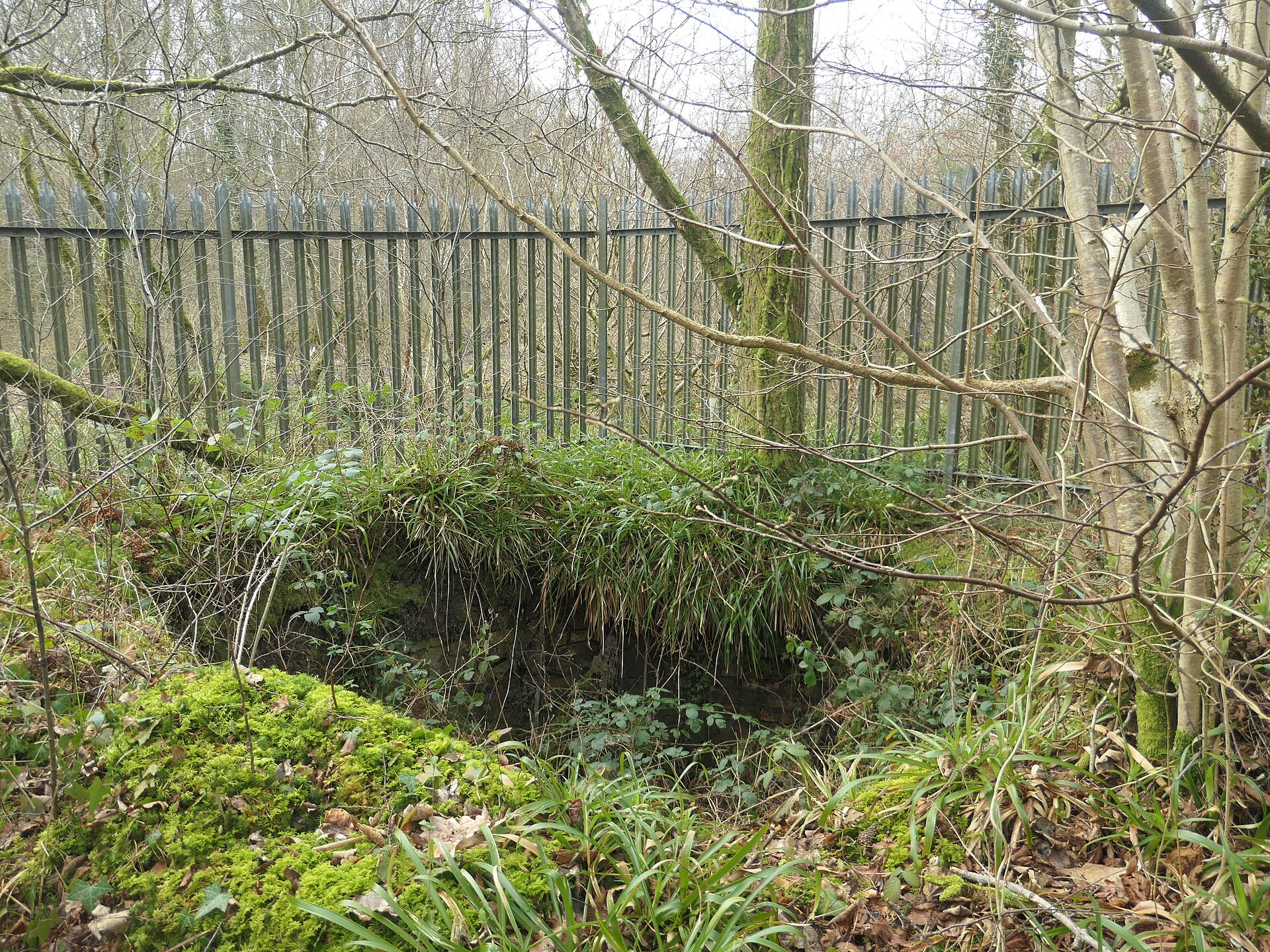
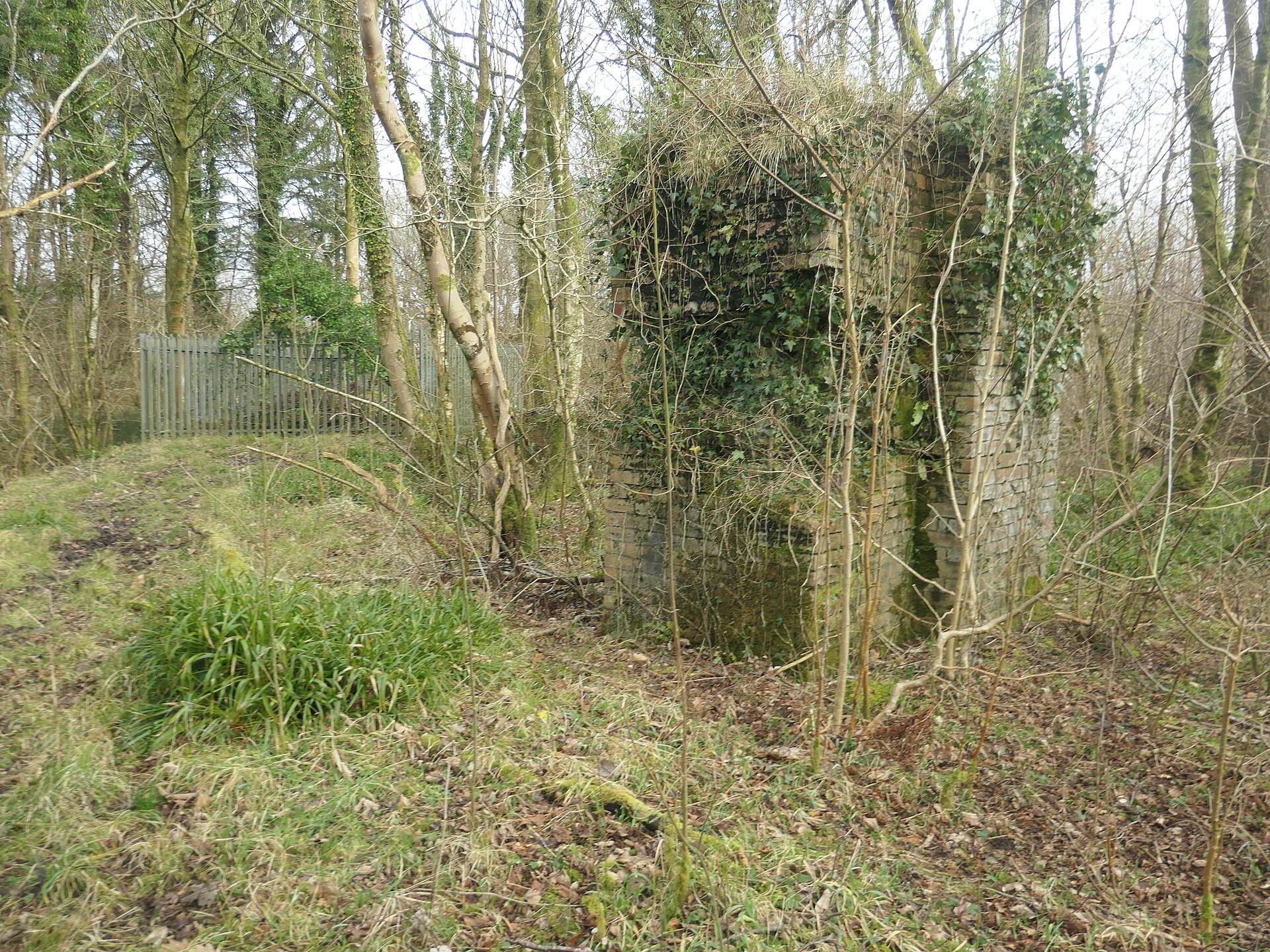
The Robin Hood Pit site survives as ruins in woodland. A visit in March 2025 photographed masonry of the southern shaft, overgrown and fenced off behind steel palisade, and further ruined structures nearby.
Ruined masonry at the Robin Hood Pit, including the southern shaft, fenced and overgrown in woodland at Flimby.
Related mines
- Risehow Colliery — The same company and the same ground: the Flimby & Broughton Moor Coal & Firebrick Co. worked Flimby Colliery in the 1890s and is listed as Risehow’s owner in the 1910s, Risehow coming into production in 1918 nine years after Flimby closed. The 1932 abandonment plan catalogued for Flimby covers ground under Broughton Moor, Dearham, Flimby, Ellenborough and Risehow together.
- St Helen's Colliery, Siddick — St Helen's Nos 1 and 2 pits lay between Seaton and Flimby, and the 1866 royalty agreement for the colliery was made at Flimby.
Nearby mines
- Gillhead Colliery — 0.8 miles (1.2 km) SW
- Risehow Colliery — 1.0 miles (1.6 km) NW
- Buckhill Colliery — 1.6 miles (2.6 km) SE
- Clifton Colliery, Great Clifton — 2.4 miles (3.9 km) S
- Dearham Colliery — 2.4 miles (3.9 km) NE
Straight-line distance, within 9 miles (15 km). Show on the map.
What's uncertain
Points where sources disagree or the record could not be settled; both accounts are kept. All open questions in the archive.
- The Rattler seam was abandoned as unworkable on account of faults. The colliery record dates this 17 February 1898; the catalogue of abandonment plans dates the abandonment of Robin Hood No. 2 in the Rattler to December 1897. (uncertain) 1,2
Recorded claims
Individual factual claims, each attached to the source(s) that support it below. Where sources disagree, both are kept.
- Flimby Colliery belonged to R. Wilson & Co. in the 1880s and to the Flimby & Broughton Moor Coal & Firebrick Co. Ltd in the 1890s. The colliery closed in 1909. 1
- The Robin Hood pit employed 266 in 1894 (214 below ground), 200 in 1896, 384 in 1900 (290 below) and 289 in 1902. By 1905 the colliery employed 53, of whom only nineteen worked underground. 1
- The Rattler seam was abandoned as unworkable on account of faults. The colliery record dates this 17 February 1898; the catalogue of abandonment plans dates the abandonment of Robin Hood No. 2 in the Rattler to December 1897. (uncertain) 1,2
- The Metal, Cannel, Yard and Little Main seams at Robin Hood were abandoned together on 14 November 1908; the seams worked in 1905 were the Cannel Band, Little Main and Yard Band. 1,2
- A plan catalogued in 1928 covers Seaton Moor and Flimby Nos 2 and 3 and Mary, in the Ten Quarters and Metal seams, abandoned in 1868 and then held by Lord Lonsdale at Somerset House, Whitehaven. 2
- Mary Hines, aged 40, a picker and greaser, was crushed by tubs on the surface incline on 28 August 1869. Hers is one of twenty-three deaths recorded at the colliery. 1
- Joseph Fletcher, an incline breaker of 17, was killed on 8 August 1899 while trying to land an empty set of four tubs that had failed to reach the bank-head: a set of eight full tubs on the other end of the rope was set in motion, dashing the empty tubs and Fletcher against the incline wheel. 1
- James Nesbitt, a labourer employed at the brickworks belonging to Flimby Colliery near Maryport, was killed by being run over by a railway wagon on 28 November 1894. 1
- The Durham Mining Museum records no disaster of five or more killed at Flimby Colliery. 1
Photographs & further reading
Owners, output grades, year-by-year employment, the seams worked and abandoned, and the twenty-three recorded deaths with the inquest account of each.
View sourceThe four sets of Flimby plans — Seaton Moor and Flimby of 1868, Robin Hood No. 2 in the Rattler, Robin Hood in the Metal, Cannel, Yard and Little Main, and the 1932 plan covering Broughton Moor, Dearham, Flimby, Ellenborough and Risehow.
View sourceSources
- (primary) Flimby Colliery — Durham Mining Museum
- (primary) Catalogue of Plans of Abandoned Mines for Flimby Colliery — Durham Mining Museum
- (primary) BGS mine plans catalogue: Flimby, Watergate and Seaton Moor — British Geological Survey
Record created: 6 September 2026 · Last researched: 7 September 2026