 MineArchive
Woolley Colliery
| Location | Woolley Colliery village, Darton, near Barnsley, South Yorkshire — 53.5951, -1.5324 (exact) |
|---|---|
| Commodity | Coal |
| Type | Coal |
| Worked | 1869–1987 |
| Maximum depth | 613 yards (the ventilation shaft sunk in 1959–61). |
| Operators | Woolley Coal Company (1854–1894), Fountain and Burnley (1894–1947), National Coal Board (1947–1987) |
Overview
A Barnsley-area colliery established in 1869 that grew into one of the largest pits in Yorkshire, reaching a workforce of 1,900 and a million tons of coal a year at its 1969 peak, and whose site is now the Woolley Grange housing estate.
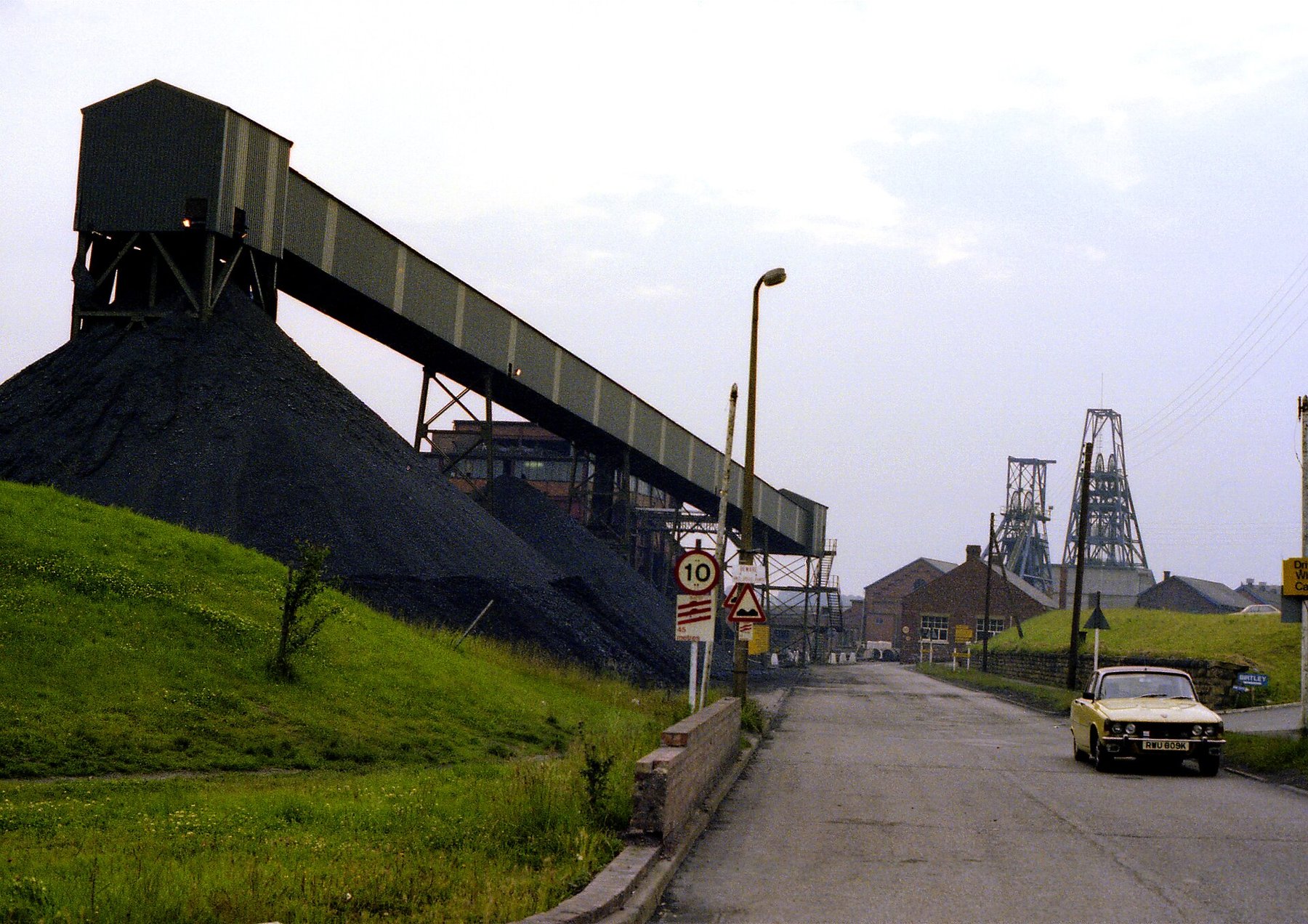
History
Coal had already been worked in the area from as early as 1850, with terraced miners' cottages built in the 1860s, before Woolley Colliery itself was formally established in 1869. A residents' history records the Woolley Coal Company working shallow drifts along Woolley Edge and a shaft at Woolley Warren House from 1854, and the Woolley Coal Co. Ltd buying the colliery in 1867. After further changes of hands it passed in 1894 to Fountain and Burnley, already owners of North Gawber Colliery, who worked it until nationalisation; shafts sunk from 1910 to 1912 at a new site west of the village opened up the deeper seams, and employment rose from 758 in 1896 to 3,080 in 1933. The colliery worked three shafts and drew coal from the Thorncliffe, Fenton and Lidget seams, much of it supplying power generation and coke production, transported out by rail. Woolley was nationalised in 1947 along with most of the rest of the British coal industry, and grew to become one of the largest collieries in Yorkshire, reaching record production of over 1 million tons in 1969 with a workforce of 1,900. In 1947 some 2,400 men produced 650,000 tons; in 1980 the pit employed 1,514 men underground and 428 on the surface, producing around 17,000 tons a week.
The trade unionist Arthur Scargill, who went on to lead the National Union of Mineworkers through the 1984-85 strike, began work at Woolley in 1953, aged 15 — though Woolley's own workforce was, by most accounts, far from the most militant in the coalfield, and Scargill was often at odds with its branch leadership, organising a strike in 1960 over when union meetings were held. In the early 1980s a new drift entrance was driven at Woolley as part of a scheme linking several Barnsley-area mines, collectively known as Denby Drift; the residents' history also records a £40 million NCB investment announced in 1982, including a new coal preparation plant, part of which was destroyed by fire in 1983. Roughly 70 per cent of Woolley's workforce stayed out for the whole of the year-long 1984-85 national miners' strike, after which men from North Gawber were transferred to Woolley, and the colliery ceased operations in 1987. Its buildings were demolished in the early 1990s and the site was redeveloped as the Woolley Grange housing estate. At least four accidents at Woolley each killed two or three men — a shaft rope failure in 1873, roof falls in 1891 and 1906, and a runaway locomotive on the surface sidings in 1924 (see Disasters, below) — and the colliery manager, Herbert Baddeley, died from injuries after an explosion in 1935.
Geology
Woolley first worked the Barnsley seam from its outcrop on Woolley Edge, with a separate Beamshaw pit working the Beamshaw and Winter seams. Shafts sunk from 1910 reached the Haigh Moor, Parkgate and Silkstone seams; by 1954 the colliery was working the Blocking, Parkgate, Silkstone and Thorncliffe seams, and in its later decades the Lidgett, Fenton, Thorncliffe and Silkstone. The Lidgett seam was only about 0.9 metres thick.
Workings
Worked from three shafts, drawing coal from the Thorncliffe, Fenton and Lidget seams. Coal was first taken by drifts into the Barnsley seam on the hillside, with shaft pits following; two shafts to the lower seams were sunk at a new site in 1910–12, a third in 1942 and a ventilation shaft, the deepest at 613 yards, in 1959–61, about a mile from the pit. By 1967 the two coal-winding shafts (Nos. 2 and 3) were fitted with skips able to draw 620 tons an hour, and all production was mechanised, partly by remotely operated longwall faces. Men travelled up to 4,800 metres from the shaft to the face, later cut to 3,700. A new drift entrance was added in the early 1980s.
Closure
Closed in 1987; buildings demolished in the early 1990s. The Woolley Grange residents' history gives the closure date as 22 December 1987, records a £5,000 redundancy bonus offered that month if men stopped resisting closure, and dates the demolition of the washery to February 1993 and the coal preparation plant to July 1993.
What remains
The former colliery site has been redeveloped as the Woolley Grange housing estate. A 2023 plan for a further 115 homes on part of the former colliery land was opposed by residents and ecologists; the land holds a colony of small blue butterflies.
No colliery buildings survive. The pit village of Woolley Colliery, begun with two long stone terraces in the 1860s and known locally as Mucky Woolley, still stands beside the site, though some of its original terraced housing was demolished while the pit was working.
Redevelopment
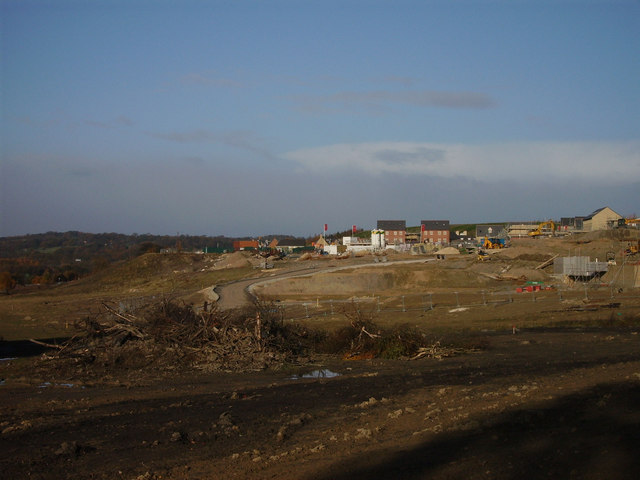
Building of the Woolley Grange estate on the cleared site began around 2003. The estate lies in the City of Wakefield, while the neighbouring colliery village is in Barnsley.
Related mines
- North Gawber Colliery — The two were merged after the strike of 1984 and 1985, North Gawber going into Woolley; the arrangement lasted barely a year before North Gawber closed.
Nearby mines
- Darton Colliery — 1.3 miles (2.2 km) SE
- North Gawber Colliery — 1.5 miles (2.4 km) SE
- East Gawber Colliery — 2.6 miles (4.1 km) SE
- Higham Colliery — 2.5 miles (4.1 km) S
- Bullcliffe Wood Colliery — 2.8 miles (4.5 km) NW, West Yorkshire
Straight-line distance, within 9 miles (15 km). Show on the map.
Disasters & major incidents
-
Woolley Colliery shaft accident, 1873
4 January 1873 · Winding / Shaft Accident · 3 fatalities
On 4 January 1873 three shaftsmen were killed at Woolley Colliery, near Barnsley, when the rope of the scaffold they were working from in the pumping shaft broke and they fell to the bottom. -
Woolley Colliery roof fall, 1891
31 December 1891 · Collapse / Roof Fall · 2 fatalities
On 31 December 1891 two young men were killed by a fall of roof at Woolley Colliery, near Barnsley. -
Woolley Colliery roof fall, 1906
24 July 1906 · Collapse / Roof Fall · 2 fatalities
On 24 July 1906 two colliers were killed instantly at Woolley Colliery, near Barnsley, when the roof fell out of a large pot-hole while they were ripping and walling a new level. -
Woolley Colliery locomotive accident, 1924
9 September 1924 · Haulage / Transport · 2 fatalities
On 9 September 1924 a colliery locomotive holding back twelve empty wagons ran out of control down a wet surface incline at Woolley Colliery, near Barnsley, and two men in its cab were fatally injured.
Culture
- Arthur Scargill at Woolley Colliery (Labour)
Arthur Scargill worked at Woolley Colliery from 1953, aged fifteen, for nineteen years, and served on its NUM branch committee and as its delegate to the Yorkshire Area Council.
What's uncertain
Points where sources disagree or the record could not be settled; both accounts are kept. All open questions in the archive.
- A £40 million NCB investment including a West Side coal preparation plant was announced in 1982, and a fire destroyed part of it in 1983, causing £8 million of damage. (uncertain) 1
Recorded claims
Individual factual claims, each attached to the source(s) that support it below. Where sources disagree, both are kept.
- Woolley Colliery was formally established in 1869, though coal had already been worked in the area from as early as 1850. 1
- Record production of over 1 million tons of coal was reached in 1969, with a workforce of 1,900. 2
- Arthur Scargill, later President of the National Union of Mineworkers, began working at Woolley Colliery in 1953. 2
- Woolley Colliery closed in 1987; its buildings were demolished in the early 1990s and the site was redeveloped as Woolley Grange. 2,1
- Fountain and Burnley, owners of North Gawber Colliery, acquired Woolley in 1894 and owned it until nationalisation in 1947. 1,3
- Shafts to the lower seams were sunk in 1912, further shafts in 1942 and 1959/61, the last the deepest at 613 yards; by 1967 two skip-winding shafts could draw 620 tons an hour. 3
- Employment was 758 in 1896 and 3,080 in 1933 (DMM's 1933 figures, 2,838 and 242, sum to the residents' history's total). 1,3
- At nationalisation 2,400 men produced 650,000 tons; in 1980 the pit employed 1,514 underground and 428 on the surface, producing around 17,000 tons a week. 4,5
- Scargill started at Woolley aged 15 in 1953; the pit was among the most conservative in Yorkshire and he organised a strike there in 1960 over the timing of union meetings. 5
- About 70 per cent of the workforce struck for the full year; afterwards men from North Gawber Colliery were transferred to Woolley. 1,5
- A £40 million NCB investment including a West Side coal preparation plant was announced in 1982, and a fire destroyed part of it in 1983, causing £8 million of damage. (uncertain) 1
- DMM lists four accidents each killing two or three: a pumping-shaft scaffold rope failure (4 January 1873, 3), roof falls (31 December 1891, 2; 24 July 1906, 2) and a runaway surface locomotive (9 September 1924, 2). 3,6,7,8,9
- The BGS / Mining Remediation Authority mine plans catalogue holds plans filed under Woolley Colliery. 10
- A 2006 photograph looks across the old Woolley Colliery pit site to new houses of the Woolley Grange development under construction. 11
- Located at about 53.595 N, 1.532 W. 5
Photographs & further reading
Owners, employment and seams from 1894 to 1954, the NCB's 1967 description, and a roll of men killed at the pit.
View sourceShort account of the later colliery's shafts, seams, travelling distances and output.
View sourceThe colliery, its pit village, Arthur Scargill's years there and the 1984–85 strike.
View sourceSources
- (secondary) The history of Woolley Colliery and Woolley Grange — Woolley Grange Management Company
- (secondary) Woolley Colliery — Subterranea Britannica
- (primary) Woolley Colliery — Durham Mining Museum
- (secondary) Woolley Colliery — Northern Mine Research Society
- (secondary) Woolley Colliery — Wikipedia
- (primary) Disasters – Names: Woolley, 4th January 1873 — Durham Mining Museum
- (primary) Disasters – Names: Woolley, 31st December 1891 — Durham Mining Museum
- (primary) Disasters – Names: Woolley, 24th July 1906 — Durham Mining Museum
- (primary) Disasters – Names: Woolley, 9th September 1924 — Durham Mining Museum
- (primary) BGS / Mining Remediation Authority mine plans catalogue: Woolley Colliery — British Geological Survey
- (observational) Old Woolley Colliery (Geograph photo 280482, 2006) — Geograph Britain and Ireland
Record created: 27 August 2026 · Last researched: 16 September 2026