 MineArchive
Winster Mines
| Location | Winster, Derbyshire — 53.1419, -1.6399 (approximate) |
|---|---|
| Commodity | Lead |
| Type | Metal |
| Worked | by the 17th century–1938 |
Overview
A cluster of lead mines around the Peak District village of Winster, worked from at least Roman times and driving a lead-mining boom that briefly made the village one of Derbyshire's largest towns, before the last of them, Mill Close Mine, closed in 1938.
History
Lead mining around Winster is thought to date back to Roman activity in this part of Derbyshire. A boom from the late 17th century saw the village's population rise to around 2,000 by 1750, and at its height in the mid-18th century Winster may have been the county's fourth-largest town, with 1,563 recorded residents in 1761. Mining here, as across the Derbyshire orefield, was governed by the ancient Barmote Court system, established in 1288 to regulate the lead-mining customs of the area and settle disputes between miners, administered by a barmaster with the help of a jury of miners; Winster's own market hall, first built around 1500 and rebuilt in 1773, served a similar civic role to the Barmote court buildings elsewhere in the orefield.
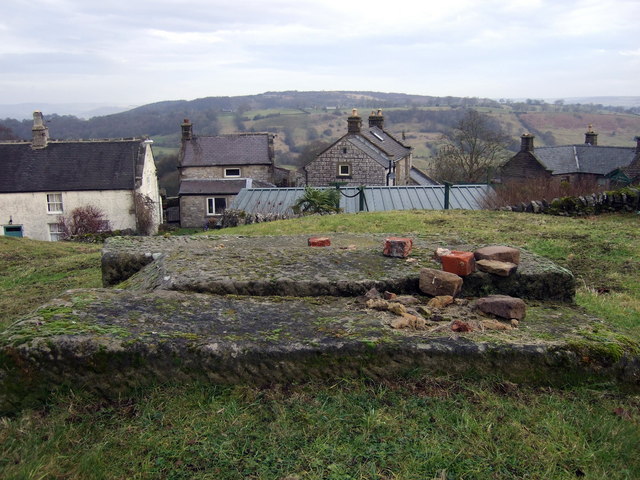
One of the mines on Winster Common, Wesson Mine, was worked for lead until the 1850s; its main shaft, since sealed with stone slabs, descends 81 metres. As mining went deeper through the 19th century, flooding became an increasing problem and forced the closure of many workings. The last mine to remain active was Mill Close, around two miles north-east of the village, which employed a large local workforce until it finally closed in 1938.
Geology
Lead ore (galena) in the Derbyshire orefield's characteristic limestone veins and pipe workings, typical of the wider Peak District lead-mining field.
Workings
Numerous separate shafts and levels worked by generations of individual free miners under Barmote Court customs, rather than a single continuous mine; Wesson Mine's shaft alone reaches 81 metres.
Closure
Individual workings closed piecemeal as flooding worsened through the 19th century; the last surviving mine, Mill Close, closed in 1938.
What remains
Winster today is a small village of around 550 people; its former mining commons and shafts survive as capped or partially open sites, and the Market House (National Trust) and the Miners' Standard public house both recall the village's mining past.
Nearby mines
- Placket Mine — 0.3 miles (0.5 km) W
- Winster Pitts and Drummer's Venture — 0.4 miles (0.6 km) SE
- Wills Founder Mine — 0.5 miles (0.7 km) W
- Portway Lead Mine — 0.8 miles (1.2 km) NW
- Gorseydale Lead Mines — 1.0 miles (1.6 km) SE
Straight-line distance, within 9 miles (15 km). Show on the map.
What's uncertain
Points where sources disagree or the record could not be settled; both accounts are kept. All open questions in the archive.
- Lead mining in the Winster area is thought to date back to Roman activity in this part of Derbyshire. (uncertain) 1
Recorded claims
Individual factual claims, each attached to the source(s) that support it below. Where sources disagree, both are kept.
- Lead mining in the Winster area is thought to date back to Roman activity in this part of Derbyshire. (uncertain) 1
- A boom in mining from the late 17th century saw Winster's population rise to around 2,000 by 1750, with 1,563 residents recorded in 1761, briefly making it one of Derbyshire's largest towns. 1,2
- Lead mining around Winster, as across the Derbyshire orefield, was regulated by the Barmote Court system established in 1288, administered by a barmaster and a jury of miners. 3
- Wesson Mine, on Winster Common, was last worked for lead in the 1850s; its main shaft, now sealed with stone slabs, descends 81 metres. 1
- The last active mine at Winster, Mill Close, around two miles north-east of the village, closed in 1938. 1
Sources
- (secondary) Winster: A Brief History — Winster village website
- (secondary) Winster: A Pretty Lead Mining Village in the Derbyshire Peak District — Let's Go Peak District
- (secondary) Barmote court — Wikipedia
Record created: 27 August 2026 · Last researched: 27 August 2026