 MineArchive
Whittle Colliery
| Location | Newton-on-the-Moor, four and a half miles south of Alnwick, Northumberland — 55.3514, -1.7225 (exact) |
|---|---|
| Commodity | Coal |
| Type | Coal |
| Worked | 1920–March 1987 |
| Maximum depth | A drift mine; no shaft depth applies to the 1965 drift, which ran about 500 metres at 1 in 3. |
| Operators | South Shilbottle Collieries Ltd (1917–1940), Co-operative Wholesale Society Ltd (1940–1947), National Coal Board (1947–1987) |
Overview
A Northumberland drift mine opened in 1920 under South Shilbottle Collieries and worked latterly for household coal. A new drift of about 500 metres at one in three was driven in 1965, in production from 1966. In 1978 an underground roadway joined Whittle to Shilbottle and the two became one; when Shilbottle stopped producing, its men transferred here, taking the workforce to some 1,100. Whittle closed in March 1987.
History
Whittle opened in 1920 under South Shilbottle Collieries Ltd, having had a drift sunk in 1917. It passed to the Co-operative Wholesale Society by the 1940s — the CWS also owned Shilbottle — and to the National Coal Board in 1947. Output was gas, household and steam coal in the 1920s and household coal from 1930 onward; the 1947 return was 55,000 tons.
A new drift about 500 metres long at a gradient of one in three was driven in 1965 and came into production in 1966. In 1978 an underground roadway was driven between Shilbottle and Whittle and the two pits were worked as one. Shilbottle ceased production in the early 1980s with the loss of 700 jobs, and men transferred to Whittle, whose workforce reached about 1,100. A decision to convert to machine cutting was later said by management to have been unviable, and the colliery closed in March 1987.
Geology
The Northumberland coalfield south of Alnwick, worked by drift rather than shaft, latterly for household coal.
Workings
A drift mine throughout. A drift was sunk in 1917 and a second, about 500 metres long at one in three, in 1965, producing from 1966. From 1978 an underground roadway connected the workings to Shilbottle, after which the two were run as a single operation.
Closure
Closed in March 1987 under British Coal. The conversion to machine cutting was afterwards described by management as unviable. The name reappeared in the 1990s attached to Whittle Colliery Ltd, and the site was later the subject of an opencast proposal debated in the Commons in 1998.
What remains
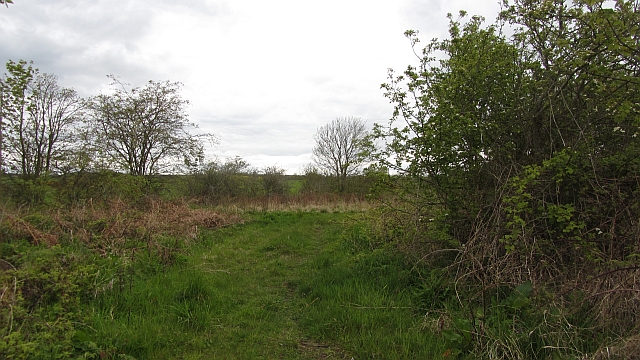
No deep-mine working remains. The site was later worked opencast.
No colliery structure is known to survive.
Related mines
- Framlington Colliery — Held together twice over: South Shilbottle Collieries Ltd owned both in the 1910s — the National Archives holds a single report on the company covering Whittle Pit and Framlington Colliery — and the Co-operative Wholesale Society later held Framlington alongside Whittle and Shilbottle.
- Shilbottle Colliery — Joined underground and then merged: a roadway was driven between the two in 1978 and they were worked as one pit, and when Shilbottle stopped producing its men transferred to Whittle, taking the workforce there to about 1,100. Both were also owned by the Co-operative Wholesale Society before nationalisation.
Nearby mines
- Newton Colliery, Newton-on-the-Moor — 0.6 miles (0.9 km) S
- Shilbottle Colliery — 2.6 miles (4.2 km) E
- Alnwick Moor Bell Pits — 3.6 miles (5.7 km) NW
- Framlington Colliery — 4.1 miles (6.6 km) SW
- Healey Cote Colliery — 5.4 miles (8.7 km) SW
Straight-line distance, within 9 miles (15 km). Show on the map.
Recorded claims
Individual factual claims, each attached to the source(s) that support it below. Where sources disagree, both are kept.
- The colliery opened in 1920 and closed in 1987. 1
- Whittle was owned by South Shilbottle Collieries Ltd in the 1910s and 1920s, by the Co-operative Wholesale Society Ltd by the 1940s, and by the National Coal Board from 1947. 1
- A new drift some 500 metres long at a gradient of one in three was driven in 1965, with production commencing in 1966. An earlier drift had been sunk in 1917. 2
- In 1978 an underground roadway was driven between Shilbottle and Whittle and the two pits became one. When Shilbottle ceased production some 700 jobs were lost and men transferred to Whittle, making a workforce there of about 1,100. 2
- The colliery returned gas, household and steam coal in 1925, household coal from 1930, and 55,000 tons in 1947. 1
Photographs & further reading
The colliery record: opening and closure, the succession of owners from South Shilbottle Collieries through the Co-operative Wholesale Society to the NCB, and the output returns.
View sourceSources
- (primary) Whittle Colliery — Durham Mining Museum
- (secondary) The Amble and District Mining Memorial: Whittle Colliery — The Amble and District Mining Memorial
- (primary) Whittle Colliery (House of Commons debate, 19 October 1998) — Hansard, UK Parliament
Record created: 8 September 2026 · Last researched: 8 September 2026