 MineArchive
Shilbottle Colliery
| Location | Shilbottle, four miles south-south-east of Alnwick, Northumberland — 55.3656, -1.6608 (exact) |
|---|---|
| Commodity | Coal |
| Type | Coal |
| Worked | 1807–1982 |
| Maximum depth | Unknown. |
| Operators | Co-operative Wholesale Society Ltd (1900–1947), National Coal Board (1947–1982) |
Overview
A Northumberland colliery whose Engine Pit was sunk in 1807, worked through a group of shafts — the Engine, East, Long Dyke and Grange pits and the Smoke Staple — over nearly two centuries. In the early twentieth century it was bought for £50 by the Co-operative Wholesale Society, which built a new village of 170 houses and made it the only pit in the area to offer a week’s paid holiday and a pension scheme. It passed to the National Coal Board after the war, was joined underground to Whittle in 1978, and stopped producing in the early 1980s.
History
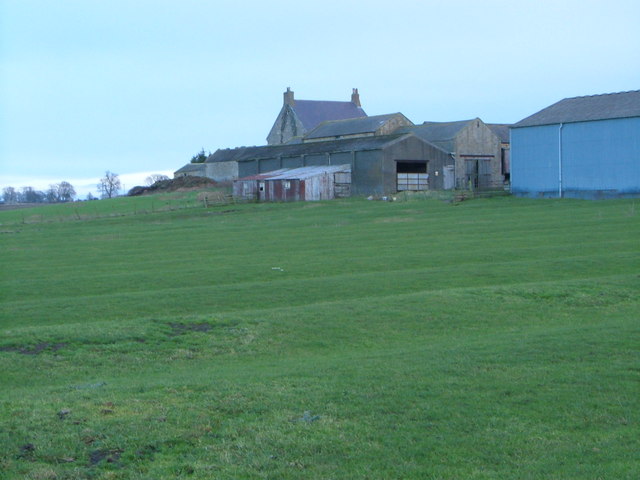
Coal mining began in the district around 1728, and by the end of the eighteenth century six shafts were working around Blue Lodge Farm, also called Colliery Farm. The Engine Pit was sunk in 1807, the Smoke Staple in August 1844 and the East Pit from October 1845; the Grange Pit was sunk from 1921 and drew its first coal in 1925. The Shilbottle seam itself was abandoned in 1926.
In the early twentieth century the colliery was bought for £50 by the English Co-operative Wholesale Society, the federation of consumer co-operatives, which upgraded the site and built a new village of 170 houses including cottages for aged miners. It was the only pit in the area where the workers were given a week’s holiday with pay and a pension scheme. The National Coal Board took over after the Second World War and production continued until the decline of the 1970s. In 1978 an underground roadway was driven to Whittle and the two were worked as one.
Geology
The Northumberland coalfield south of Alnwick. The Shilbottle seam, which gave the colliery its name, was abandoned in 1926.
Workings
A group of shafts rather than a single pit: the Engine Pit sunk 1807, the Smoke Staple from August 1844, the East Pit from October 1845, the Long Dyke Pit, and the Grange Pit sunk from 1921 and producing from 1925. From 1978 the workings were connected underground to Whittle Colliery.
Closure
Accounts differ on the date. The Durham Mining Museum gives 1982; Wikipedia says the pit closed in 1981 and the workforce transferred to Whittle; the Amble mining memorial gives 1982 with the loss of 700 jobs. All agree the men went to Whittle, which itself closed in March 1987.
What remains
Shilbottle is now a village with no working colliery; the CWS-built miners’ housing survives as part of it.
No colliery structure is known to survive.
Related mines
- Framlington Colliery — Both ended up with the Co-operative Wholesale Society, the consumer co-operative federation that owned Shilbottle, Whittle and Framlington together in the years before nationalisation.
- Whittle Colliery — Joined underground and then merged: a roadway was driven between the two in 1978 and they were worked as one pit, and when Shilbottle stopped producing its men transferred to Whittle, taking the workforce there to about 1,100. Both were also owned by the Co-operative Wholesale Society before nationalisation.
Nearby mines
- Whittle Colliery — 2.6 miles (4.2 km) W
- Newton Colliery, Newton-on-the-Moor — 3.1 miles (4.9 km) SW
- Togston Colliery — 4.5 miles (7.3 km) SE
- Longhoughton Quarry — 4.6 miles (7.4 km) N
- Ratcheugh Quarry — 4.6 miles (7.4 km) N
Straight-line distance, within 9 miles (15 km). Show on the map.
What's uncertain
Points where sources disagree or the record could not be settled; both accounts are kept. All open questions in the archive.
- Accounts differ: the Durham Mining Museum gives 1982, Wikipedia 1981. Both agree the workforce transferred to Whittle. (disputed) 1,2
Recorded claims
Individual factual claims, each attached to the source(s) that support it below. Where sources disagree, both are kept.
- The colliery was worked through several shafts: the Engine Pit, sunk 1807; the Smoke Staple, sunk from 22 August 1844; the East Pit, sunk from 14 October 1845; the Long Dyke Pit; and the Grange Pit, sunk from 1921 with first coal in 1925. 1
- In the early twentieth century Shilbottle Colliery was bought for £50 by the English Co-operative Wholesale Society, which upgraded the site and built a new village of 170 houses including cottages for aged miners. 2
- Shilbottle was the only pit in the area where workers were given a week’s holiday with pay and a pension scheme. 2
- Coal mining began in the district around 1728, and by the end of the eighteenth century six shafts were operating around Blue Lodge Farm, also known as Colliery Farm. 2
- The Shilbottle seam was abandoned in 1926. 1
- Accounts differ: the Durham Mining Museum gives 1982, Wikipedia 1981. Both agree the workforce transferred to Whittle. (disputed) 1,2
Photographs & further reading
The colliery record: the five named pits with their sinking dates and grid references, the abandonment of the Shilbottle seam in 1926, and the output and employment returns.
View sourceSources
- (primary) Shilbottle Colliery — Durham Mining Museum
- (secondary) Shilbottle — Wikipedia
- (primary) Shilbottle Coal Co. — Durham Mining Museum
Record created: 8 September 2026 · Last researched: 8 September 2026