 MineArchive
Wheal Clifford
| Location | Fernsplatt, near United Downs, Gwennap, Cornwall — 50.2340, -5.1620 (approximate) |
|---|---|
| Commodities | Copper, Tin |
| Type | Metal |
| Worked | By 1835–1861 |
| Maximum depth | Unknown. |
| Operators | Clifford Amalgamated Mines (1861–1870), Mount Wellington Ltd (1935–?) |
Overview
A Gwennap copper mine near Fernsplatt that produced over 50,000 tons of copper ore in its own right between 1835 and 1861, notable for striking the United Mines group's punishing 'Hot Lode', before merging into Clifford Amalgamated Mines and eventually giving its name to that combined operation.
History
Wheal Clifford, situated near Fernsplatt about a kilometre north-east of United Downs, produced 50,167 tons of 6.5%-grade copper ore and 365 tons of black tin during its independent working life between 1835 and 1861. Like its neighbours in the wider United Mines group -- itself founded around 1780 from the amalgamation of Ale and Cakes Mine, Wheal Cupboard and Poldory, and rebuilt into profitability in the 1820s by the engineer John Taylor -- Wheal Clifford struck the group's notorious Hot Lode, where water at around 100 degrees Fahrenheit poured continually over the men working it; conditions were so extreme that miners could barely manage an hour's work in a day, driving costs up sharply and cutting productivity. In 1861 a large combination was effected, bringing together the Consolidated Mines, United Mines, Wheal Clifford itself, Ting Tang, Wheal Squire and other workings into a single company that took the name Clifford Amalgamated Mines -- Wheal Clifford's own name surviving as the identity of the combined operation. Over the following eight years this combined company raised 105,000 tons of copper ore, selling for over £473,000, alongside further income from black tin, blende, iron pyrites and arsenic; between 1861 and 1872 the wider combination produced 94,728 tons of copper ore, 7 tons of arsenic, 5,550 tons of pyrite and 1,011 tons of zinc ore in total. The venture became increasingly unprofitable as global metal prices fell, and closed around 1870.
Geology
Copper and tin lodes near Fernsplatt, about a kilometre north-east of United Downs in Gwennap.
Workings
Struck the United Mines group's Hot Lode, where water at around 100 degrees Fahrenheit poured continually over working miners, severely limiting how long men could work at any one time.
Closure
Merged into Clifford Amalgamated Mines in 1861, which itself closed around 1870 as global metal prices fell. The mining rights over Wheal Clifford passed to Mount Wellington Ltd in 1935 with those of United, Consolidated and Wheal Andrew.
What remains
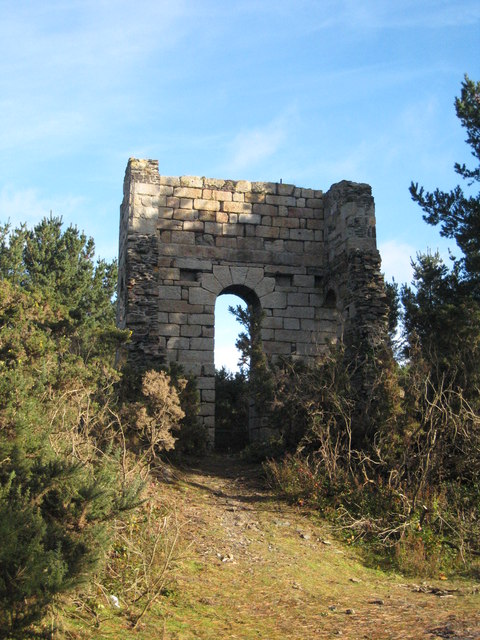
Engine house remains survive on the site, on high ground near Fernsplatt.
Engine house remains.
Related mines
- Consolidated Mines — Merged with Wheal Clifford and United Mines into Clifford Amalgamated Mines in 1861.
- Mount Wellington Mine — Mount Wellington Ltd acquired the rights over Wheal Clifford in 1935.
- United Mines — Absorbed into the wider United Mines group; its own Hot Lode discovery was one of the group's most productive.
- Wheal Andrew — Both became part of United Mines and passed together to Mount Wellington Ltd in 1935.
Nearby mines
- Consolidated Mines — 0.1 miles (0.1 km) NW
- Wheal Baddon — 0.2 miles (0.3 km) W
- Wheal Squire — 0.2 miles (0.3 km) SW
- Wheal Maid — 0.3 miles (0.5 km) NW
- Copper Hill Mine — 0.4 miles (0.6 km) SW
Straight-line distance, within 9 miles (15 km). Show on the map.
Recorded claims
Individual factual claims, each attached to the source(s) that support it below. Where sources disagree, both are kept.
- Wheal Clifford produced 50,167 tons of 6.5%-grade copper ore and 365 tons of black tin during its independent working life between 1835 and 1861. 1
- Wheal Clifford struck the United Mines group's Hot Lode, where water at around 100 degrees Fahrenheit poured continually over the miners working it, so severely limiting working time that men could barely manage an hour's work in a day. 2
- In 1861 Wheal Clifford was combined with the Consolidated Mines, United Mines, Ting Tang, Wheal Squire and others into Clifford Amalgamated Mines -- taking Wheal Clifford's own name -- which raised 105,000 tons of copper ore worth over £473,000 in its first eight years, before closing around 1870 as global metal prices fell. 1
- Consolidated Mines ceased working in 1857, and in 1861 amalgamated with the neighbouring United Mines and Wheal Clifford to form Clifford Amalgamated Mines, which continued, unprofitably, until 1870. 3
- The Clifford Amalgamated group's copper-ore abandonment plan in the British Geological Survey catalogue (OMR103) lists Wheal Clifford by name among the setts it covers, alongside Consolidated, United, Ale and Cakes, Poldory, Wheal Andrew and Wheal Cupboard. 4
- In 1935 Mount Wellington Ltd, backed by the British Non-Ferrous Mining Corporation, acquired the rights on United and Consolidated Mines, Wheal Clifford and Wheal Andrew. 5
- Wheal Clifford produced 50,167 tons of 6.5% copper ore and 365 tons of black tin during the years 1835-61; at its peak the United Mines group had 80 miles of underground workings and 22 engines. 6
Photographs & further reading
A fuller account of the wider United Mines/Clifford Amalgamated Mines group Wheal Clifford gave its name to.
View sourceSources
- (secondary) Wheal Clifford Mine, Cornwall — Cornwall Calling
- (secondary) United Mines, Gwennap Cornwall — Cornwall Calling
- (secondary) Consolidated Mines — Wikipedia
- (primary) Mine plan: Clifford Amalgamated Consolidated and United ... Wheal Fortune ... (abandonment plan, Copper Ore, 1870) — BGS / Mining Remediation Authority mine plans catalogue
- (secondary) Mount Wellington Tin Mine — Wikipedia
- (secondary) United Mines — Grace's Guide to British Industrial History
Record created: 30 August 2026 · Last researched: 24 September 2026