 MineArchive
Werntarw Colliery
| Also known as | Wern Tarw Colliery |
|---|---|
| Location | Wern Tarw, near Pencoed, Bridgend — 51.5508, -3.4941 (approximate) |
| Commodity | Coal |
| Type | Coal |
| Worked | Drift 1900 (abandoned c. 1913); reopened 1915, pits 1920–28 August 1964 |
| Maximum depth | 730 feet 3 inches (No. 1 pit) |
| Operators | Meiros Collieries Limited (1915–1935), Cardiff and Ogmore Collieries Limited (1907–1913), South Wales Coalite Company Limited (1936–1946), National Coal Board (1947–1964) |
Overview
A colliery on the southern rim of the coalfield near Pencoed, opened in 1915 by the Meiros Collieries Limited after an earlier drift of 1900 had failed, with a pit sunk 730 feet in 1920. In 1951 the Coal Board's plan to move 87 of its men six miles to Llanharan brought 15,000 miners out on strike in sympathy, the worst disruption in the South Wales coalfield since nationalisation. Werntarw outlived Llanharan by two years, and was closed on 28 August 1964 after heating in the Bute seam turned into a fire.
History
The first Werntarw drift was started in 1900 by W. W. Lewis and had gone from the Lists of Mines by 1904; it passed to the Cardiff and Ogmore Collieries Limited, a company registered in January 1907 with 30,000 pounds of capital to take up mineral leases here, which employed 51 men in 1909 and 21 in 1911 before the old Werntarw was abandoned about 1913. The colliery proper was opened in 1915 by the Meiros Collieries Limited, working drifts from 1915 and pits from 1920; the No. 1 pit was sunk to 730 feet 3 inches. E. McIntyre managed it in 1918 and J. Barrie in 1923. By 1935 the owner was the Meiros Collieries (1931) Limited, with 360 men underground and 60 on the surface working the No. 3 Rhondda and Six Feet seams; the company, whose only mine this was, was run from Exchange Buildings in Cardiff by Rees Rees and H. G. Roberts. The South Wales Coalite Company Limited appears to have held the colliery from then until nationalisation; D. E. Miles managed it in 1938 and 1945. On nationalisation in January 1947 Wern Tarw went into the National Coal Board's South Western Division, No. 2 Area, South Group. In May and June 1951 the Board proposed to transfer 87 men from Wern Tarw to Llanharan, six miles away. The lodge's opposition failed to win an official area strike but brought 15,000 men out in sympathy -- the most serious disruption in the coalfield since 1947. Llanharan closed in August 1962 despite nine million pounds of investment, and Wern Tarw outlived it. In February 1961 the colliery's Hafod Slant ran 1,900 yards in from the outcrop, driven down at one in three, and had been stopped in its lower reaches by difficult ground. In August 1964 heating in the Bute seam in the B1 district turned into a fire and the workings were sealed off 120 yards from the pit bottom, the men being transferred temporarily to the Cwm and National pits.
Geology
Eighteen coal seams lay within 1,200 feet of vertical ground here, totalling 97 and a half feet of coal at an average of five feet five inches. The Yard seam, called the Six Feet at this colliery, was worked extensively at 60 to 66 inches, along with the No. 3 Rhondda; the Bute seam was the colliery's undoing.
Geological setting: Sedimentary Beds and Seams (well documented example)
Workings
Drifts from 1915 and pits from 1920, the No. 1 pit sunk to 730 feet 3 inches. The Hafod Slant, measured in February 1961, ran 1,900 yards from the outcrop of the Hafod seam at a gradient of one in three until difficult ground stopped it.
Closure
Heating in the Bute seam in the B1 district turned into a fire in August 1964; the workings were sealed off 120 yards from the pit bottom and the men were moved temporarily to the Cwm and National collieries. The National Coal Board closed the colliery officially on 28 August 1964 because of heavy gas emissions and the increasing risk of fire.
What remains
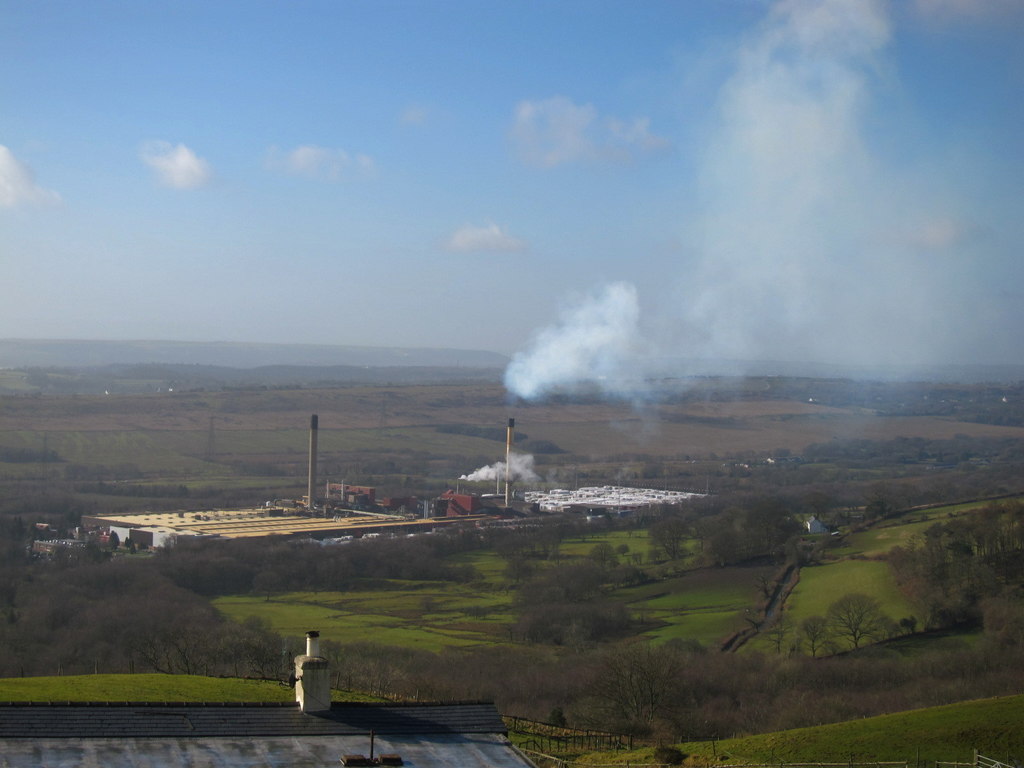
A rockwool factory occupies the colliery site north of Pencoed.
Nothing of the colliery survives on the site, which is covered by the rockwool plant.
Redevelopment
An industrial plant making rockwool insulation stands on the colliery site.
Nearby mines
- Glyn Colliery, Tonyrefail — 4.3 km E, Rhondda Cynon Taf
- Barrow Colliery, Bryncethin — 4.9 km W
- Tylechafach Colliery — 5.6 km NE, Rhondda Cynon Taf
- Llanharry Iron Mine — 5.9 km SE, Rhondda Cynon Taf
- Wyndham Western Colliery — 6.3 km NW
Straight-line distance, within 15 km. Show on the map.
People
- W. W. Lewis · owner, 1900–1904 — Started the first Werntarw drift in 1900; it had left the Lists of Mines by 1904.
- D. E. Miles · manager, 1938–1954 — Manager of Werntarw in 1938 and 1945 and still in charge in 1954.
Recorded claims
Individual factual claims, each attached to the source(s) that support it below. Where sources disagree, both are kept.
- The first Werntarw drift was started in 1900 by W. W. Lewis and had left the Lists of Mines by 1904; the Cardiff and Ogmore Collieries Limited, registered in January 1907, employed 51 men here in 1909 and 21 in 1911 before the old drift was abandoned about 1913. 1
- The colliery was opened in 1915 by the Meiros Collieries Limited, with drifts from 1915 and pits from 1920, the No. 1 pit sunk to 730 feet 3 inches. 2
- By 1935 the owner was the Meiros Collieries (1931) Limited, whose only mine this was, with 360 men underground and 60 on the surface working the No. 3 Rhondda and Six Feet seams; the South Wales Coalite Company Limited held it from then until nationalisation. 2
- The Coal Board's proposal in May and June 1951 to transfer 87 men from Wern Tarw to Llanharan, six miles away, brought 15,000 men out on strike in sympathy -- the most serious disruption in the coalfield since 1947 -- although the lodge failed to obtain an official area strike. 2,1
- Heating in the Bute seam turned into a fire in August 1964 and the workings were sealed 120 yards from the pit bottom; the colliery was closed on 28 August 1964 because of heavy gas emissions and the increasing fire risk. 2
Photographs & further reading
The earlier drift and the Cardiff and Ogmore company, the 1951 transfer dispute and the colliery's last years, read through the Internet Archive.
View sourceSources
- (secondary) Werntarw Colliery — Northern Mine Research Society (Internet Archive)
- (secondary) Werntarw colliery (Welsh Coal Mines, via the Internet Archive) — Welsh Coal Mines
Record created: 20 September 2026 · Last researched: 20 September 2026