 MineArchive
Raglan Colliery
| Also known as | Raglan Collieries |
|---|---|
| Location | Heol-y-Cyw, near Pencoed and Bryncethin, Bridgend — 51.5471, -3.5154 (approximate) |
| Commodity | Coal |
| Type | Coal |
| Worked | c. 1900–15 June 1935 |
| Maximum depth | Unknown. |
| Operators | Hall Hedley (?–1904), Hedley's Collieries Limited (1904–1916), Raglan Collieries Limited (1916–1935) |
Overview
A group of at least four drifts at Heol-y-Cyw, near Pencoed, opened by Hall Hedley of Pontardawe and worked from about 1916 by the Raglan company. In 1926 one of its men led the breakaway back to work that grew into the Miners' Industrial Union, and in 1929 its men struck rather than be forced to join it. It closed for losses in 1935.
History
Raglan Colliery was a series of at least four drifts at Heol-y-Cyw, near Pencoed and Bryncethin. It was working by 1900, owned and run by Hall Hedley of Pontardawe. The No. 2 drift, known as the Bryncethin, worked the Field Vein, the upper part of the No. 2 Rhondda seam, 84 inches of mixed coal and dirt; the No. 4 was driven on the site of the old South Glamorgan colliery into the Pentre seam, here called the Lantern, up to 83 inches thick. The Hafod seam and a little of the No. 3 Rhondda were also worked. In 1903, with more than 200 men and boys, most of whom walked nearly three miles to work, new houses at Heol-y-Cyw stood empty for want of drinking water. In April 1904 the colliery passed to a limited company, Hedley keeping a large interest, when it employed about 250 and raised some 250 tons a day; by 1907 the firm had built about a score of new houses. Under H. V. Thornley it employed 427 men in 1913, and its gas and bunker coal was shipped as 'Raglan'.
On 15 January 1903 a fall of roof killed two colliers working together (see Disasters, below). Other deaths were single: in 1902 a labourer was strangled hanging from a stable door and a 15-year-old was run over by drams on the drift; in December 1903 a 12-year-old oil boy, illegally employed, was run over by empty trams; and in 1911 an overman, W. J. Hawkins, was killed by two tons of clay while cutting a place for a fan.
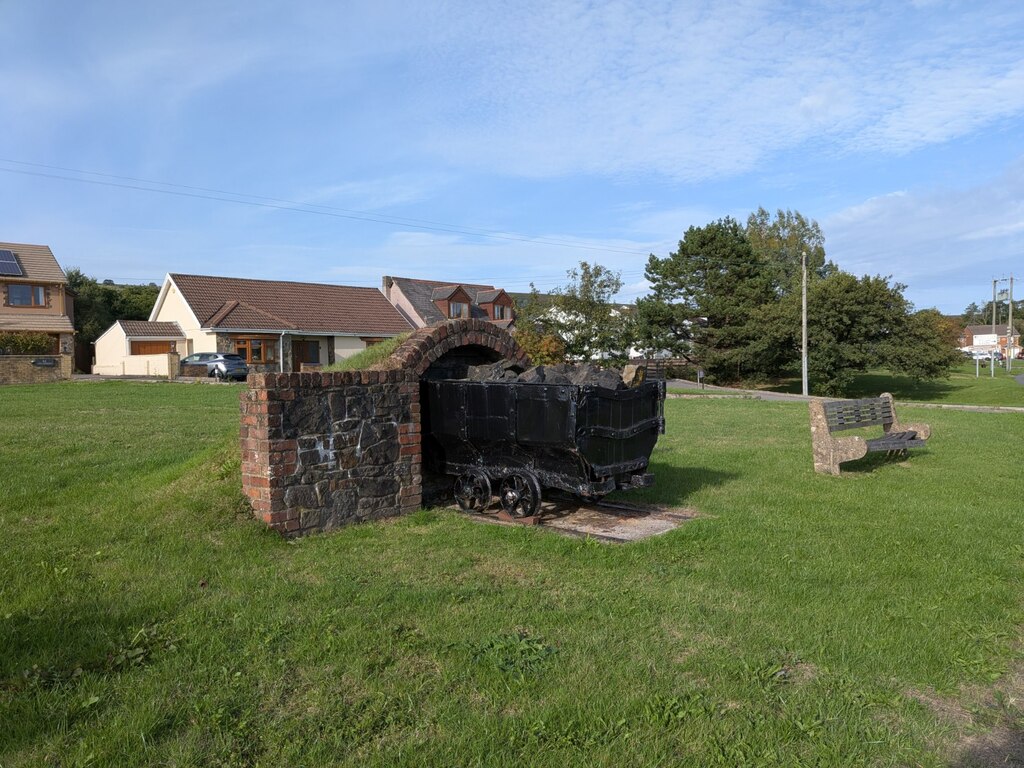
By 1917 the Raglan Collieries Company owned the No. 4 drift and the neighbouring Brynwith, and stayed outside the coal owners' association; there had been trouble over sub-contracting and non-unionism at both collieries in 1909. In September 1920 the Spion Kop slant broke into an underground lake and flooded, and 300 men had to rush out. During the 1926 lockout one of Raglan's men, William Gregory, broke from the South Wales Miners' Federation and led some men back to work, later becoming secretary of the South Wales Miners' Industrial Union. On 19 August 1929 the men struck when the management threatened to sack anyone who would not join the Industrial Union; 95 per cent backed the Federation, massed at the gates, and won its recognition. A washery was built from December 1926. In 1934 the Member for Ogmore raised in Parliament that Raglan men were being made to work long hours on pain of dismissal. At its annual meeting in July 1935 the company said it had closed Raglan for its losses, saving £26,000 a year; the No. 4 drift's abandonment plan is dated 15 June 1935. Welsh Coal Mines says it was kept for pumping until 1943. Stone from the Raglan engine house was used to build the village's miners' memorial.
Geology
The Field Vein (upper No. 2 Rhondda) at 84 inches of mixed coal and dirt in the No. 2 drift; the Pentre seam, locally the Lantern, up to 83 inches in the No. 4; with the Hafod, a little No. 3 Rhondda (34 inches) and the Malthouse.
Workings
At least four drifts: No. 2 (the Bryncethin), No. 4 on the site of the old South Glamorgan colliery, the Spion Kop slant and others; a washery from 1926.
Closure
Closed by the company in 1935 because of its losses; the No. 4 drift was abandoned on 15 June 1935. Welsh Coal Mines says the colliery was kept for pumping until 1943.
What remains
Unknown.
Redevelopment
Unknown.
Related mines
- Brynwith Colliery — Neighbouring workings at Heol-y-Cyw under the same owners, Hedley's and then the Raglan company.
Nearby mines
- Brynwith Colliery — 0.8 miles (1.2 km) N
- Werntarw Colliery — 0.9 miles (1.5 km) E
- Cwmciwc Colliery — 2.0 miles (3.2 km) E, Rhondda Cynon Taf
- Barrow Colliery, Bryncethin — 2.1 miles (3.4 km) W
- Brynna Colliery — 2.4 miles (3.8 km) E, Rhondda Cynon Taf
Straight-line distance, within 9 miles (15 km). Show on the map.
Disasters & major incidents
-
Raglan Colliery roof fall, 1903
15 January 1903 · Collapse / Roof Fall · 2 fatalities
At about half past ten on the night of Thursday 15 January 1903 a fall of rock several tons in weight came down on two colliers holing under the No. 3 Rhondda seam at Hedley's Raglan Colliery, Heol-y-Cyw, killing George Britten, 32, and John Leyshon, 18. Men in the next stall saw it fall; both were dead when they were dug out after midnight.
What's uncertain
Points where sources disagree or the record could not be settled; both accounts are kept. All open questions in the archive.
- It was maintained for pumping until 1943. (uncertain) 1
Recorded claims
Individual factual claims, each attached to the source(s) that support it below. Where sources disagree, both are kept.
- Raglan was a series of at least four drifts; the No. 2 was known as the Bryncethin. 1,2
- In April 1904 the colliery passed from Hall Hedley to a limited company; it employed about 250. 3
- It employed 427 men in 1913 under H. V. Thornley. 1,2
- In September 1920 the Spion Kop slant hit an underground lake and flooded; 300 men had to rush out. 2
- On 19 August 1929 the men struck when threatened with dismissal for not joining the Miners' Industrial Union. 2
- The No. 4 drift was abandoned on 15 June 1935. 2,4
- It was maintained for pumping until 1943. (uncertain) 1
Photographs & further reading
Ray Lawrence's account of the drifts, owners, workforce and the 1926 and 1929 union disputes.
View sourceA section on Raglan and the Brynwyth slant on the Llanharan page, with grid references for the drifts.
View sourceSources
- (secondary) Llanharan Colliery - Welsh Coal Mines — Welsh Coal Mines
- (secondary) NMRS: Raglan Colliery, Heol-y-Cyw — Northern Mine Research Society
- (primary) Weekly Mail, 9 April 1904: Raglan Colliery, Heolycyw — Welsh Newspapers Online (National Library of Wales)
- (primary) BGS / Mining Remediation Authority mine plan: RAGLAN, NO 4 DRIFT (No 2 Rhondda, abandoned 15 June 1935) — British Geological Survey
- (observational) Geograph: Heol-y-cyw miners memorial — Geograph Britain and Ireland
- (primary) BGS / Mining Remediation Authority mine plan: RAGLAN NO 1 DRIFT, RAGLAN NO 2 DRIFT, HEOL LAETHOG DRIFT (No 3 Rhondda) — British Geological Survey
- (primary) BGS / Mining Remediation Authority mine plan: RAGLAN NO 4 (Malthouse (No 2 Rhondda), abandoned 1935) — British Geological Survey
- (primary) Evening Express, 21 January 1903: Raglan Colliery accident — Welsh Newspapers Online (National Library of Wales)
- (primary) Glamorgan Gazette, 14 May 1909: Dispute at Brynwith — Welsh Newspapers Online (National Library of Wales)
- (primary) NMRS deaths database: George Britten, Raglan, 15 January 1903 — Northern Mine Research Society
- (primary) NMRS deaths database: W. J. Hawkins, Raglan No. 4, 11 September 1911 — Northern Mine Research Society
- (primary) The Glamorgan Gazette, 18 October 1907: Heolycyw (colliery progress) — Welsh Newspapers Online (National Library of Wales)
- (primary) Weekly Mail, 23 May 1903: Water question at Heolycyw — Welsh Newspapers Online (National Library of Wales)
- (secondary) 1909 fatalities — Welsh Coal Mines
- (secondary) Mining fatalities, 1903 - Welsh Coal Mines — Welsh Coal Mines
- (secondary) Welsh coal mining fatalities, 1902 — Welsh Coal Mines
Record created: 11 October 2026 · Last researched: 11 October 2026