 MineArchive
Warren Moor Mine
| Location | Kildale, North Yorkshire — 54.4710, -1.0370 (exact) |
|---|---|
| Commodity | Iron |
| Type | Iron |
| Worked | 1866–1874 |
| Maximum depth | Shaft-sinking attempts were unsuccessful; the ironstone was instead worked by drift mining into a seam 5 feet 1 inch (1.55 m) thick, split by a shale band roughly a foot and a half thick. |
| Operators | John Watson and partners (1866–1868), Leven Vale Company (1872–1874) |
Overview
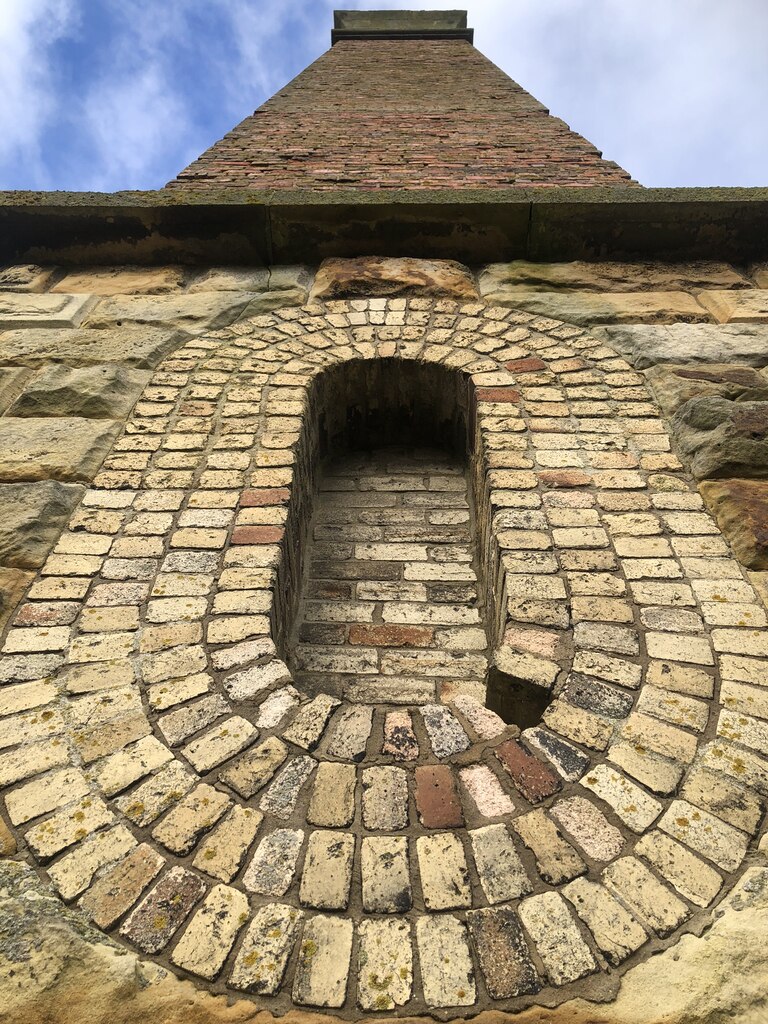
Warren Moor Mine was a short-lived ironstone mine on the North York Moors near Kildale, worked from 1866 to 1874 by two successive operators, neither of whom made it profitable. Its unused chimney, built in 1856-57 before mining even began, is the only surviving example of its kind associated with Victorian ironstone mining anywhere in the UK.
History
The site at Warren Moor was surveyed by the Bell Brothers in 1857 using exploratory boreholes, but the firm declined to develop it, leaving behind an unused chimney built in 1856-57 in anticipation of a mine that did not yet exist. A railway spur was later built connecting the site to what is now the Esk Valley Line. In 1866, John Watson and partners took a 42-year lease and began working the ironstone by drift mining, since attempts to sink a shaft were unsuccessful; the seam itself was only 5 feet 1 inch thick, split by a shale band, and yielded ore of around 26% iron content -- markedly poorer than the roughly 50% achieved at nearby Rosedale. The venture was in financial trouble by 1867, and the Kildale Estate had reacquired the land by June 1868. The Leven Vale Company took over in 1872, building miners' housing and planning to expand operations, but a slump in iron prices in 1873 pushed the company into liquidation by August 1874, ending mining at the site for good. The miners' cottages built by the Leven Vale Company were demolished in 1927, their stone reused in rebuilding Kildale's village hall. Further exploratory boreholes were drilled in 1913, but no further working followed.
Geology
Ironstone of the Cleveland field on the North York Moors near Kildale.
Workings
The ironstone bed was worked by drift mining rather than through a shaft, after attempts to sink one failed. The seam's ore averaged only around 26% iron content, well below the roughly 50% achieved at the nearby, larger Rosedale ironstone workings.
Closure
Mining ended in August 1874, when the Leven Vale Company went into liquidation following a slump in iron prices in 1873.
What remains
The site was remediated and made safe during the 2010s. The 1856-57 chimney survives -- the only one left in the UK associated with Victorian ironstone mining -- alongside mineshaft remains, ruins of a boiler and pump house, and the trackbed of the former railway spur.
A 64-foot (20 m) Grade II listed chimney, built of sandstone blocks faced in white firebrick at its base and red brick above, together with mineshaft remains, boiler and pump house ruins, and the eastern trackbed.
Redevelopment
The site was remediated and made safe throughout the 2010s for public access; the former workings are known to have polluted the nearby River Leven.
Nearby mines
- Commondale Quarry — 2.6 miles (4.1 km) E
- Belman Bank Alum Works — 2.9 miles (4.7 km) N
- Roseberry Mine — 3.3 miles (5.3 km) NW
- Belmont Mine — 3.6 miles (5.8 km) N
- Cliff Rigg Quarry — 3.6 miles (5.8 km) W
Straight-line distance, within 9 miles (15 km). Show on the map.
Recorded claims
Individual factual claims, each attached to the source(s) that support it below. Where sources disagree, both are kept.
- The ironstone bed at Warren Moor was only 5 feet 1 inch thick and yielded ore of around 26% iron -- markedly poorer than the roughly 50% achieved at the nearby Rosedale ironstone workings, a key reason the venture never became profitable. 1
- The mine's 1856-57 chimney, built before working even began, is the only surviving example in the UK specifically associated with Victorian ironstone mining, and is Grade II listed. 1,2
- The Leven Vale Company, which took over the mine in 1872, was forced into liquidation in August 1874 after a slump in iron prices, ending mining at Warren Moor for good. 1
Photographs & further reading
The Geograph photo page for the surviving 1856-57 chimney, with further contributor notes on the site and its condition.
View sourceSources
- (secondary) Warren Moor Mine — Wikipedia
- (primary) Warren Moor Ironstone Mine, Kildale — North York Moors National Park Authority
Record created: 1 September 2026 · Last researched: 1 September 2026