 MineArchive
Walsall Wood Colliery
| Location | Walsall Wood, Staffordshire — 52.6320, -1.9310 (approximate) |
|---|---|
| Commodity | Coal |
| Type | Coal |
| Worked | 1874–1964 |
| Maximum depth | The Deep Coal seam was reached at 1,677 feet in 1877, then the deepest shaft in the Cannock Chase coalfield. |
| Operators | Pelsall Coal & Iron Co. (?–1894) |
Overview
A Cannock Chase coalfield colliery sunk from 1874 by a group of Walsall businessmen with no prior mining experience, reaching the deepest shaft in the coalfield at the time before closing in 1964; a fatal roof collapse in 1956 killed four men.
History
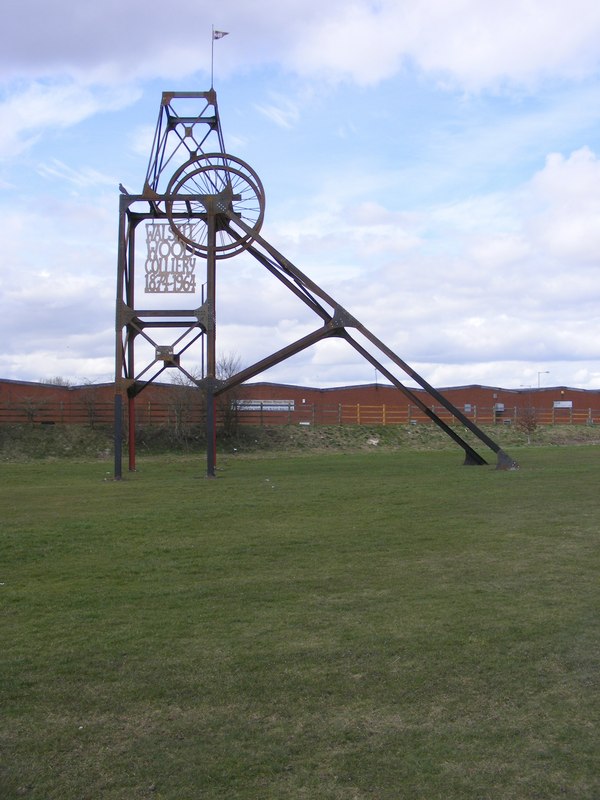
Walsall Wood Colliery was set up by a group of wealthy Walsall businessmen with no previous experience of mining, leasing the land from the Earl of Bradford; shaft sinking began in 1874. The Deep Coal seam was reached in 1877 at 1,677 feet, making the shaft the deepest in the Cannock Chase coalfield at the time, though production did not actually begin until 1879. The colliery expanded in 1894 by purchasing the neighbouring Pelsall Colliery from the Pelsall Coal & Iron Co. On 9 October 1956, a junction in the Charles Seam -- previously partially collapsed and only temporarily supported by a hollow wooden chock -- gave way without warning, trapping a work team under fallen beams and steel joists; four men died and a fifth, Lionel Walker, was freed alive after some seven hours by manager George Schofield and colleagues Henry Joiner and Ted Bevan, who were later awarded British Empire Medals for the rescue (see Disasters, below). The colliery finally closed on 30 October 1964, once its economically recoverable coal reserves were exhausted. A memorial pithead sculpture by the artist Luke Perry was erected on the site in 2010, next to what is now Oak Park Leisure Centre.
Geology
Coal of the Cannock Chase field: the Deep Coal seam, reached in 1877 at 1,677 feet, the deepest shaft then in the coalfield.
Workings
Sunk from 1874, reaching the Deep Coal seam at 1,677 feet in 1877; expanded in 1894 with the purchase of the neighbouring Pelsall Colliery.
Closure
Closed on 30 October 1964, once its economically recoverable coal reserves were exhausted.
What remains
A memorial pithead sculpture by the artist Luke Perry was erected on the site in 2010, standing today next to Oak Park Leisure Centre.
A 2010 memorial pithead sculpture; no original colliery structures are known to survive.
Related mines
- Pelsall Hall Colliery — Both were South Staffordshire pits on the same shallow, long-worked coalfield north of Walsall; Pelsall Hall is named on the Walsall Wood record, which is how it came into this archive.
Nearby mines
- Aldridge Colliery — 0.9 miles (1.5 km) S
- Pelsall Hall Colliery — 1.9 miles (3.0 km) W, West Midlands
- Grove Colliery — 2.8 miles (4.5 km) N
- Park Lime Pits — 2.8 miles (4.5 km) SW, West Midlands
- Norton Green Colliery — 3.0 miles (4.9 km) NW
Straight-line distance, within 9 miles (15 km). Show on the map.
Disasters & major incidents
-
Walsall Wood Colliery Collapse (1956)
9 October 1956 · Collapse / Roof Fall · 4 fatalities
A collapsed roof junction in the Charles Seam at Walsall Wood Colliery killed four men on 9 October 1956; a fifth was rescued alive after some seven hours trapped in the debris.
Recorded claims
Individual factual claims, each attached to the source(s) that support it below. Where sources disagree, both are kept.
- Walsall Wood Colliery was sunk from 1874 by Walsall businessmen with no prior mining experience, leasing from the Earl of Bradford; the Deep Coal seam was reached at 1,677 feet in 1877, the deepest shaft in the Cannock Chase coalfield at the time. 1
- The colliery closed on 30 October 1964 once its economically recoverable reserves were exhausted; a 2010 memorial pithead by Luke Perry now marks the site. 1
- On 9 October 1956 a collapsed junction in the Charles Seam, previously supported only by a temporary wooden chock, killed four men; a fifth, Lionel Walker, was freed alive after some seven hours. 2
Photographs & further reading
A detailed account of the 1956 rescue and the men who carried it out.
View sourceSources
- (secondary) Walsall Wood — Wikipedia
- (secondary) Walsall Wood Colliery accident, 1956 — BrownhillsBob's Brownhills Blog
Record created: 31 August 2026 · Last researched: 1 September 2026