 MineArchive
Norton Green Colliery
| Also known as | Moat Colliery |
|---|---|
| Location | Norton Green, Norton Canes, Staffordshire — 52.6657, -1.9770 (approximate) |
| Commodity | Coal |
| Type | Coal |
| Worked | from By 1894 |
| Maximum depth | Unknown. |
| Operators | Conduit Colliery Company (1894–?) |
Overview
A Cannock Chase pit at Norton Green, Norton Canes, also called the Moat Colliery after the medieval moat beside it. It was returned as the Conduit Colliery Company's No. 3 (Norton Green) mine in the 1890s, employing over a thousand.
History
Norton Green Colliery stood at the south side of Norton Canes, beside the medieval homestead moat near Spring Cottage, south of Norton Green Lane, and the moat gave it its other name, the Moat Colliery. The South Staffordshire Railway's Norton branch reached Norton Green in 1858 to serve the collieries around the village.
The official lists of mines for 1894 and 1896 return it as the Conduit Colliery Company's No. 3 (Norton Green) mine, raising household, manufacturing and steam coal and ironstone, with 1,094 people employed in 1894 (841 underground) and 1,100 in 1896. From 1905 the company's pits are returned by number only: No. 3 then worked the Bass, Deep, Shallow and Yard seams and employed 1,159, rising to 1,463 in 1923, with 1,100 in 1940. The mine plans held for Norton Green are of the Bass, Shallow and Deep seams.
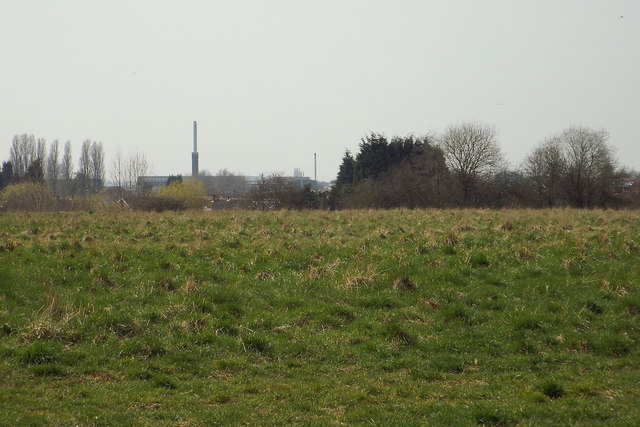
A chimney stack on the site, at the Norton Aluminium works in Norton Green Lane, is the last colliery chimney left in the Cannock Chase Coalfield.
Geology
Cannock Chase Coal Measures: the Bass, Deep, Shallow and Yard seams, with ironstone raised in the 1890s.
Workings
Returned as the Conduit Colliery Company's No. 3 mine. Its shafts are not described.
Closure
Unknown.
What remains
The site is occupied by the Norton Aluminium foundry works off Norton Green Lane.
A chimney stack, the last colliery chimney in the Cannock Chase Coalfield.
Redevelopment
An aluminium alloy foundry, Norton Aluminium, occupies the site.
Related mines
- Conduit Colliery — Norton Green was returned as the Conduit Colliery Company's No. 3 mine in the 1890s.
Nearby mines
- Conduit Colliery — 0.4 miles (0.7 km) NE
- Great Wyrley Colliery — 1.5 miles (2.3 km) W
- Cannock Chase No. 4 Pit — 1.5 miles (2.4 km) NE
- Grove Colliery — 1.5 miles (2.4 km) E
- Wyrley No. 3 Colliery — 1.9 miles (3.1 km) W
Straight-line distance, within 9 miles (15 km). Show on the map.
Recorded claims
Individual factual claims, each attached to the source(s) that support it below. Where sources disagree, both are kept.
- Norton Green Colliery, also known as the Moat Colliery, lay beside the medieval moat near Spring Cottage, from which it took its nickname. 1
- In 1894 and 1896 the lists of mines return the Conduit Colliery Company's No. 3 (Norton Green) mine. 2
- The No. 3 (Norton Green) mine employed 1,094 people in 1894 and 1,100 in 1896. 2
- It raised household, manufacturing and steam coal and ironstone in the 1890s. 2
- The mine plans for Norton Green record the Bass, Shallow and Deep seams. 3
- The chimney stack at Norton Aluminium in Norton Green Lane, on the colliery site, is the last colliery chimney in the Cannock Chase Coalfield. 4
Photographs & further reading
The parish's history, placing each of its six colliery companies' pits, Norton Green among them, by grid reference.
View sourceOfficial returns for the Conduit Colliery Company's pits, including the No. 3 (Norton Green) mine in the 1890s.
View sourceSources
- (secondary) History — Norton Canes Parish Council
- (primary) Conduit Colliery — Durham Mining Museum
- (primary) NORTON GREEN, Bass, Shallow and Deep seams: mine plan catalogue entry — British Geological Survey / Mining Remediation Authority
- (secondary) Properties of Note, p. 1 — Norton Canes Parish Council
- (observational) Foundry chimneys at Norton Aluminium, Norton Canes (photograph, 2016) — Geograph
Record created: 2 October 2026 · Last researched: 8 October 2026