 MineArchive
Pelsall Hall Colliery
| Also known as | Pelsall Colliery |
|---|---|
| Location | Pelsall, north of Walsall, West Midlands — 52.6266, -1.9752 (approximate) |
| Commodity | Coal |
| Type | Coal |
| Worked | By 1872–1892 |
| Maximum depth | Unknown. |
| Operators | Starkey and Morgan (1872–?) |
Overview
A South Staffordshire colliery at Pelsall, north of Walsall, worked by Starkey and Morgan and employing about a hundred people. On 14 November 1872 an inrush from old workings killed twenty-two men and boys (see Disasters, below). The pit went on working for another twenty years and closed in 1892 with one of the bodies never found.
History
Pelsall Hall was one of the pits of the South Staffordshire coalfield, standing on ground served by the Wyrley and Essington Canal's Daw End branch and worked in the early 1870s by Starkey and Morgan, with Charles Starkey as manager. About a hundred people were employed there.
On the morning of Thursday 14 November 1872 a collier driving a heading holed into flooded old workings, and all twenty-two men and boys cut off below died (see Disasters, below). The colliery worked on until 1892.
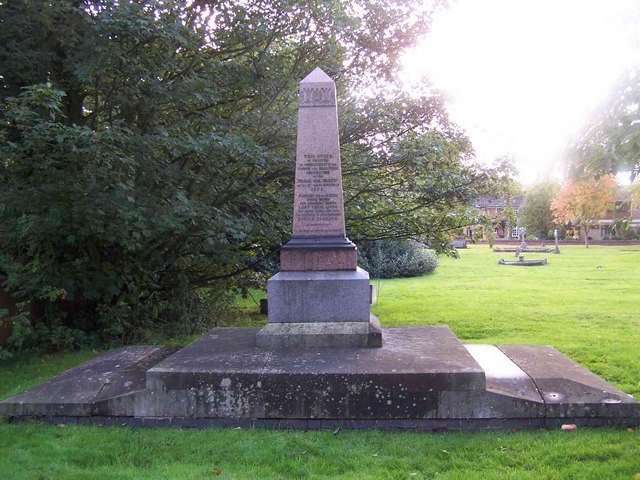
The ground was leased from Mr Charles of Pelsall Hall, and the workings were shallow. Clearing them after the inrush took the pumps 180 hours to lift six million gallons, with tanks fitted in both shafts; when the men got down on the Monday evening the roads were choked and full of chokedamp, and ten of the dead were found together at the far crop of the mine, dry and killed by gas rather than water. The relief fund paid the families 9s 6d a week, the pit reopened in March 1873, and the obelisk in the churchyard covers the grave of twenty-one of the twenty-two.
Geology
The South Staffordshire coalfield, worked here in ground already riddled with older workings. That is the fact that mattered: the coal was shallow and had been got at for generations, so abandoned headings full of water lay unrecorded close to the new faces, and a heading driven a few yards too far could let all of it in at once.
Geological setting: Sedimentary Beds and Seams (well documented example)
Workings
A shaft colliery working deep and shallow ground, with headings driven ahead of the faces. The 1872 inrush shows how the workings were laid out and how narrow the margin was: the water that came out of the old heading needed only a few minutes to seal the deep workings from the shaft, and the shaft inset itself was closed by water standing thirty-five feet up it.
Closure
The colliery closed in 1892, twenty years after the disaster. Searches for the last missing man continued up to the final closure.
What remains
Nothing of the colliery survives above ground. The memorial stands in the churchyard of St Michael and All Angels at Pelsall, a short distance from where the pit was, and marks the mass grave of those recovered; its inscription records 'the sudden and disastrous inundation of the Pelsall Hall Colliery on the 14th day of November 1872 whereby 22 miners lost their lives'.
Nothing of the colliery survives above ground; the memorial in the churchyard of St Michael and All Angels marks the mass grave of the 1872 dead.
Related mines
- Walsall Wood Colliery — Both were South Staffordshire pits on the same shallow, long-worked coalfield north of Walsall; Pelsall Hall is named on the Walsall Wood record, which is how it came into this archive.
Nearby mines
- Fishley Colliery — 1.1 miles (1.7 km) NW
- Walsall Wood Colliery — 1.9 miles (3.0 km) E, Staffordshire
- Aldridge Colliery — 1.9 miles (3.1 km) E, Staffordshire
- Coppy Hall Colliery — 1.9 miles (3.1 km) SE, Staffordshire
- Brownhills Colliery — 2.1 miles (3.4 km) N, Staffordshire
Straight-line distance, within 9 miles (15 km). Show on the map.
Disasters & major incidents
-
Pelsall Hall Colliery roof fall, 1867
10 January 1867 · Collapse / Roof Fall · 2 fatalities
Two bandsmen, R. Parr and J. Starkey, were killed by a fall of coal and rock between two slips in the shallow coal at Pelsall Hall Colliery on 10 January 1867. -
Pelsall Hall Colliery inundation, 1872
14 November 1872 · Flooding / Inundation · 22 fatalities
A little before nine on Thursday 14 November 1872 a collier named Michael Cash, driving a heading at Pelsall Hall Colliery near Walsall, holed into old unrecorded workings full of water. Within minutes the water sealed the deep workings from the shaft. A few men escaped by clinging to the cage; twenty-two men and boys were cut off. When the pit was pumped out, ten were found together in a dry refuge, dead from chokedamp; one body was never recovered.
Recorded claims
Individual factual claims, each attached to the source(s) that support it below. Where sources disagree, both are kept.
- The BGS mine-plans catalogue holds a Mining Remediation Authority abandonment plan titled 'Pelsall Hall' (catalogue 2513, Deep Shallow, dated 1890). 1
- In November 1872 the colliery was Starkey and Morgan's, with Charles Starkey as manager for nine years and about a hundred people employed. 2
- The memorial in St Michael and All Angels' churchyard records the sudden and disastrous inundation of Pelsall Hall Colliery on 14 November 1872, in which 22 miners lost their lives, all but John Hubbard buried beneath it. 3,4
- The colliery was owned by Messrs Morgan and Starkey and leased from Mr Charles of Pelsall Hall; the workings were shallow. After the inrush the pumps ran at full capacity with large tanks fitted in both shafts, raising over six million gallons in about 180 hours under the eye of the Inspector, Mr Barker; by about 6 p.m. on the Monday the water was low enough and the gas cleared for men to go down, but the roads near the shaft bottom were choked with debris and full of chokedamp. Ten men were found together at the extreme crop of the mine, dry-clothed and killed by gas; Cash and one other had drowned, and one body was never recovered despite an extensive search hampered by falls. 5
- A relief fund paid widows and dependants 9s 6d a week, with no family to receive more than £1; the colliery reopened in March 1873, and the granite obelisk in St Michael's churchyard was erected over the mass grave of 21 of the 22 dead. 6
Photographs & further reading
A full account of the inundation, the pumping and recovery, the inquest, the funeral and the relief fund, with the roll of the dead.
View sourceSources
- (primary) BGS / Mining Remediation Authority mine plans: PELSALL HALL — British Geological Survey / Mining Remediation Authority
- (secondary) The Pelsall Hall Colliery disaster of 1872 — Chasewater and Cannock Mining Heritage
- (observational) Memorial to the Pelsall Hall Colliery mining disaster — Geograph Britain and Ireland
- (secondary) Pelsall Online: the 1872 mining disaster — Pelsall Online
- (secondary) Pelsall Hall Colliery Inrush - Walsall - 1872 — Northern Mine Research Society (information supplied by Ian Winstanley and the Coal Mining History Resource Centre)
- (secondary) Pelsall Hall Colliery Disaster 1872 — Burntwood Family History Group
Record created: 9 September 2026 · Last researched: 24 September 2026