 MineArchive
Pelsall Hall Colliery inundation, 1872
| Date | 14 November 1872 |
|---|---|
| Mine | Pelsall Hall Colliery |
| Region | West Midlands |
| Primary type | Flooding / Inundation |
| Associated types | Entrapment, Rescue |
| Fatalities | 22 (Names and ages on the churchyard obelisk run from Stephen Lawton, 13, to Charles Capewell, recorded as 89, and include Thomas Starkey, 70, and his grandson Thomas, 18; spellings vary between the NMRS list and the memorial.) |
| Context | During active mining (A Thursday morning at Starkey and Morgan's Pelsall Hall Colliery, with the night shift up and day men at breakfast on the pit bank; about a hundred were employed.) |
A little before nine on Thursday 14 November 1872 a collier named Michael Cash, driving a heading at Pelsall Hall Colliery near Walsall, holed into old unrecorded workings full of water. Within minutes the water sealed the deep workings from the shaft. A few men escaped by clinging to the cage; twenty-two men and boys were cut off. When the pit was pumped out, ten were found together in a dry refuge, dead from chokedamp; one body was never recovered.
Cause
A heading driven ahead of the face broke into an old gate road of unrecorded workings full of water; the lease had been taken as maiden ground.
Contributing factors
No record or surface sign of old workings existed. Water normally flowed from the face and was drained down an old road; a quarter of an hour before the inrush Cash's face began spouting water, but neither he nor Harry Astbury saw danger in it. Sand and gravel above the coal made the district's seams wet. Another shot hole in the heading was found drilled within six inches of the old workings.
What happened
Cash called Astbury to see 'the River Dee' coming from his face, went back to work, and fifteen minutes later shouted that the water had broken in. It carried Astbury to the shaft bottom. Cries of 'pull up' reached the bank, and when the cage came up men were clinging to its bonnet; ten near the pit bottom escaped by catching it before the inset closed, and one man was swept through an archway into the pumping shaft and brought up unconscious. The skip went down into men swimming and clinging to supports, some pulled in by the hair, and then into silence. The water rose 35 feet in the shaft.
Rescue & recovery
Pumping went on day and night through drizzle, the crowds turning the pit bank to mud; chokedamp from the old workings lay near the floor, air trows were put in, and more than one rescuer was overcome. By the Monday the water had fallen far enough to go down. The body of 18-year-old Thomas Starkey came up caught in the pumps; Michael Cash was found behind an overturned tub and 14-year-old Thomas Coleman in the stables. On the Friday George Goring, Thomas Lees and Enoch Jaundrill found another way into the crop of the shallow and found ten men huddled together, dry and dressed to leave, old Thomas Starkey among them. Bodies were brought out in sacks through a narrow opening reached from the cage in mid-shaft. On Christmas Day Bibles were presented to the rescuers.
Investigation & inquiry
The inquest sat at the Station Inn, Pelsall. The Inspector, Mr Baker, reported that 'this sad accident is one of those cases which neither legislature nor those having responsible conduct of mines can either forsee or provide against', and recommended that the old headway be explored.
Legal & regulatory aftermath
Fifteen widows and forty-five orphans were left. A fund chaired by B. Bloomer paid weekly allowances; the landowner John Smith Charles and others subscribed. The colliery reopened in March 1873.
Memorials & commemoration
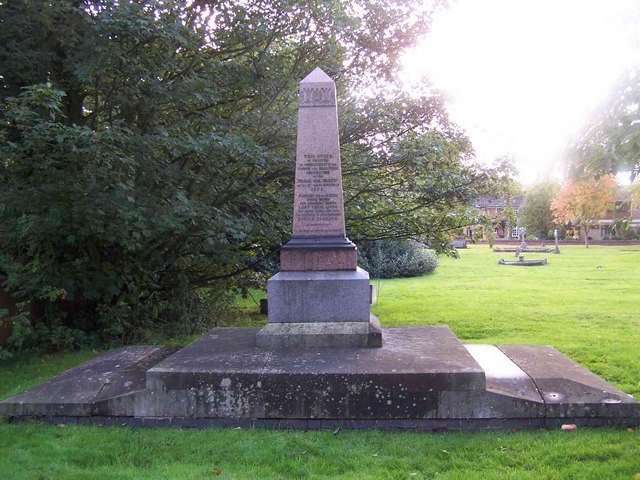
Twenty-one coffins were laid in a vault at St Michael's church, Pelsall, on 25 November 1872; John Hubbard was buried at Aldridge. An obelisk of Aberdeen granite on Hollingwood stone, carved by a Wednesbury firm with the names, was later set over the vault without ceremony.
Recorded claims
Individual factual claims, each attached to the source(s) that support it below. Where sources disagree, both are kept.
- A collier named Cash, driving a heading in front of the working face on the morning of 14 November 1872, holed unexpectedly into an old heading; the water behind it sealed the deep workings from the shaft within minutes. 1
- Ten men near the pit bottom got out by catching the cage just before the inset was closed by water, which rose thirty-five feet in the shaft; twenty-two men and boys were left below and none survived. 1
- Despite repeated searches continuing to the colliery's final closure in 1892 the twenty-second body was never found, and the Mining Inspectorate report referred to him only as miner 22, unknown and not found. 1
- Fifteen widows and forty-five orphans were left, and a relief fund was raised for them. 1
- Charles Starkey told the inquest he helped rescue nine men, including two of his sons, from water already seven to eight feet deep in the shaft. (disputed) 1
- About a quarter of an hour before the inrush Cash showed Harry Astbury water spouting from his face ('come and see the River Dee'); neither saw immediate danger or warned the manager. 1,2
- Over about 180 hours more than six million gallons were raised, with tanks fitted in both shafts. 2
- Ten men were found together in the dry 'crop of the shallow', dressed and dead from chokedamp, which the water had never reached. 1,2
- The fund paid 2s 6d a week for each child under 14 and 9s 6d for each widow, with no family receiving more than £1 a week. 1,3
- An obelisk in St Michael's churchyard, Pelsall, records the names and commemorates 'the sudden and disastrous inundation of the Pelsall Hall Colliery on the 14th November 1872'. 1,3
Related terminology
Mining terms this disaster is structurally linked to, with the nature of the relationship.
- Cage (rescue/recovery concept)
Survivors escaped clinging to the cage. - Chokedamp (hazard involved)
Ten of the dead were killed by chokedamp in a dry refuge. - Gate Road (contextual relationship)
Named in this record’s cause: “A heading driven ahead of the face broke into an old gate road of unrecorded workings full of water; the lease had been taken as…” - Inrush (direct cause)
The heading holed into flooded old workings. - Skip (contextual relationship)
Named in this record’s narrative: “…an archway into the pumping shaft and brought up unconscious. The skip went down into men swimming and clinging to supports, some pulled in…”
Photographs & further reading
This page doesn't try to reproduce everything — these are the best original sources found for this disaster.
Detailed contemporary-based account of the inrush, recovery, inquest, funeral and fund, with the memorial names.
View sourceSources
- (secondary) The Pelsall Hall Colliery disaster of 1872 — Chasewater and Cannock Mining Heritage
- (secondary) Pelsall Hall Colliery Inrush - Walsall - 1872 — Northern Mine Research Society (information supplied by Ian Winstanley and the Coal Mining History Resource Centre)
- (secondary) Pelsall Hall Colliery Disaster 1872 — Burntwood Family History Group
Record created: 9 September 2026 · Last researched: 13 September 2026