 MineArchive
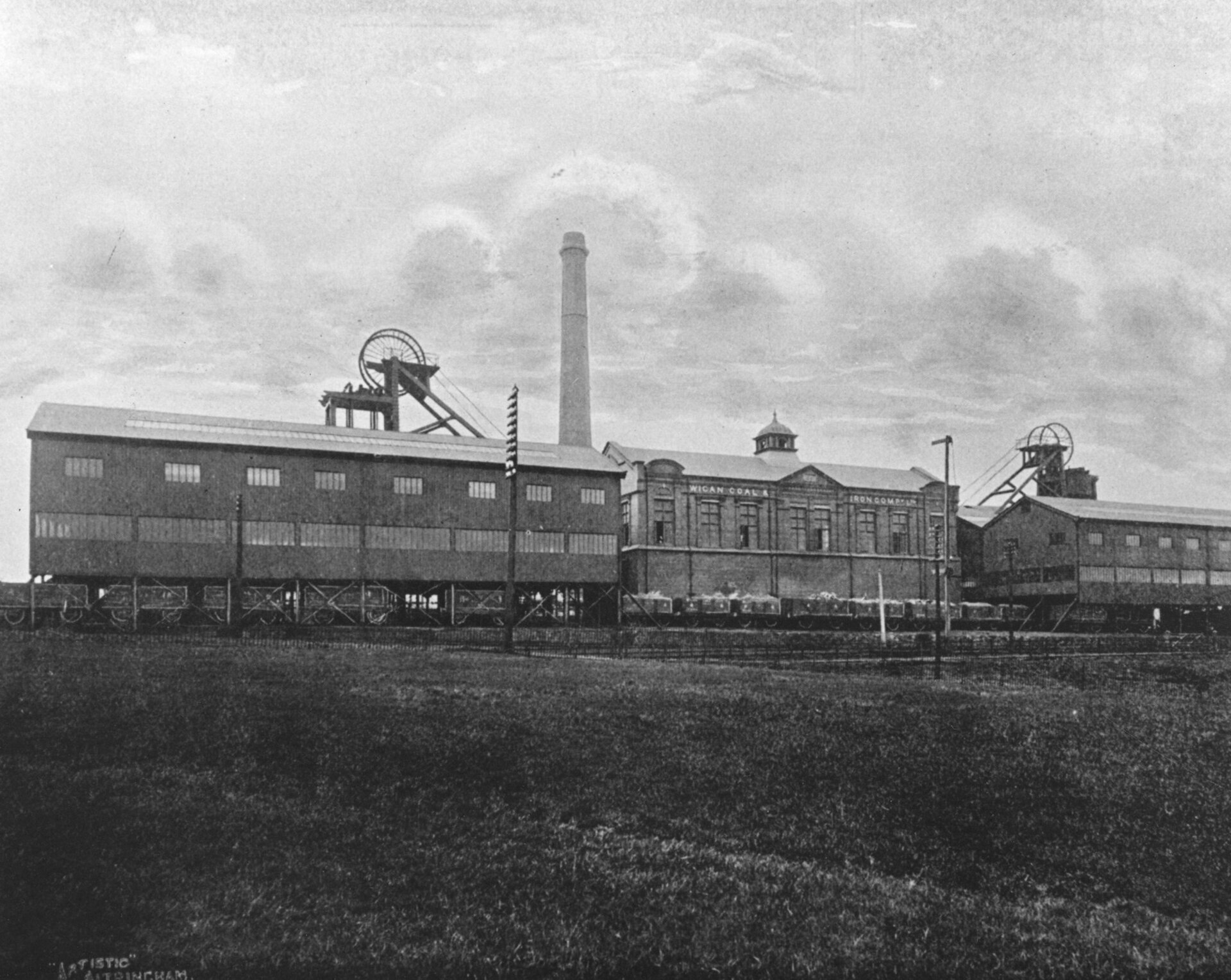
Victoria Colliery, Standish
| Location | Standish, west of the West Coast Main Line north of Boar's Head, Greater Manchester — 53.5760, -2.6440 (approximate) |
|---|---|
| Commodity | Coal |
| Type | Coal |
| Worked | 1900–13 June 1958 |
| Maximum depth | 627 yards (No. 2 Pit) |
| Operators | Wigan Coal & Iron Co. (1900–1930), Wigan Coal Corporation Ltd (1930–1946), National Coal Board (1947–1959) |
Overview
Wigan Coal and Iron's Victoria Colliery beside the West Coast Main Line at Standish, its two 20-foot shafts sunk from 1900 by the caisson method through running sand to over 600 yards, worked by the National Coal Board until June 1958.
History
The Wigan Coal and Iron Company began Victoria Colliery in 1900, immediately west of the London and North Western main line and three-eighths of a mile north of Boar's Head Junction, Standish. Both shafts, 20 feet in finished diameter, had to pass through wet clay and running sand: at No. 1 (North) Pit the timber supports were crushed and the caisson method was adopted, as it was from the start at No. 2 (South). No. 1 reached 601 yards and No. 2 627 yards, both meeting the Stranger Fault at around 470 to 490 yards. No. 1 was wound by an 1881 Haigh Foundry engine brought from Giants Hall. The shafts cut a long run of Wigan seams, and the Cannel, King, Haigh Yard, Smith and Arley were reached by tunnels; the Lower Mountain Mine beyond the Great Haigh Fault was worked briefly from 1954. The whole take was badly faulted. The colliery passed to the Wigan Coal Corporation in 1930 and the National Coal Board in 1947, and in 1954 employed 701 men underground and 160 on the surface. On 15 June 1942 two men were killed when a chain to a carriage broke and the haulage rope struck them. Victoria closed on 13 June 1958 and was formally abandoned on 30 May 1959; the site is now a housing estate, with the reclaimed ground kept as open space.
Geology
Lancashire Coal Measures cut by the Stranger Fault and Great Haigh Fault: Riding Mine to Wigan Four Feet in the shafts; Cannel, King, Haigh Yard, Smith and Arley by tunnel; the Lower Mountain Mine in the Lower Coal Measures from 1954.
Workings
Two 20-foot shafts sunk by the caisson method: No. 1 (North, upcast) to 601 yards and No. 2 (South, downcast) to 627 yards; tunnels to lower seams and through the Great Haigh Fault.
Closure
Coal winding ended on 13 June 1958; the colliery was formally abandoned on 30 May 1959.
What remains
The site is a housing estate, with its reclaimed land used as open space.
Redevelopment
Housing estate and open space.
Related mines
- Giants Hall Colliery — Victoria's No. 1 Pit was wound by Giants Hall's 1881 No. 2 Pit engine, transferred in 1900; both Wigan Coal & Iron's Standish pits (NMRS).
Nearby mines
- Giants Hall Colliery — 0.5 miles (0.9 km) SW
- Gidlow Colliery — 0.6 miles (1.0 km) S
- Taylor Colliery — 1.2 miles (2.0 km) SW
- John Pit — 1.3 miles (2.1 km) SW
- Langtree Colliery — 1.4 miles (2.2 km) NW
Straight-line distance, within 9 miles (15 km). Show on the map.
Recorded claims
Individual factual claims, each attached to the source(s) that support it below. Where sources disagree, both are kept.
- Sinking began in 1900; both shafts were 20 feet in diameter and sunk by the caisson method through wet clay and running sand. 1
- Wigan Coal's Victoria Colliery's two 20-foot shafts were sunk in 1900. 2
- No. 1 Pit reached 601 yards and No. 2 Pit 627 yards. 1
- In 1954 it employed 701 men underground and 160 on the surface. 1
- On 15 June 1942 two men were killed by a haulage rope when a chain to a carriage broke. 3
- The colliery closed on 13 June 1958 and was formally abandoned on 30 May 1959. 1
- The site is now a housing estate, with the reclaimed land used as open space. 2
Sources
- (secondary) Victoria Colliery (Standish) — Northern Mine Research Society
- (secondary) Wikipedia: Standish, Greater Manchester — Wikipedia
- (primary) NMRS Coal Mining Accidents and Deaths: James Ord, Victoria (b), Standish, 15 June 1942 — Northern Mine Research Society
Record created: 16 October 2026 · Last researched: 16 October 2026