 MineArchive
Giants Hall Colliery
| Also known as | Giant's Hall Colliery |
|---|---|
| Location | Standish, near Wigan, Greater Manchester — 53.5691, -2.6497 (approximate) |
| Commodity | Coal |
| Type | Coal |
| Worked | Early 1800s–January 1961 |
| Maximum depth | 616 yards (No. 3 Pit) |
| Operators | Wigan Coal & Iron Co. (1875–1930), Wigan Coal Corporation Ltd (1930–1946), National Coal Board (1947–1961) |
Overview
A Wigan Coal & Iron colliery at Standish, its first shaft sunk in the early 1800s and its two deep shafts of 1876-1881 reaching over 600 yards, worked by the National Coal Board until January 1961.
History
Giants Hall Colliery lay at Standish, about three-quarters of a mile west of the West Coast Main Line and south of Boar's Head station. Its No. 1 Pit, known as the Billy Pit, was first sunk in the early 1800s to the Ince Four Feet and was worked out and closed around 1846. The Standish collieries passed to the Wigan Coal and Iron Company in 1865-66, and between 1876 and 1881 the company sank two 18-foot shafts, No. 2 to 606 yards as a furnace upcast and No. 3 to 616 yards for coal winding, and reopened No. 1 to the Ince Seven Feet. The shafts passed through a long run of seams from the Riding Mine down to the Wigan Four Feet, and the Cannel, King, Haigh Yard and Arley were reached by tunnelling. A Sirocco fan replaced the furnace in 1920. The colliery passed to the Wigan Coal Corporation in 1930 and to the National Coal Board in 1947; skip winding and steel headgears came in 1954-55. On 22 September 1944 an ignition of firedamp killed two men. The colliery closed in January 1961.
Geology
Lancashire Coal Measures: the shafts cut the Riding Mine, Park Yard, Ince Yard, Bulldog, Deep Yard, Ince Four Feet and Seven Feet, Pemberton Yard, Five Feet, Two Feet and Four Feet, and Wigan Five Feet and Four Feet; the Westwood Fault crossed No. 3 Pit at 496 yards.
Workings
Three shafts: No. 1 (Billy Pit, 173 yards), No. 2 (606 yards, furnace upcast) and No. 3 (616 yards, coal winding). Lower seams (Cannel, King, Haigh Yard, Arley) were worked by tunnels from the shafts; the lower shaft sections were later filled and plugged at about 356 yards.
Closure
Closed in January 1961 under the National Coal Board.
What remains
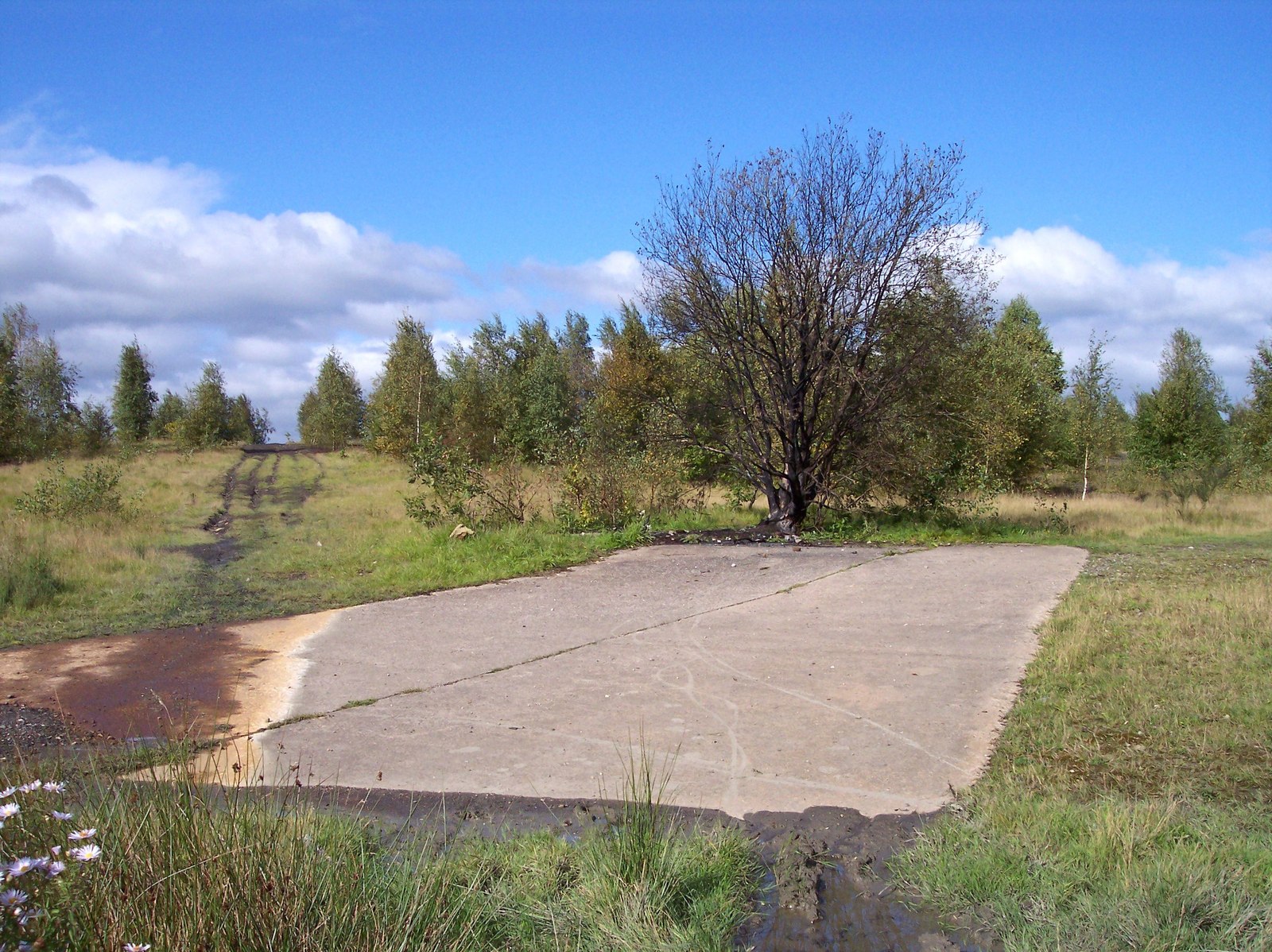
The site has been landscaped; slag heaps and concrete remains of the colliery survive among birch scrub.
Landscaped spoil heaps and concrete bases.
Redevelopment
Unknown.
Nearby mines
- Taylor Colliery — 0.9 miles (1.4 km) W
- John Pit — 0.9 miles (1.5 km) W
- Great Haigh Sough — 1.4 miles (2.3 km) SE
- Orrell Colliery — 1.5 miles (2.5 km) SW
- Langtree Colliery — 1.7 miles (2.8 km) N
Straight-line distance, within 9 miles (15 km). Show on the map.
Recorded claims
Individual factual claims, each attached to the source(s) that support it below. Where sources disagree, both are kept.
- Giants Hall Colliery lay at Standish, about three-quarters of a mile west of the West Coast Main Line and south of Boar's Head station. 1
- Wigan Coal & Iron owned it from 1875 to 1930, the Wigan Coal Corporation from 1930 to 1946 and the National Coal Board from 1947 to 1961. 1
- By 1896 Wigan Coal & Iron's Standish pits included Giant's Hall. 2
- Nos. 2 and 3 Pits, each 18 feet in diameter, were sunk between 1876 and 1881 to 606 and 616 yards. 1
- An ignition of firedamp on 22 September 1944 killed two men. 3
- The colliery closed in January 1961. 1
- Landscaped slag heaps and other remnants of the colliery survive. 4
Sources
- (secondary) Giant's Hall Colliery — Northern Mine Research Society
- (secondary) Wikipedia: Standish, Greater Manchester — Wikipedia
- (primary) NMRS mining accidents and deaths: Giants Hall, 22 September 1944 (Thomas Tyrer) — Northern Mine Research Society
- (observational) A walk on the Standish coalfield (Geo-Trip 134) — Geograph Britain and Ireland
- (primary) BGS mine plans: Giants Hall, Ince Yard and Bulldog seams — British Geological Survey / Mining Remediation Authority
Record created: 16 October 2026 · Last researched: 16 October 2026