 MineArchive
Ushaw Moor Colliery
| Location | Ushaw Moor, Deerness valley, County Durham — 54.7792, -1.6583 (approximate) |
|---|---|
| Commodity | Coal |
| Type | Coal |
| Worked | Drift from 1858; colliery dated 1865–5 August 1960 |
| Maximum depth | Unknown. |
| Operators | Ferens and Love (1860–1879), Pease & Partners Ltd. (1893–1946), National Coal Board (1947–1960) |
Overview
A Deerness valley colliery west of Durham that began as a drift in 1858 selling coal landsale and grew into a pit working the Busty seam for coking coal, fireclay and, in the 1920s, barytes. Its years under Henry Chaytor of Witton Castle were bitter -- a sacking he made deliberately set off a long strike -- and the colliery was sold on to Pease and Partners, under whom relations eased. It closed on 5 August 1960, and two streets of terraced houses now stand on the site.
History
A drift mine was established at Ushaw Moor in 1858, selling its coal on the landsale system; the Durham Mining Museum dates the colliery from 1865 and records Ferens and Love as owners in the 1860s. Henry Chaytor of Witton Castle bought it in 1879, and his tenure brought a long and bitter strike, begun by what Wikipedia's account calls a deliberate sacking. Worn down by years of industrial unrest, Chaytor sold the colliery to Pease and Partners -- in 1883 by Wikipedia's account, in 1893 by the museum's owner list -- after which, the same account says, the workmen and the community had an easier time of it. Whellan's Directory of County Durham described the colliery in 1894 as working the Busty seam on the north side of the Dearness, not far from Flass Hall, the seam containing a band that widened greatly to the west, with a top coal of 1 foot 10 inches and a bottom coal of 3 feet 6 inches. The returns record coking and manufacturing coal with fireclay from the 1890s, and barytes in the 1920s. Employment was 205 in 1883, 626 in 1894 and 871 in 1905, falling to 336 by 1925 and 273 in 1945. The National Coal Board took the colliery over in 1947 and closed it on 5 August 1960. The museum names 45 men and boys killed at the colliery but records no disaster of five or more.
Geology
The Busty seam of the Durham coalfield on the north side of the Deerness, its band widening westward, with a top coal of 1 foot 10 inches and a bottom coal of 3 feet 6 inches; fireclay and, in the 1920s, barytes were raised with the coal.
Geological setting: Sedimentary Beds and Seams (well documented example)
Workings
A drift from 1858 and later shaft workings; the museum holds shaft details for the colliery. Coking ovens took part of the output, and fireclay and barytes appear in the returns alongside coal.
Closure
The National Coal Board closed Ushaw Moor on 5 August 1960, after a century of working from the first landsale drift.
What remains
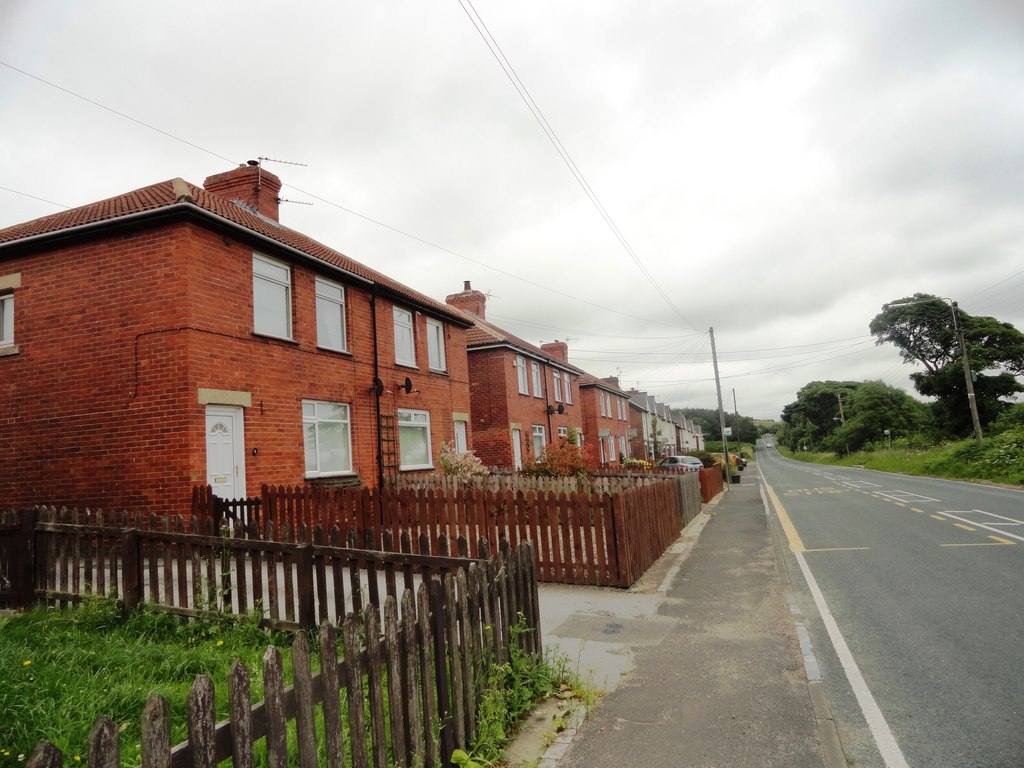
Two streets of terraced houses, Deerness View, stand on the colliery site a kilometre west of the village centre; the Deerness Valley Railway Path runs past on the old line.
Nothing of the colliery survives above ground on the site, which is built over.
Redevelopment
Housing at Deerness View, west of Ushaw Moor village.
Nearby mines
- Bearpark Colliery — 2.4 km E
- Brandon Colliery — 3.7 km SE
- Hamsteels Colliery — 3.8 km W
- Littleburn Colliery — 4.6 km SE
- Cornsay Colliery — 5.2 km W
Straight-line distance, within 15 km. Show on the map.
People
- Henry Chaytor · owner, 1879–1893 — Of Witton Castle; bought Ushaw Moor Colliery in 1879 and sold it to Pease and Partners after the long strike of his tenure.
What's uncertain
Points where sources disagree or the record could not be settled; both accounts are kept. All open questions in the archive.
- Henry Chaytor of Witton Castle bought the colliery in 1879 and sold it to Pease and Partners after a long strike; Wikipedia puts the sale in 1883 and the Durham Mining Museum's owner list in 1893. (disputed) 1,2
- Chaytor's tenure brought a long strike, which Wikipedia's account attributes to a deliberate sacking, and he sold the colliery sick of years of industrial unrest. (uncertain) 2
Recorded claims
Individual factual claims, each attached to the source(s) that support it below. Where sources disagree, both are kept.
- A drift mine was established at Ushaw Moor in 1858, selling coal on the landsale system; the Durham Mining Museum dates the colliery from 1865, with Ferens and Love as owners in the 1860s. 1,2
- Henry Chaytor of Witton Castle bought the colliery in 1879 and sold it to Pease and Partners after a long strike; Wikipedia puts the sale in 1883 and the Durham Mining Museum's owner list in 1893. (disputed) 1,2
- Chaytor's tenure brought a long strike, which Wikipedia's account attributes to a deliberate sacking, and he sold the colliery sick of years of industrial unrest. (uncertain) 2
- Whellan's directory of 1894 describes the colliery working the Busty seam, whose band widened greatly to the west, with a top coal of 1 foot 10 inches and a bottom coal of 3 feet 6 inches. 1
- The returns record coking and manufacturing coal with fireclay from the 1890s and barytes in the 1920s, with employment of 205 in 1883, 871 in 1905 and 273 by 1945. 1
- The National Coal Board closed Ushaw Moor Colliery on 5 August 1960; the museum names 45 men and boys killed there and records no disaster of five or more. 1
Photographs & further reading
Owners, output and employment by year, Whellan's 1894 description of the Busty seam, and the names of 45 men killed at the colliery.
View sourceSources
- (secondary) Ushaw Moor Colliery — Durham Mining Museum
- (secondary) Ushaw Moor — Wikipedia
Record created: 20 September 2026 · Last researched: 20 September 2026