 MineArchive
Tynewydd Colliery, Porth
| Location | Porth, at the confluence of the Rhondda Fawr and Rhondda Fach, Rhondda Cynon Taf — 51.6147, -3.4125 (approximate) |
|---|---|
| Commodity | Coal |
| Type | Coal |
| Worked | 1852–1901 |
| Maximum depth | 90 yards (Welsh Coal Mines); about 88 yards to the No. 3 Rhondda seam (manager's evidence, 1877) |
| Operators | Troedyrhiw Coal Company (1852–1901) |
Overview
A small colliery at the meeting of the Rhondda Fawr and Rhondda Fach in Porth, opened in 1852 by the Troedyrhiw Coal Company and still raising its coal by water balance in 1877, when it was called almost the last balance pit in the kingdom. That April water from the abandoned Cymmer workings broke in, killing five and entombing others; the rescue that brought out four men and a boy after more than nine days won the first Albert Medals awarded for gallantry on land. It closed in 1901.
History
In 1850 the Troedyrhiw Coal Company, formed by James Thomas, a former miner, Matthew Cope, a Cardiff docksman, and John Lewis, an Aberdare grocer, took over the Troedyrhiw Colliery on the northern edge of Porth, and in 1852 it opened Tynewydd at the junction of the Rhondda Fawr and Rhondda Fach, Porth's fourth mine. It soon struck the No. 3 Rhondda seam, and coke ovens were built at the surface. Welsh Coal Mines records two shafts, each 90 yards deep, sunk to the No. 2 and No. 3 Rhondda seams, with winding by water balance and ventilation by furnace. By 1877 the pit was described as the only balance pit, or almost the only one, left in the kingdom; James Thomas, a partner and its certificated manager, told the inquest that year that the pit was about 88 yards deep to the No. 3 Rhondda, that the water used to lift the coal was pumped back from the bottom by a water-wheel working two pumps, and that it raised about 160 tons a day with 150 men and 15 horses. Old workings of the neighbouring Cymmer Colliery in the No. 3 Rhondda, known as Hinde's pit, had long been flooded, and a barrier of unworked coal was left at the boundary. At about four on the afternoon of 11 April 1877 the water broke through, drowning four and killing a fifth man by the rush of compressed air, and the rescue of the entombed survivors held the country's attention until the last four men and a boy were brought out on 20 April (see Disasters, below). The inquest jury found James Thomas guilty of manslaughter; he was later acquitted at the assizes. In the 1896 list of mines Tynewydd employed 118 under the Troedyrhiw Coal Company, and the colliery closed in 1901.
Geology
Worked the No. 2 and No. 3 Rhondda seams of the South Wales Coalfield. The No. 3 Rhondda workings of Cymmer Colliery beyond the boundary had been abandoned and were full of water; the manager believed a fault in the coal would keep it back before the boundary was reached, but in 1877 the barrier left proved too thin.
Geological setting: Sedimentary Beds and Seams (well documented example)
Workings
Winding by water balance: a tank of water in the descending cage raised the coal, and the water was pumped back up from the pit bottom by a water-wheel driving two 12-inch pumps. Ventilation was by furnace. The manager gave the pit as about 17 feet by 12 and 88 yards deep; Welsh Coal Mines records two shafts of 90 yards. Coke ovens stood at the surface.
Closure
Welsh Coal Mines gives 1901 for the closure; the sources read give no reason for it.
What remains
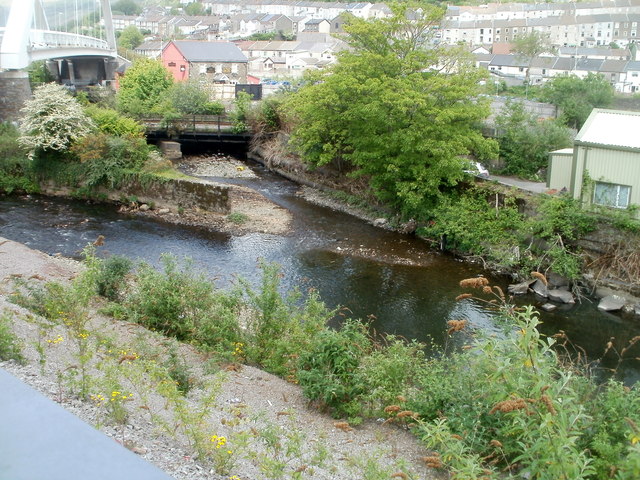
The colliery stood by the confluence of the two Rhondda rivers in Porth. No surviving remains are described in the sources read, and no recent report of the site has been found.
Related mines
- Cymmer Colliery — Water from Cymmer's abandoned, flooded No. 3 Rhondda workings broke into Tynewydd in 1877.
- Ynysfeio Colliery — Both worked by the Troedyrhiw Coal Company, whose principals included James Thomas, Cope and John Lewis.
Nearby mines
- Cymmer Colliery — 0.5 km SE
- Lewis Merthyr Colliery — 1.4 km E
- Ynyshir Colliery — 1.6 km N
- Tymawr Colliery — 1.7 km E
- Cilely Colliery — 2.3 km SW
Straight-line distance, within 15 km. Show on the map.
Disasters & major incidents
-
Tynewydd Colliery inundation, 1877
11 April 1877 · Flooding / Inundation · 5 fatalities
At about four on the afternoon of 11 April 1877, as the men were about to leave, water from the flooded old workings of Cymmer Colliery broke through the boundary barrier into Tynewydd Colliery at Porth. Of fourteen men underground, two drowned at once and two more in a flooded heading; a fifth was killed by escaping compressed air as rescuers broke through to his group. Four men and a boy survived in an air pocket for more than nine days until they were reached through 38 yards of coal on 20 April, a rescue followed across Britain that brought the first Albert Medals awarded for gallantry on land.
Recorded claims
Individual factual claims, each attached to the source(s) that support it below. Where sources disagree, both are kept.
- The Troedyrhiw Coal Company, formed by James Thomas, Matthew Cope and John Lewis, opened Tynewydd in 1852 at the junction of the Rhondda Fawr and Rhondda Fach; it struck the No. 3 Rhondda seam and coke ovens were built. 1,2
- Welsh Coal Mines records two shafts, each 90 yards deep, sunk in 1852 to the No. 2 and No. 3 Rhondda seams. (disputed) 1
- The manager told the 1877 inquest the pit was about 17 feet by 12 and about 88 yards deep to the No. 3 Rhondda. (disputed) 2
- Coal was raised by water balance and the colliery was ventilated by furnace; in 1877 it was called the only, or almost the only, balance pit left in the kingdom. 1,2
- A newspaper of 12 April 1877 put the workforce at about 100 men; the manager told the inquest 150 men and 15 horses, raising about 160 tons a day. (uncertain) 2
- On 11 April 1877 water from the flooded old No. 3 Rhondda workings of Cymmer Colliery broke into Tynewydd; five died and the rest were rescued. 1,3,4
- The rescue brought the first Albert Medals awarded for gallantry on land. 3,5,4
- An inquest jury returned manslaughter against the manager, James Thomas, who was acquitted at the assizes. 2,5
- Tynewydd employed 118 in 1896 under the Troedyrhiw Coal Company and closed in 1901. 1
Photographs & further reading
Colliery page with the story of the 1877 rescue, photographs of rescuers and rescued, and the full list of medal recipients.
View sourceBook-length compilation of contemporary newspaper reports of the flood, rescue, inquest and trial.
View sourceCurator's account of the rescue and the Albert Medals now held at Big Pit National Coal Museum.
View sourceSources
- (secondary) Tynewydd Colliery — Welsh Coal Mines
- (secondary) The Tynewydd Colliery Tragedy of 1877 (compilation of contemporary reports) — People's Collection Wales
- (secondary) The Tynewydd Mining Disaster (Ceri Thompson, 2012) — Amgueddfa Cymru – Museum Wales
- (secondary) Tynewydd Colliery disaster — Wikipedia
- (secondary) Heroes of Mine: Tynewydd 1877 (extract from D. V. Henderson, Heroic Endeavour) — Heroes of Mine
Record created: 13 September 2026 · Last researched: 13 September 2026