 MineArchive
Tillicoultry Colliery
| Also known as | Tillicoultry Mine, Tillicoultry 1 and 2 |
|---|---|
| Location | Devonside, Tillicoultry, Clackmannanshire — 56.1487, -3.7249 (exact) |
| Commodity | Coal |
| Type | Coal |
| Worked | 1866 (first listed)–18 January 1957 (abandoned 1959) |
| Maximum depth | At least 200 feet below ground (1952) |
| Operators | James Snowdone (1866–?), Tillicoultry Coal Company (1869–?), Alloa Coal Company (1876–1947), National Coal Board (1947–1957) |
Overview
The Alloa Coal Company's mine at Devonside, on the south bank of the River Devon at Tillicoultry, opened in 1876 and reopened by the National Coal Board in 1947. Famous for output per man twice the national average, it was the scene of the first live television broadcast from underground, on 25 November 1952, and closed in January 1957.
History
Coal was worked at Tillicoultry by James Snowdone in 1866 and by the Tillicoultry Coal Company in 1869. The Alloa Coal Company, founded as a partnership in 1835 and a limited company from 1898, opened its mine at Devonside, on the south side of the River Devon, in 1876. It was a surface mine, worked from an adit entrance rather than a shaft, and the Lists of Mines return 146 people there in 1894, working the Splint; by 1920 it worked the Main as well, with about fifty men.
The National Coal Board reopened the mine in 1947 with a second mine, and the sign above its bricked-up entrance still records the date. The nearby Bessie Glen mine closed in 1948 and its workings were taken over by Tillicoultry. In 1948 it raised 220 tons a day, 55,000 tons a year, with a Baum washer, baths for seventy men built in 1938, a canteen, and electricity from Devon Colliery; coal went by special trains off the Tillicoultry to Dollar line to Alloa docks, and the Coalsnaughton Main was worked later. Highly mechanised, it was known for output per man-shift often twice the national average; the workforce reached 346 in 1950 and output 121,000 tons in 1951.
On 25 November 1952 BBC Scotland's programme Other People's Jobs made the first live television broadcast from underground at Tillicoultry, with fourteen miners showing a coal cutter, shot-firing and stripping at the face. Output fell year by year after 1951, and the mine closed on 18 January 1957; it was abandoned in 1959.
Geology
Clackmannanshire coalfield: the Splint and Main seams, the Coalsnaughton Main after 1947, with the Lower Five Feet and Alloa Splint in the Bessie Glen and Melloch workings taken over by the mine.
Workings
Two surface drifts, No. 1 (1876) and No. 2 (1947), mechanised; a Baum washer; baths of 1938; a rail connection to the Tillicoultry to Dollar line.
Closure
Closed by the National Coal Board on 18 January 1957 after output had fallen each year since 1951; abandoned in 1959.
What remains
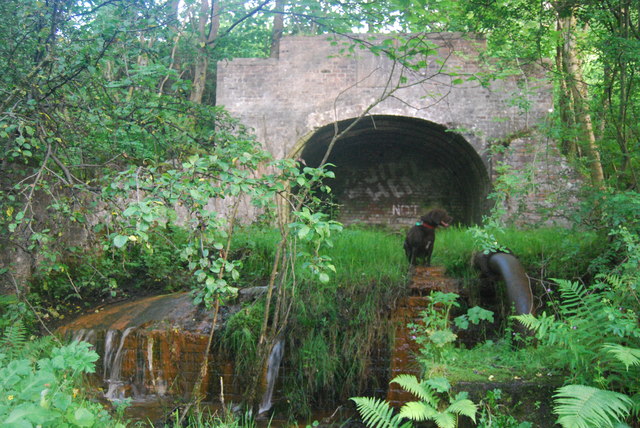
The brick-arched entrance to the mine survives, bricked up, in woodland at Devonside.
The bricked-up mine entrance with its National Coal Board date sign.
Redevelopment
Unknown.
Related mines
- Alloa Colliery — Both worked by the Alloa Coal Company.
- Bannockburn Colliery — Both worked by the Alloa Coal Company.
- Brucefield Colliery — Both worked by the Alloa Coal Company.
- Craigrie Colliery — Both worked by the Alloa Coal Company.
- Devon Colliery — Both Alloa Coal Company collieries; Tillicoultry's electricity came from Devon Colliery.
- Zetland Colliery — Both worked by the Alloa Coal Company.
Nearby mines
- Devon Colliery — 2.0 miles (3.2 km) W
- Alloa Colliery — 2.1 miles (3.3 km) SW
- Solsgirth Colliery — 2.2 miles (3.5 km) NE
- Alva Silver Mine (Silver Glen) — 2.4 miles (3.9 km) W
- Castlebridge Colliery — 2.4 miles (3.9 km) S
Straight-line distance, within 9 miles (15 km). Show on the map.
Disasters & major incidents
-
Tillicoultry Colliery roof fall, 1862
7 March 1862 · Collapse / Roof Fall · 2 fatalities
Early in March 1862 a mass of rock weighing about two tons fell from the roof of the west pit at Devonside, near Tillicoultry, on two colliers clearing debris there. William Allan and John Cook, both of Coalsnaughton, were killed; men working close by narrowly escaped.
Culture
- First live television broadcast from a coal mine, 1952 (Screen)
The first live television broadcast from underground was made from Tillicoultry Mine's Coalsnaughton Main section on 25 November 1952.
Recorded claims
Individual factual claims, each attached to the source(s) that support it below. Where sources disagree, both are kept.
- The mine was opened in 1876 by the Alloa Coal Company and reopened in 1947 by the National Coal Board. 1,2
- James Snowdone (1866) and the Tillicoultry Coal Company (1869) are listed at Tillicoultry before the Alloa Coal Company. 3
- In 1948 the mine produced 220 tons a day, 55,000 tons a year, with baths built in 1938 for 70 men and electricity from Devon Colliery. 1,2
- The mine was known for output per man-shift often twice the national average. 1,2,4
- The workforce reached 346 in 1950, and output 121,000 tons in 1951. 1,2
- On 25 November 1952 BBC Scotland's Other People's Jobs made the first live television broadcast from underground in a coal mine at Tillicoultry. 1,2,5
- The mine closed on 18 January 1957 and was abandoned in 1959. 1,2,6
- When Bessie Glen Mine closed in 1948 its mining operations were taken over by Tillicoultry Mine. 3
Photographs & further reading
The national record of the mine, its 1948 details and the 1952 broadcast.
View sourceA local history of the mine, its output and the 1952 television broadcast.
View sourceThe county's pits by village, with owners, dates and newspaper accident reports.
View sourceOwners, employment, seams and those killed at the colliery.
View sourceSources
- (secondary) Tillicoultry Colliery (NRHE 130824) — Historic Environment Scotland (trove.scot, formerly Canmore)
- (secondary) A Walk in the Past with Valerie Campbell: Tillicoultry mine — Alloa and Hillfoots Advertiser
- (secondary) Clackmannanshire's Mines — Clackmannanshire.scot
- (secondary) Tillicoultry — Wikipedia
- (observational) Tillicoultry Mine (Geograph 4039151) — Geograph
- (primary) BGS mine plan: Tillicoultry, Coalsnaughton Main, abandoned 1959 — BGS / Mining Remediation Authority mine plans
Record created: 4 October 2026 · Last researched: 4 October 2026