 MineArchive
First live television broadcast from a coal mine, 1952
| Category | Screen |
|---|---|
| Dates | End of 1951: Tillicoultry chosen. 25 November 1952, 8.15-8.50 pm: the broadcast. January 1957: the mine closes. |
BBC Scotland's 'Other People's Jobs: The Miner' went out live from the coalface of Tillicoultry Mine in Clackmannanshire on 25 November 1952, the first live television broadcast from underground in a coal mine. Fourteen miners took part, filmed by four cameras manhandled to a three-foot seam.
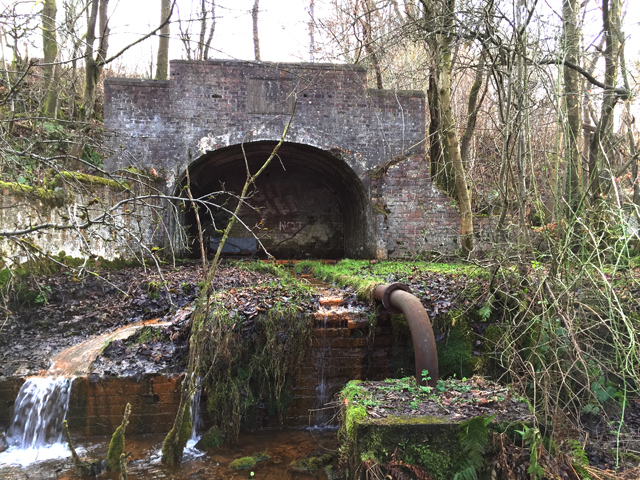
The mining history in this record
The BBC had spent almost four years trying to persuade the National Coal Board to let it broadcast from a working pit, looking for a site each time a new transmitter opened. With Scotland's first transmitter being prepared at Kirk o' Shotts, a suitable mine was found at Tillicoultry, a small, highly mechanised drift mine on the south bank of the River Devon, and the Coal Board's Alloa Area agreed that it could be done.
Equipment worth about £50,000 was taken in by mine car and conveyor over three days. The control panel, normally in the mobile unit, was dismantled, carried in and rebuilt about 200 feet below ground, and four 120 lb cameras were manhandled to the face of the Coalsnaughton Main section, where holes had to be dug in the floor so they could work in a seam three feet high. Signals went by radio link to Kirk o' Shotts. The programme, produced by Aubrey Singer with Alastair Borthwick, James Buchan and Jameson Clark as commentators, ran from 8.15 to 8.50 pm on Tuesday 25 November: the mine manager, Jim Galbraith, introduced the surface, and the live pictures showed stripping, brushing, packing, coal cutting, conveyor shifting and the firing of a shot, with interviews at the face. Fourteen miners took part, and one said he hoped it would show young men what the work was really like.
People
Aubrey Singer, producer. Alastair Borthwick, James Buchan and Jameson Clark, commentators. William Jackson, engineer in charge. Jim Galbraith, mine manager. Wilson Morton, shot-firer, seen in the first and last live pictures.
Legacy today
Singer remembered it as the most memorable of his Scottish productions, not least because each camera broke down as soon as he had finished with it and took weeks to clean. Historic Environment Scotland holds photographs of the camera crew at work underground, and the national record of the mine notes the broadcast as what it is famous for.
Recorded claims
Individual factual claims, each tagged with how solidly it's grounded and attached to the source(s) that support it. Where sources disagree, both are kept.
- On 25 November 1952 BBC Scotland's 'Other People's Jobs: The Miner' was broadcast live from underground at Tillicoultry Mine, the first live television broadcast from a coal mine. (documented fact) 1,2,3
- Four 120 lb cameras were taken to the coalface, the control panel was rebuilt about 200 feet below ground, and holes were dug in the floor so the cameras could work in a three-foot seam. (contemporary account) 2,3
- Fourteen miners took part, with the aim of showing young men that mining was a career worth considering. (contemporary account) 2
- The producer was Aubrey Singer and the commentators Alastair Borthwick, James Buchan and Jameson Clark; the mine manager Jim Galbraith recorded the opening commentary. (documented fact) 3
- The BBC's fee of 50 guineas was split by the Tillicoultry miners between the Old Age Pensioners' Fund and the Tillicoultry and Hillfoots Amateur Athletic Club. (contemporary account) 3
- The BBC had tried for almost four years to persuade the National Coal Board to allow a broadcast from a working coal mine. (later recollection) 3
Mines
- Tillicoultry Colliery — Clackmannanshire
The first live television broadcast from underground was made from Tillicoultry Mine's Coalsnaughton Main section on 25 November 1952.
Sources
- (secondary) Tillicoultry Colliery (NRHE 130824) — Historic Environment Scotland (trove.scot, formerly Canmore)
- (secondary) A Walk in the Past with Valerie Campbell: Tillicoultry mine — Alloa and Hillfoots Advertiser
- (secondary) Other People's Jobs: The Miner — Scotland On Air
- (observational) Remains of Tillicoultry Coal Mine (Geograph 5282017) — Geograph
Record created: 4 October 2026 · Last researched: 4 October 2026