 MineArchive
Thirlwall Colliery
| Location | Thirlwall Common, near Haltwhistle, Northumberland — 55.0067, -2.5464 (approximate) |
|---|---|
| Commodity | Coal |
| Type | Coal |
| Worked | 1834–20 February 1926 |
| Maximum depth | Unknown. |
| Operators | Thirlwall Coal Company (?–1918), Mickley Coal Co. (1918–1926) |
Overview
A colliery on Thirlwall Common near Haltwhistle, first opened in 1834, derelict by 1865 and reopened in the 1900s; under the Mickley Coal Company from 1918 it employed up to 154 men until it closed in 1926.
History
Thirlwall Colliery lay on Thirlwall Common, near Haltwhistle, between the Newcastle to Carlisle railway and the woodland on the common. It first opened in 1834, but by the time of the first edition Ordnance Survey map of 1865 its workings were marked as old.
In the early 20th century the Thirlwall Coal Company Ltd reopened it. Prospecting was under way with six men in 1905, and by 1910 the colliery employed 154, working the Limestone Coal. In 1918 the Mickley Coal Company Ltd took it over. It worked the Thirlwall seam for gas, household and steam coal, employing 57 in 1921, 122 in 1923 and 1924 and 154 again in 1925; J. McDonald, G. B. Morris, W. L. Duncan and O. R. Forster managed it in turn. A tramway carried the coal down to coal drops at sidings on the main line.
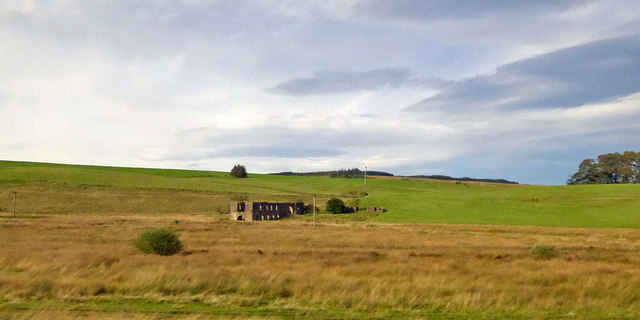
The Thirlwall seam was abandoned on 20 February 1926 and the colliery closed. Its remains on the common include the foundations of engine houses, a waggonway, reservoirs and a dam, a magazine, a bridge and the coal drops.
Geology
The Limestone Coal and the Thirlwall seam.
Workings
Workings on Thirlwall Common with engine houses, reservoirs and a magazine, and a tramway to coal drops at sidings on the Newcastle to Carlisle line.
Closure
The Thirlwall seam was abandoned on 20 February 1926.
What remains
Foundations of engine houses, a waggonway, reservoirs, a dam, a magazine, a bridge and the coal drops survive on Thirlwall Common.
Engine-house foundations, waggonway, reservoirs and dam, magazine, bridge and coal drops.
Related mines
- Mickley Colliery — Both owned by the Mickley Coal Company, which took Thirlwall over in 1918.
Nearby mines
- Blenkinsopp Colliery — 2.3 miles (3.7 km) SE
- South Tyne Colliery — 4.1 miles (6.5 km) SE
- Wallshield Colliery — 4.2 miles (6.7 km) E
- Ventners Hall Colliery — 4.8 miles (7.7 km) E
- Blackett Colliery — 5.0 miles (8.1 km) SE
Straight-line distance, within 9 miles (15 km). Show on the map.
Recorded claims
Individual factual claims, each attached to the source(s) that support it below. Where sources disagree, both are kept.
- Thirlwall Colliery first opened in 1834 and was shown as old workings on the Ordnance Survey map of 1865. 1
- The Thirlwall Coal Company Ltd reopened Thirlwall Colliery in the early 20th century, and the Mickley Coal Company Ltd took it over in 1918. 2,1
- Thirlwall Colliery employed 154 people in 1910 and again in 1925. 2
- The Thirlwall seam was abandoned on 20 February 1926. 3
- Engine-house foundations, a waggonway, reservoirs, a dam, a magazine, a bridge and coal drops survive from Thirlwall Colliery. 1,4
- Thirlwall's managers were J. McDonald (1910), G. B. Morris (1915), W. L. Duncan (1921) and O. R. Forster (1923-24). 5
Photographs & further reading
Coals Archive record: the 1834 opening, the reopening, the Mickley company and the remains on Thirlwall Common.
View sourceSources
- (secondary) Thirlwall Colliery — North East Heritage Library (Coals Archive)
- (primary) Thirlwall Colliery — Durham Mining Museum
- (primary) BGS / Mining Remediation Authority mine plan 21875616: Thirlwall, Thirlwall seam, abandoned 20 February 1926 — British Geological Survey
- (observational) Old coal drops for Thirlwall Colliery (Robin Webster) — Geograph
- (primary) Thirlwall Colliery: colliery management — Durham Mining Museum
Record created: 22 October 2026 · Last researched: 22 October 2026