 MineArchive
Stonecroft and Greyside Mine
| Also known as | Stonecroft Mine, Stoneycroft and Greyside |
|---|---|
| Location | Fourstones, near Hexham, Northumberland — 55.0153, -2.2303 (approximate) |
| Commodities | Lead, Barite |
| Type | Metal |
| Worked | 1851–1898 |
| Maximum depth | At least 60 fathoms (360 feet), from an 1896 accident report |
| Operators | Stonecroft and Greyside Mining Company (1877–1893), Thomas Clark (1894–1898) |
Overview
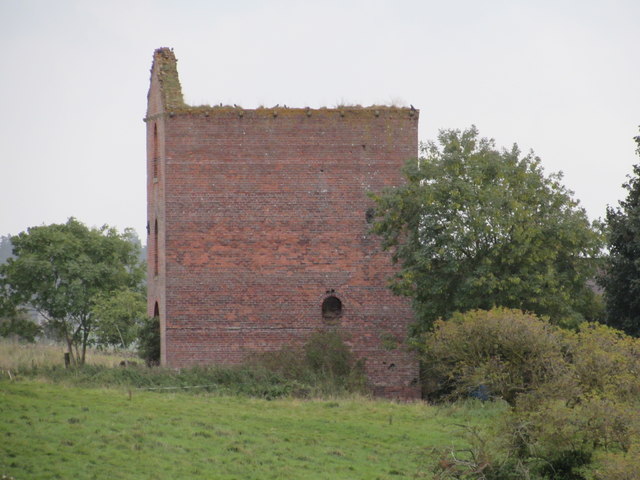
A lead and barytes mine at Fourstones west of Hexham, opened in 1851 on ground worked since the seventeenth century and closed in 1898. Its brick Cornish engine house, built by 1871 for a 70-inch condensing engine said to raise six hundred gallons a minute from seventy fathoms, still stands roofless in a field — one of the most conspicuous mine buildings in the county. The workforce reached ninety-four in 1896, two years before the end.
History
Mining had been going on around Settlingstones since 1690, and Stonecroft was built on the site of an earlier working. The Durham Mining Museum gives 1851 for its opening and 1898 for its close. Two shafts are named, Stonecroft and Greyside, the latter at NY859690.
Lead ore was the mine's business from the start, with barytes recorded alongside it from 1883, and the 1888 List of Mines gives 'Stonecroft and Greyside, Fourstones, Lead ore & barytes, Stonecroft and Greyside Mining Co., Fourstones, Hexham'. Thomas Clark held it in the 1890s. Employment tells the story of a mine reopening and then stopping: twenty-one in 1894, thirteen of them on the surface, with the return marked 're-opening'; ninety-four by 1896, sixty-one of them below ground; and closure two years after that.
The engine house was put up by 1871 to hold a 70-inch Cornish condensing engine with a ten-foot stroke, which pumped the water out of the mine and drove the dressing machinery. Six deaths are recorded at the mine between 1866 and 1896, most of them in or about the shaft: John Jordan when the cage went amain in 1878, Robert Herdman who fell down the shaft the same year, and Emmanuel Nattrass in 1896, who had got off the cage at the sixty-fathom level and given the all-clear when he collapsed in a fit and fell into the shaft — the bar that should have fenced it was, the inspector noted, not in position, 'as too often happens'.
Geology
The mine worked lead and barytes veins in the Carboniferous rocks of the Tyne valley west of Hexham, on the same belt as the Settlingstones barytes mine a mile away, which became one of the most important witherite and barytes producers in Britain. Silver was recovered with the lead. The mineralisation here belongs to the northern edge of the North Pennine orefield, where the veins carry barium minerals rather than the fluorspar of the orefield's centre.
Geological setting: Veins and Lodes (well documented example)
Workings
Two shafts, Stonecroft and Greyside, the workings reaching at least the sixty-fathom level — an inspector's account of a death in 1896 places a man on that level, ten fathoms from the bottom. The Cornish engine house of 1871, brick-built with arches repeated over three floors, housed the pumping engine and drove the dressing plant; the sockets for the great stone beams that carried the engine are still visible in its front wall. The abandonment plan for 'Stoneycroft and Greyside' is catalogued as no. 571 in the 1888 List of the Plans of Abandoned Mines.
Closure
The mine closed in 1898, two years after reaching its recorded peak of ninety-four people.
What remains
The engine house survives as a roofless brick tower standing alone in a field near High Stonecroft House, its brick arches repeated over three floors and a wall tie still holding the structure together; a visitor found an elder and a determined tree growing inside it. A row of miners' cottages and some of the ancillary mine buildings, converted to modern uses, remain at Settlingstones nearby.
The Cornish pumping engine house of 1871, roofless but substantially complete, and converted mine buildings and miners' cottages at Settlingstones.
Redevelopment
None on the mine site itself; the ancillary buildings at Settlingstones have been converted to other uses.
Related mines
- Settlingstones Mine — The two worked the same barium-bearing vein belt west of Hexham a mile apart, and the converted ancillary buildings and miners' cottages that survive from Stonecroft stand at Settlingstones.
Nearby mines
- Fourstones Colliery — 2.2 miles (3.6 km) E
- Settlingstones Mine — 2.7 miles (4.4 km) S
- Keepershields Quarry — 3.5 miles (5.6 km) NE
- Morwood Colliery — 3.7 miles (5.9 km) W
- Water House Mine — 3.7 miles (6.0 km) SW
Straight-line distance, within 9 miles (15 km). Show on the map.
What's uncertain
Points where sources disagree or the record could not be settled; both accounts are kept. All open questions in the archive.
- The BGS mine-plans catalogue holds a Mining Remediation Authority abandonment plan titled 'Stonecroft And Greyside' (catalogue OM3750, Lead Ore, dated 1897); the catalogue gives no location and the plan's details do not clearly tie it to this working, so it may belong to another of the same name. (uncertain) 5
Recorded claims
Individual factual claims, each attached to the source(s) that support it below. Where sources disagree, both are kept.
- The Durham Mining Museum gives the mine as opened in 1851 and closed in 1898, with two shafts, Stonecroft and Greyside. 1
- Lead ore was returned from 1882 and barytes alongside it from 1883; the 1888 List of Mines gives 'Lead ore & barytes' under the Stonecroft and Greyside Mining Co. 1,2
- Twenty-one people were employed in 1894, thirteen of them on the surface, with the return marked 're-opening'; by 1896 there were ninety-four, sixty-one of them below ground. 1
- The engine house was built by 1871 to hold a 70-inch Cornish condensing engine with a ten-foot piston stroke, said to raise six hundred gallons a minute from a depth of seventy fathoms, which pumped the mine and drove the dressing machinery. 3,4
- Six deaths are recorded at the mine between 1866 and 1896, most of them in or about the shaft; the inspector's note on the last of them records that the bar which should have fenced the shaft was not in position, 'as too often happens'. 1
- The engine house survives roofless, its brick arches repeated over three floors, with a wall tie still holding the structure and the sockets visible in the front wall where the stone supports for the engine were mounted. 3,4
- The BGS mine-plans catalogue holds a Mining Remediation Authority abandonment plan titled 'Stonecroft And Greyside' (catalogue OM3750, Lead Ore, dated 1897); the catalogue gives no location and the plan's details do not clearly tie it to this working, so it may belong to another of the same name. (uncertain) 5
Photographs & further reading
A visit to the surviving Cornish engine house, describing the brick arches, the wall tie and the sockets for the engine beams, and what the mine worked.
View sourceDates, shafts, owners, output and employment returns, with the museum's list of the six men killed at the mine and the inspectors' accounts of each death.
View sourceSources
- (primary) Stonecroft and Greyside (Lead Ores) — Durham Mining Museum
- (primary) 1888 List of Mines under the Metalliferous Mines Act: Lead Ore, Barytes, and Whinstone Mines in Northumberland — Mines Department, via the Durham Mining Museum
- (observational) Stonecroft Engine House (visit account) — Fabulous North
- (observational) Stonecroft Engine House (photograph) — Geograph Britain and Ireland
- (primary) BGS / Mining Remediation Authority mine plans: STONECROFT AND GREYSIDE — British Geological Survey / Mining Remediation Authority
Record created: 4 September 2026 · Last researched: 4 September 2026