 MineArchive
Smelt Colliery
| Location | Glascoed road, Brymbo, Wrexham — 53.0766, -3.0717 (approximate) |
|---|---|
| Commodities | Coal, Fireclay |
| Type | Coal |
| Worked | 1790–1967 |
| Maximum depth | Unknown. The colliery was worked mainly by levels into the hillside. |
| Operators | John Wilkinson (1792–?), The Brymbo Coal Company (1846–?) |
Overview
The Smelt was a day-level driven sideways into Brymbo hill beside the Glascoed road, dating from 1790 and named after the lead smelting works John Wilkinson built next to it in 1792. It outlasted every other mine around Brymbo. A shaft was sunk for coal around 1840 and the colliery passed to the Brymbo Coal Company in 1846, but it was never large: twelve people in 1896, twenty-six in 1923, and by the late 1930s it was raising clay rather than coal, which earned it the local name Clai-tan, the fireclay pit. A newspaper in its last years called it 'a country colliery for a country setting'. It closed in 1967 after 177 years.
History
The Smelt dates from 1790 and probably takes its name from the lead smelting works John Wilkinson built nearby in 1792; Wilkinson became its owner that year, and the Brymbo Coal Company took it on in 1846. It began as a series of levels driven into Brymbo hill, and around 1840 a shaft was sunk that produced coal. It was always a small operation. The Inspector of Mines list for 1896 records ten people underground and two on the surface under the manager Edward Griffiths; Smelt Nos. 1 and 2 employed 24 below and 3 above in 1908 under S. Wane, 26 below and 5 above in 1918, and 26 in total in 1923, then raising steam coal and fireclay from the Main and Fireclay seams. By 1938 fourteen people worked underground and eight on the surface, and only clay was being produced; in 1945 Smelt Nos. 1 and 2 were producing mainly clay with a workforce of 22. The fireclay went to the brickworks at Caello nearby, and the pit was locally called the 'Clai-tan' — the fireclay pit — as a result. An old photograph shows a small surface building with a stubby chimney and wooden headgear, taken down by the 1960s when only the level was still in use, with small spoil tips around the site and across the railway tracks.
Geology
The Smelt worked the Main coal and the fireclay seam beneath it in the Denbighshire Coal Measures, taking both from the same levels into Brymbo hill; in the colliery's later decades the fireclay was the product that paid, and the coal a by-product.
Geological setting: Sedimentary Beds and Seams (well documented example)
Workings
A day-level, or drift, driven sideways into Brymbo hill on the hillside beside the Glascoed road, originally a series of levels, with a shaft added around 1840 to raise coal. By the 1960s the shaft and its wooden headgear were gone and only the level was still worked. The spoil tips were small and lay around the site and across the railway.
Closure
The Smelt closed in 1967 after 177 years of work, the last mine of any kind around Brymbo: the area's last deep pit, Plas Power, had gone in 1938, and what coal was left in the district was taken by opencast between 1972 and 1975. A newspaper article in its final years described it as 'a country colliery for a country setting'.
What remains
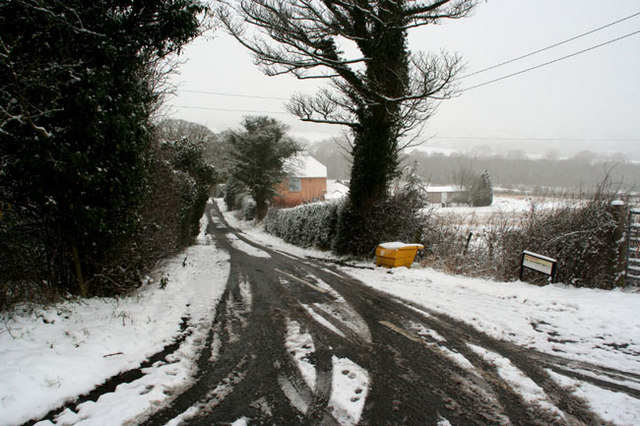
The site was overgrown and fenced off behind danger signs until the 1990s, when it was reclaimed; there is now nothing to show that a colliery was ever there.
Nothing; the site was reclaimed in the 1990s.
Related mines
- Brymbo Colliery — Both were worked by John Wilkinson and then by the Brymbo Coal Company from 1846; the Smelt outlasted the Brymbo pits, closing in 1967 as the last mine in the district.
Nearby mines
- Vron Colliery — 0.9 miles (1.4 km) S
- Brymbo Colliery — 0.9 miles (1.5 km) S
- Pentrefron Colliery — 1.0 miles (1.6 km) S
- Talwrn Colliery — 1.4 miles (2.3 km) S
- Ffrwd Colliery — 1.6 miles (2.5 km) NE
Straight-line distance, within 9 miles (15 km). Show on the map.
Recorded claims
Individual factual claims, each attached to the source(s) that support it below. Where sources disagree, both are kept.
- The Smelt dates from 1790 and probably took its name from the lead smelting works John Wilkinson built nearby in 1792; Wilkinson became its owner that year and the Brymbo Coal Company took it on in 1846. 1
- The colliery began as a series of levels driven into Brymbo hill, with a shaft sunk about 1840 that produced coal. 1,2
- The Inspector of Mines list for 1896 records ten people underground and two on the surface; the workforce reached 27 in 1908 and 26 in 1923, and was 22 in 1945. 1
- By 1938 only clay was being produced; the fireclay went to the brickworks at Caello and the pit was known locally as the 'Clai-tan', the fireclay pit. 1,2
- The Smelt closed in 1967 after 177 years of work, outlasting every other mine in the Brymbo area. 3,1
- The site was overgrown and fenced off with danger signs until the 1990s, since when it has been reclaimed and there is nothing left to show a colliery was there. 2
- The BGS mine-plans catalogue holds a Mining Remediation Authority abandonment plan titled 'Smelt' (catalogue OM15245, Fireclay, dated 1968). 4
Photographs & further reading
The Trust’s page on the Smelt, drawn from the Brymbo township history: the day-level into the hill, the fireclay years, the surface buildings and the reclaimed site.
View sourceOwners from Wilkinson to the Brymbo Coal Company and the Inspector of Mines returns for 1896 to 1945, on a page covering the Wrexham-area collieries together.
View sourceSources
- (primary) Ffrwd Colliery, near Brymbo — Welsh Coal Mines, from the Inspector of Mines lists
- (secondary) The Smelt Colliery — North Wales Miners Association Trust, after the Brymbo township history
- (secondary) Denbighshire Collieries — Clwyd Family History Society
- (primary) BGS / Mining Remediation Authority mine plans: SMELT — British Geological Survey / Mining Remediation Authority
- (observational) Glascoed Road, Brymbo (photographed 2007) — Geograph Britain and Ireland, Bob Shires
- (secondary) Brymbo's collieries, part 1 — the Brymbo Company — The history of the township of Brymbo (read via a 2019 Wayback Machine capture)
Record created: 9 September 2026 · Last researched: 9 September 2026