 MineArchive
Pontyberem Colliery
| Also known as | Pontyberem Anthracite Colliery |
|---|---|
| Location | Pontyberem, Gwendraeth valley, Carmarthenshire — 51.7530, -4.2100 (approximate) |
| Commodity | Anthracite |
| Type | Coal |
| Worked | from 1845 |
| Maximum depth | No shaft depth: the colliery was worked through slants driven into the seams rather than from a vertical shaft |
| Operators | Pontyberem Colliery Co. Ltd (1880–1908), Amalgamated Anthracite Collieries Ltd (1926–1947) |
Overview
An anthracite colliery in the Gwendraeth valley, opened in 1845 and worked through slants rather than a deep shaft. It employed 355 men in 1896 and 564 by 1923, taking coal from the Lower Pumpquart and Triquart seams. Ownership passed through a series of companies and then through the anthracite amalgamations of the 1920s, and in 1926 it was merged with the neighbouring Glynhebog colliery under Amalgamated Anthracite Collieries.
History
Pontyberem sits in the heart of the west Wales anthracite coalfield, and the colliery was opened there in 1845. By 1880 it was in the hands of the Pontyberem Colliery Co. Ltd. The Inspector of Mines list for 1896 records 355 men at the Pontyberem slants; by 1908 there were 364 and the owners were the Ponthenry Colliery Co. Ltd, and later the Ammanford Colliery Co. Ltd took it on. A list of 1923 gives 564 men, working the Lower Pumpquart and Triquart seams.
The anthracite trade then consolidated fast. United Anthracite Collieries Limited was formed in 1924 and grouped Great Mountain, Pontyberem Anthracite, New Dynant Anthracite and Ammanford collieries. In 1926 Pontyberem was merged with Glynhebog after Amalgamated Anthracite Collieries took charge; that company went on to absorb Carway, Caerbryn, the Gwendraeth Valley collieries, New Rhos and Pentremawr until it controlled a million tons of anthracite output in 1926. The combined workforce of Glynhebog, Pontyberem and Great Mountain No. 3 stood at 335 in 1945. On nationalisation in 1947 Pontyberem went into the National Coal Board's South Western Division, No. 1 (Swansea) Area, No. 1 (Pentremawr) Group.
Geology
The west Wales anthracite coalfield, the western end of the South Wales basin where the coal has been altered to anthracite. The seams worked here were the Lower Pumpquart and the Triquart. The Gwendraeth valley seams dip at angles that made slants — roadways driven down into the coal from the surface — the practical way in, which is why the 1896 inspector's list refers to the Pontyberem slants rather than to shafts.
Geological setting: Sedimentary Beds and Seams (well documented example)
Workings
Slants driven into the seams rather than a sunk shaft, in the Welsh manner of the district. The colliery worked the Lower Pumpquart and Triquart seams. Its later years were spent as part of a combined undertaking rather than as a separate pit: from 1926 it was run with Glynhebog, and by 1945 the workforce is recorded for Glynhebog, Pontyberem and Great Mountain No. 3 together.
Closure
The closure date is not known. The colliery was absorbed into the anthracite combines from 1924 and run with its neighbours, and passed to the National Coal Board in 1947 in the Pentremawr Group.
What remains
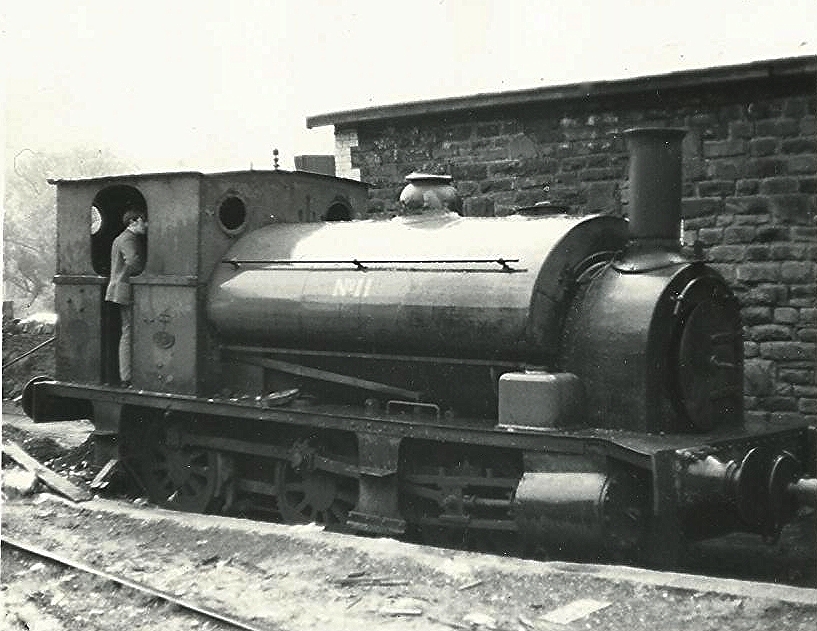
No account of the present site was found. A National Coal Board saddle tank locomotive, Avonside works number 1421 of 1900, rebuilt in 1953 and running as NCB No. 11, was photographed at Pontyberem and survives in preservation, which is the most visible remnant of the colliery's working life.
Related mines
- Glynhebog Colliery — Merged in 1926 under Amalgamated Anthracite Collieries; by 1945 the two were worked together with Great Mountain No. 3.
- Gwendraeth Colliery — Both were Gwendraeth valley anthracite collieries taken into Amalgamated Anthracite Collieries in the 1920s; Pontyberem is named on the Gwendraeth record.
Nearby mines
- Caepontbren Colliery — 0.2 miles (0.3 km) W
- Gwendraeth Colliery, Pontyates — 0.6 miles (0.9 km) S
- Ponthenry Colliery — 0.9 miles (1.5 km) N
- Cynheidre Colliery — 1.1 miles (1.8 km) E
- Carway Colliery — 1.2 miles (2.0 km) SW
Straight-line distance, within 9 miles (15 km). Show on the map.
Recorded claims
Individual factual claims, each attached to the source(s) that support it below. Where sources disagree, both are kept.
- The colliery was opened in 1845 and was held by 1880 by the Pontyberem Colliery Co. Ltd, by 1908 by the Ponthenry Colliery Co. Ltd and later by the Ammanford Colliery Co. Ltd. 1
- The Inspector of Mines list for 1896 records 355 men at the Pontyberem slants and 364 in 1908; a list of 1923 gives 564 men working the Lower Pumpquart and Triquart seams. 1
- In 1926 Pontyberem was merged with Glynhebog colliery after Amalgamated Anthracite Collieries took charge; the combined workforce of Glynhebog, Pontyberem and Great Mountain No. 3 was 335 in 1945. 1
Photographs & further reading
The colliery's ownership sequence and workforce figures from the Inspector of Mines lists, with a 1920s photograph of the site.
View sourceSources
- (secondary) Pontyberem — Welsh Coal Mines
- (observational) Avonside 1421 of 1900, NCB No. 11, at Pontyberem — Wikimedia Commons

Record created: 9 September 2026 · Last researched: 9 September 2026