 MineArchive
Cynheidre Colliery
| Also known as | Cynheidre-Pentremawr Colliery |
|---|---|
| Location | Five Roads, near Llanelli, Carmarthenshire — 51.7505, -4.1840 (exact) |
| Commodity | Coal |
| Type | Coal |
| Worked | 1954-56 (sinking)–1989 |
| Maximum depth | No. 1 shaft 798 yards (730 m), No. 2 shaft 786 yards (719 m) |
| Operators | National Coal Board (1954–1989) |
Overview
One of the National Coal Board's post-war West Wales 'super pits', built to keep deep anthracite mining viable — and the site of the worst coal-and-gas outburst disaster in British history, a hazard its own deep, disturbed seams made almost impossible to fully tame.
History
Cynheidre was developed by the National Coal Board after the Second World War as one of a pair of West Wales 'super pits', alongside Abernant, intended to keep economic anthracite mining viable in the Gwendraeth Valley by reaching seams too deep to work economically by the older slant-mine method. Shafts No. 1 (upcast, 798 yards) and No. 2 (downcast, 786 yards) were sunk between 1954 and 1956 about two miles south of Pentremawr; a third shaft, originally sunk in 1939-41 to ventilate the nearby Glynhebog drift, was deepened to 760 yards in 1955, and a fourth shaft followed in 1962 at 700 yards, fitted with one of only two two-rope surface-mounted friction winders ever installed in Britain. Production began in 1960, and the colliery was integrated with the neighbouring Pentremawr colliery from 1963. By 1972 Cynheidre was producing 472,000 tons of anthracite a year and employing 1,430 men, working chiefly the Big Vein seam. The colliery closed in January 1989.
Geology
Cynheidre worked deep anthracite seams of the South Wales Coalfield's Gwendraeth Valley district, ground that proved exceptionally prone to outbursts — the sudden, violent ejection of fine coal and methane from the seam itself, a hazard tied to geologically disturbed ground under high gas pressure. The first recorded outburst here came in October 1962 at the Pumpquart district; 66 outbursts were logged between then and April 1971, and a further 29 after that, making Cynheidre one of the worst-affected mines for this specific hazard anywhere in the country.
Workings
Four shafts served two linked mining complexes, with underground connections and surface rail links joining the Cynheidre and Pentremawr workings. No. 4 shaft's friction winder, one of only two such installations ever built in Britain and the only one in Wales, wound coal from 700 yards. The colliery was, in its later years, described as one of the most modern anthracite collieries anywhere in Europe.
Closure
Cynheidre closed in January 1989, still employing over a thousand men, as part of the wider contraction of the South Wales anthracite coalfield.
What remains
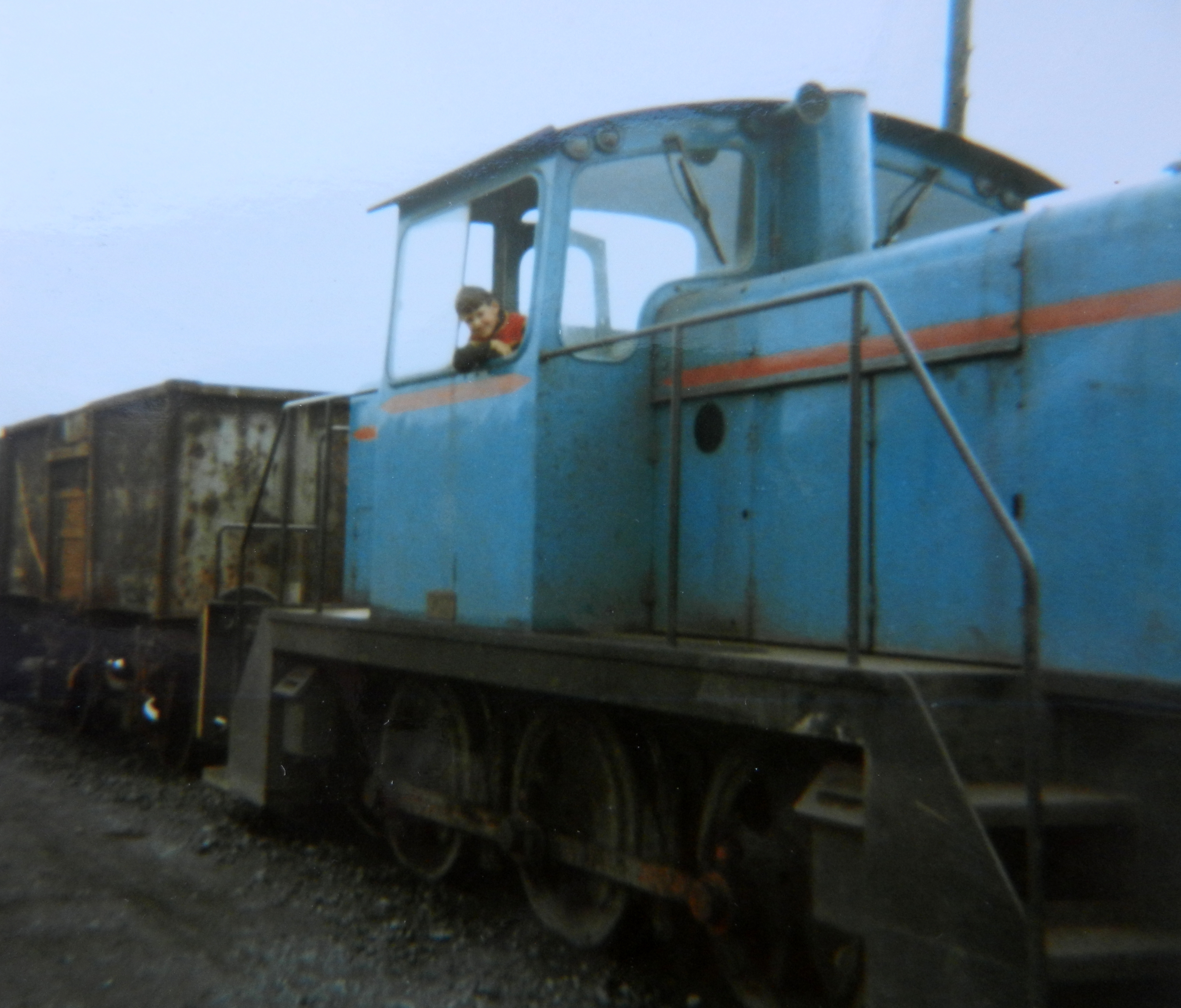
The former colliery site now hosts a waste recycling facility, established in 2009. Little of the original surface plant survives; a preserved shunting locomotive and photographs from the site's working life are held privately and in local collections.
Little survives above ground beyond scattered foundations; the site is now occupied by a waste recycling facility.
Redevelopment
A waste recycling facility now occupies the former colliery site.
Related mines
- Blaenhirwaun Colliery — Blaenhirwaun closed in 1962 and its workforce was the first to be transferred to the new Cynheidre complex, which was being sunk to take the Gwendraeth anthracite at a scale the older pits could not.
- Carway Colliery — Carway closed in July 1960 and its workforce went straight to man the new Cynheidre colliery, which was being sunk to take the Gwendraeth valley's anthracite on a scale the old drifts could not.
- Great Mountain Colliery — Great Mountain's No.3 Pit became Cynheidre's upcast shaft and its No.1 slant pumped water for Cynheidre until 1986; its men transferred there in 1962.
Nearby mines
- Pontyberem Colliery — 1.1 miles (1.8 km) W
- Ponthenry Colliery — 1.3 miles (2.2 km) NW
- Gwendraeth Colliery — 2.1 miles (3.4 km) N
- Carway Colliery — 2.2 miles (3.6 km) W
- Trimsaran Colliery — 3.4 miles (5.5 km) SW
Straight-line distance, within 9 miles (15 km). Show on the map.
Disasters & major incidents
-
Cynheidre-Pentremawr outburst, 1971
6 April 1971 · Gas / Asphyxiation · 6 fatalities
Shortly after noon on 6 April 1971, a heading being driven in the No. 2 Cross Measure Driveage at Cynheidre erupted without warning, ejecting around 400 tons of fine coal and roughly two million cubic feet of firedamp into the workings. Six men were killed by asphyxiation, and the gas travelled far enough through the ventilation system to overcome dozens more at a longwall face a considerable distance away before a quick-thinking electrician shut down an auxiliary fan and slowed its spread.
Recorded claims
Individual factual claims, each attached to the source(s) that support it below. Where sources disagree, both are kept.
- The National Coal Board developed Cynheidre as a West Wales 'super pit' alongside Abernant; shafts No. 1 (798 yd) and No. 2 (786 yd) were sunk 1954-56, with a third shaft deepened in 1955 and a fourth sunk in 1962 fitted with one of only two two-rope friction winders ever installed in Britain. 1,2
- Production began in 1960 and the colliery was integrated with the neighbouring Pentremawr colliery from 1963; by 1972 output reached 472,000 tons of anthracite a year with 1,430 men employed, chiefly working the Big Vein seam. 1
- The Gwendraeth Valley seams here were exceptionally prone to outbursts of methane and fine coal; the first was recorded in October 1962, and 66 had occurred by the time of the fatal 1971 outburst. 2
- Cynheidre closed in January 1989. 1
Sources
- (secondary) Cynheidre Colliery — Wikipedia
- (primary) Cynheidre Colliery — welshcoalmines.co.uk
- (primary) Cynheidre-Pentremawr Outburst, Llanelli, 1971 — Northern Mine Research Society
Record created: 24 August 2026 · Last researched: 24 August 2026