 MineArchive
Poldice Mine
| Location | Gwennap, near St Day and Twelveheads, Cornwall — 50.2440, -5.1650 (exact) |
|---|---|
| Commodities | Copper, Arsenic, Tin |
| Type | Metal |
| Worked | By 1512–1930 |
| Operators | William Lemon (1748–?) |
Overview
Poldice, in the parish of Gwennap once nicknamed the 'richest square mile in the Old World', worked continuously for the best part of three centuries — moving from tin to copper to, finally, arsenic as each market in turn made the mine's ore worth raising.
History
A 1512 legal document recording a theft of tin 'near Poldyth in Wennap' suggests mining was already under way at Poldice by the early 16th century, and the mine was certainly active by the 17th century, employing 800 to 1,000 men around 1700. The mine was still principally raising tin ore in 1748, the year its chief adventurer William Lemon and manager John Williams began driving the Great County Adit through the Carnon Valley — a single drainage tunnel that went on to serve, and cheaply dewater, many of the mines across the district. By 1788 copper had overtaken tin as the mine's main product, and Poldice was making good profits through the 1790s; in the early 19th century it merged with the neighbouring Wheal Unity. Falling copper prices, driven by large new discoveries in Spain, hit the mine hard in the 1860s, and by the 1870s the cost of pumping water from the workings had made copper mining uneconomic. The mine then turned to arsenic production, continuing to raise metals in steadily decreasing quantities alongside it; small-scale mining persisted into the 1920s before the mine closed for good in 1930. Over its working life Poldice produced more than 150,000 tons of copper ore, 1,500 tons of tin and 2,500 tons of arsenic.
Geology
The mine worked copper and tin lodes within the Cornubian orefield of the Gwennap mining district, once considered the richest concentration of copper ore anywhere in the world.
Geological setting: Hydrothermal Deposits (well documented example), Veins and Lodes (well documented example)
Workings
The mine was drained by the Great County Adit, begun in 1748 to serve Poldice and many neighbouring mines across the Carnon Valley; in its later years the site also housed an arsenic calciner and arsenic flue for roasting mundic-rich ore to drive off and capture arsenic.
Closure
The mine closed in 1930 after small-scale arsenic and metal production had continued through the 1920s.
What remains
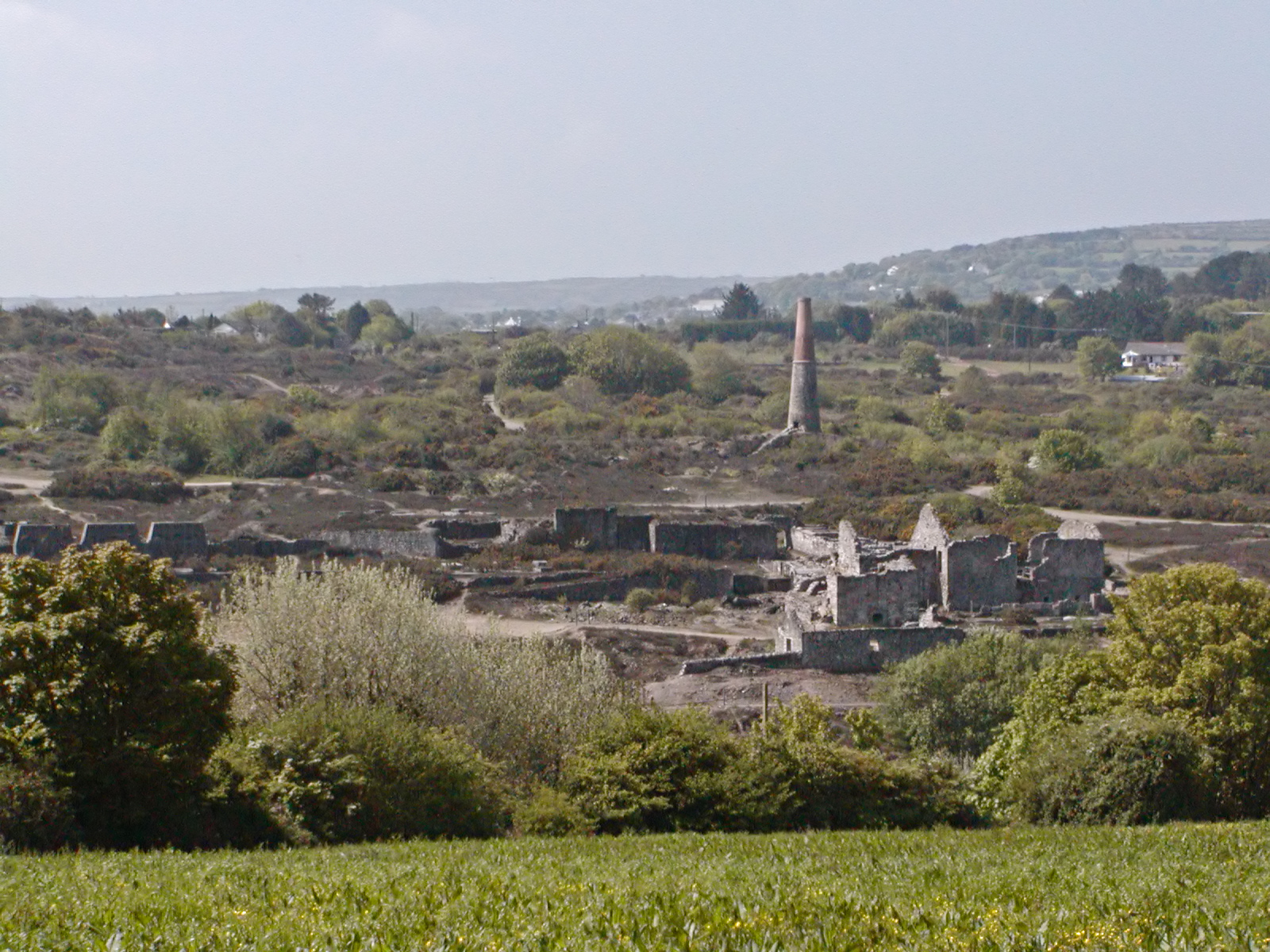
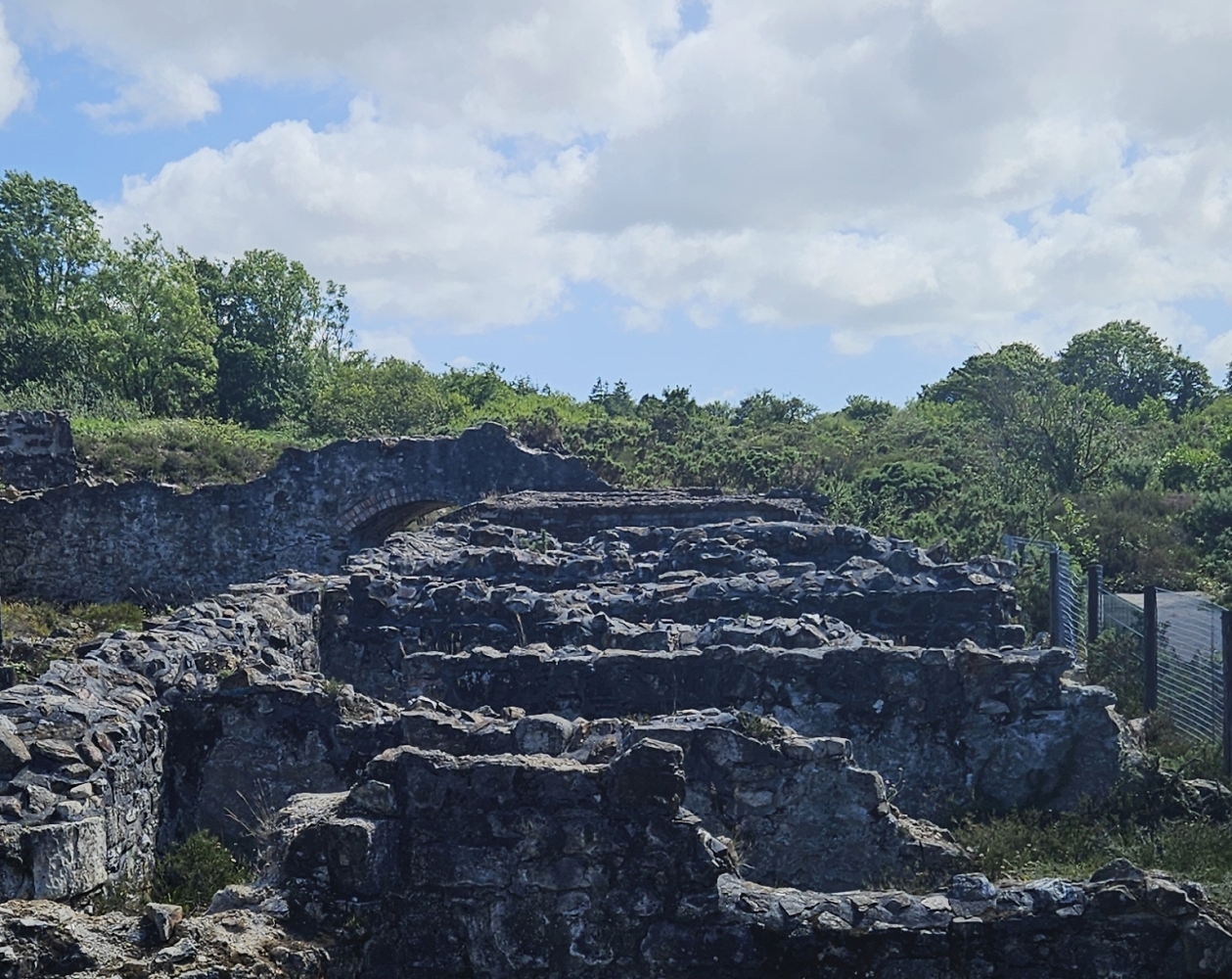
A chimney, the arsenic labyrinth and ruined buildings stand in the Poldice valley among extensive spoil.
Extensive spoil and processing waste survive across the Poldice valley, including material still being studied for its arsenic content in the surrounding soil and water; the Great County Adit itself remains a significant piece of mine-drainage infrastructure.
Related mines
- Great County Adit — The Great County Adit was conceived by Poldice's own manager, John Williams, as a single shared drainage tunnel.
Nearby mines
- Wheal Maid — 0.4 miles (0.7 km) S
- Consolidated Mines — 0.6 miles (1.0 km) S
- Wheal Clifford — 0.7 miles (1.1 km) S
- Wheal Baddon — 0.7 miles (1.2 km) S
- Wheal Squire — 0.8 miles (1.3 km) S
Straight-line distance, within 9 miles (15 km). Show on the map.
Recorded claims
Individual factual claims, each attached to the source(s) that support it below. Where sources disagree, both are kept.
- Over its working life Poldice produced more than 150,000 tons of copper ore, 1,500 tons of tin and 2,500 tons of arsenic. 1
- The Great County Adit, begun in 1748 by chief adventurer William Lemon and manager John Williams, drained Poldice and many neighbouring mines across the Carnon Valley. 1,2
- The Mining Remediation Authority's abandonment plans for Poldice run to fourteen sheets on the tin and copper ores at 20 yards to the inch (OM53), with two more for Tolgullow United or Poldice West (OM2343). 3
- Photographs of June 2026 show the mine's chimney, ruinous buildings and the arsenic labyrinth still standing in the Poldice valley. 4
Sources
- (secondary) Poldice mine — Wikipedia
- (secondary) Poldice Mine, Cornwall — Cornwall Calling
- (primary) Poldice (BGS Mine Plans Catalogue) — British Geological Survey / The Coal Authority
- (observational) Poldice Mine: chimney, ruinous buildings and arsenic labyrinth (Geograph, Rob Farrow, June 2026) — Geograph Britain and Ireland
Record created: 22 August 2026 · Last researched: 24 September 2026