 MineArchive
Plenmeller Colliery
| Location | Plenmeller, south-east of Haltwhistle, Northumberland — 54.9394, -2.4053 (approximate) |
|---|---|
| Commodity | Coal |
| Type | Coal |
| Worked | 1880s–1932 |
| Maximum depth | Unknown. |
| Operators | Plenmeller Coal Co., Plenmeller Collieries Ltd (?–1932) |
Overview
A colliery on the Plenmeller coalfield south-east of Haltwhistle that grew from a handful of landsale workers into a pit of over 700 men in the early 1920s, with its own halt on the Alston line, and whose closure in 1932 brought widespread hardship to the district.
History
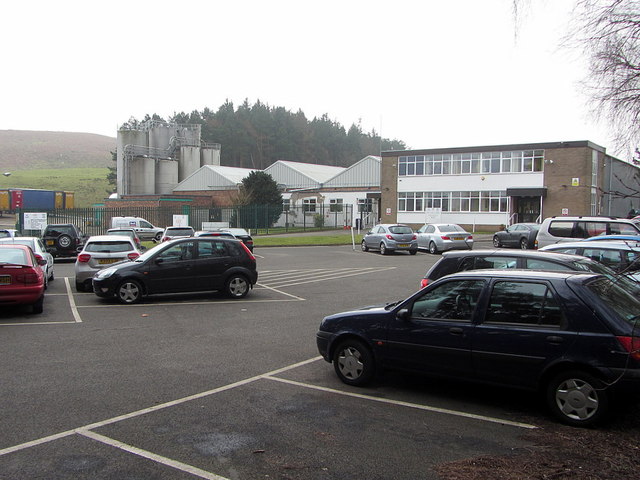
Coal had been dug on the small Plenmeller coalfield, two and a quarter miles long and half a mile wide, since the early eighteenth century; an Engine Pit there closed in 1856. The Plenmeller Coal Company was working it for landsale in the 1880s, and in the 1890s and 1900s the colliery employed fewer than twenty men. From about 1910 new owners, Plenmeller Collieries Ltd, sank to the Little Limestone coal, and the workforce leapt to 390 by 1915 and 714 in 1921, producing coking, gas, manufacturing and steam coal and iron pyrites. A halt on the Haltwhistle–Alston line opened in 1919 to serve the colliery. Employment peaked in the early 1920s and fell back to about 340 by 1930; the Little Limestone seam was abandoned on 26 May 1932, and the closure caused widespread hardship in the area. Coal came back to Plenmeller Common in 1991 as an opencast site, which by 2002 had yielded 1.91 million tonnes before the land was restored; the old colliery site is occupied by a plastic-container factory.
Geology
The Plenmeller coalfield of the South Tyne valley, in the Carboniferous Limestone series: the Little Limestone coal from 1915, with earlier Comb Roof, cannel and top seams abandoned between 1874 and 1910.
Workings
Shaft workings from the Engine Pit (closed 1856) onwards; an exploring drift was abandoned in 1903 when too much water was met. The twentieth-century colliery worked the Little Limestone coal.
Closure
The Little Limestone seam was abandoned on 26 May 1932 and the colliery closed, causing widespread hardship around Haltwhistle.
What remains
The colliery site is occupied by industrial works (RPC Containers); the opencast ground on Plenmeller Common has been restored.
Unknown.
Redevelopment
A factory making blow-moulded plastic containers on the colliery site; opencast coaling on Plenmeller Common 1991-2002, since restored.
Related mines
- Blenkinsopp Colliery — Both worked the Little Limestone coal of the South Tyne coalfields near Haltwhistle.
Nearby mines
- Church Burn Mine — 2.2 km SE
- Water House Mine — 8.0 km NE
- Blenkinsopp Colliery — 8.6 km NW
- Langley Barony Mine — 8.7 km E
- Morallee Fell Mine — 9.6 km E
Straight-line distance, within 15 km. Show on the map.
What's uncertain
Points where sources disagree or the record could not be settled; both accounts are kept. All open questions in the archive.
- The Plenmeller opencast mine was opened on 19 September 1991 and by May 2002 had extracted 1.91 million tonnes. (disputed) 2
- Opencast extraction took place at Plenmeller, but coaling ceased in 1998. (disputed) 3
Recorded claims
Individual factual claims, each attached to the source(s) that support it below. Where sources disagree, both are kept.
- Plenmeller Colliery closed on 26 May 1932; owners Plenmeller Coal Co. (1880s), Plenmellor Colliery Co. (1890s), Plenmeller Collieries Ltd (1910s); employment 17 in 1900, 390 in 1915, 714 in 1921, 337 in 1930; the Little Limestone coal worked from 1915. 1
- Employment peaked in the early 1920s; the colliery's closure in 1932 caused widespread hardship; Plenmeller Halt opened in 1919 to serve it; RPC Containers now occupy the site. 2
- The Plenmeller opencast mine was opened on 19 September 1991 and by May 2002 had extracted 1.91 million tonnes. (disputed) 2
- Opencast extraction took place at Plenmeller, but coaling ceased in 1998. (disputed) 3
- The Plenmeller coalfield is two and a quarter miles long, from east to west, and half a mile wide; coal has been mined there since the early eighteenth century. 3
Photographs & further reading
Owners, employment, seams and the abandonment dates of each seam.
View sourceSources
- (secondary) Durham Mining Museum - Plenmeller Colliery — Durham Mining Museum
- (secondary) Plenmeller — Wikipedia
- (secondary) South Tyne Valley Coalfields - Northern Mine Research Society — Northern Mine Research Society
Record created: 21 September 2026 · Last researched: 21 September 2026