 MineArchive
Penrhiw Mine
| Also known as | Penyberth Mine, Pen y Berth, Berth Ddu |
|---|---|
| Location | Ystumtuen, Cwmrheidol, Ceredigion — 52.3917, -3.8574 (exact) |
| Commodities | Lead, Zinc |
| Type | Metal |
| Worked | c. 1727–1882 |
| Maximum depth | Unknown. |
| Operators | John Taylor & Son (1844–1845), Williams family of Llanfrothen (1845–1870) |
Overview
A lead and zinc mine east of Ystumtuen, discovered around 1727 by that mine's own miners working beyond their lease boundary, and worked jointly with Ystumtuen and Bwlchgwyn for much of its history.
History
Penrhiw Mine began as a chance discovery: around 1727, as the Ystumtuen Mine's lease expired, its miners had been following the lode east and made a minor find of ore on the neighbouring property, then known as Pen y Berth or Berth Ddu, still within the confines of the Nanteos estate. Pursuing the vein further, the same men crossed the Crown boundary and discovered the productive lode at Bwlchgwyn around 1735, and royalties from working it -- paid to Thomas Powell of Nanteos without Crown authority -- drew an Attorney General's inquiry in 1743. Penrhiw, Ystumtuen and Bwlchgwyn were let together by the Nanteos estate for roughly a century; Sir Thomas Bonsall still controlled all three in 1806, selling ore at £18 a ton. In the mid-19th century Penrhiw itself passed out of the Nanteos estate into the hands of the Williams family of Llanfrothen, holding it from around 1845-50 until at least 1870, possibly as part of a marriage settlement, even while Ystumtuen and Bwlchgwyn remained under Nanteos and were let in 1844 to John Taylor & Son. In 1845 Penrhiw was worked jointly with Ystumtuen as the 'Nanteos Mine' under Taylor's direction, producing 46 tons of rather inferior-grade lead ore by the labour of 36 people; Taylor also directed miners to drive the mine's No. 6 adit towards Penrhiw, though he grew openly disappointed with a site whose waterwheels froze in hard winters and ran dry in summer droughts. Contemporary mineral statistics for the district are confusingly inconsistent, variously grouping Penrhiw with Bwlchgwyn as the 'Aberystwyth Mine' and separately with Ystumtuen as 'Nanteos', before being broken out under its own name from 1850. The mine was known to be at work as late as 1882, and may have seen further use during the neighbouring Cwm Rheidol mine's 1910-17 revival.
Geology
A lead and zinc lode east of Ystumtuen, found by miners following the vein across the Crown boundary in the 1730s.
Workings
Developed via a No. 6 adit driven towards the lode from the Ystumtuen side, alongside a system of leats and ponds serving a waterwheel -- vulnerable to both winter freezing and summer drought -- shared with the neighbouring Bwlchgwyn mine.
Closure
Known to have been at work until 1882; possibly reworked during Cwm Rheidol's 1910-17 revival.
What remains
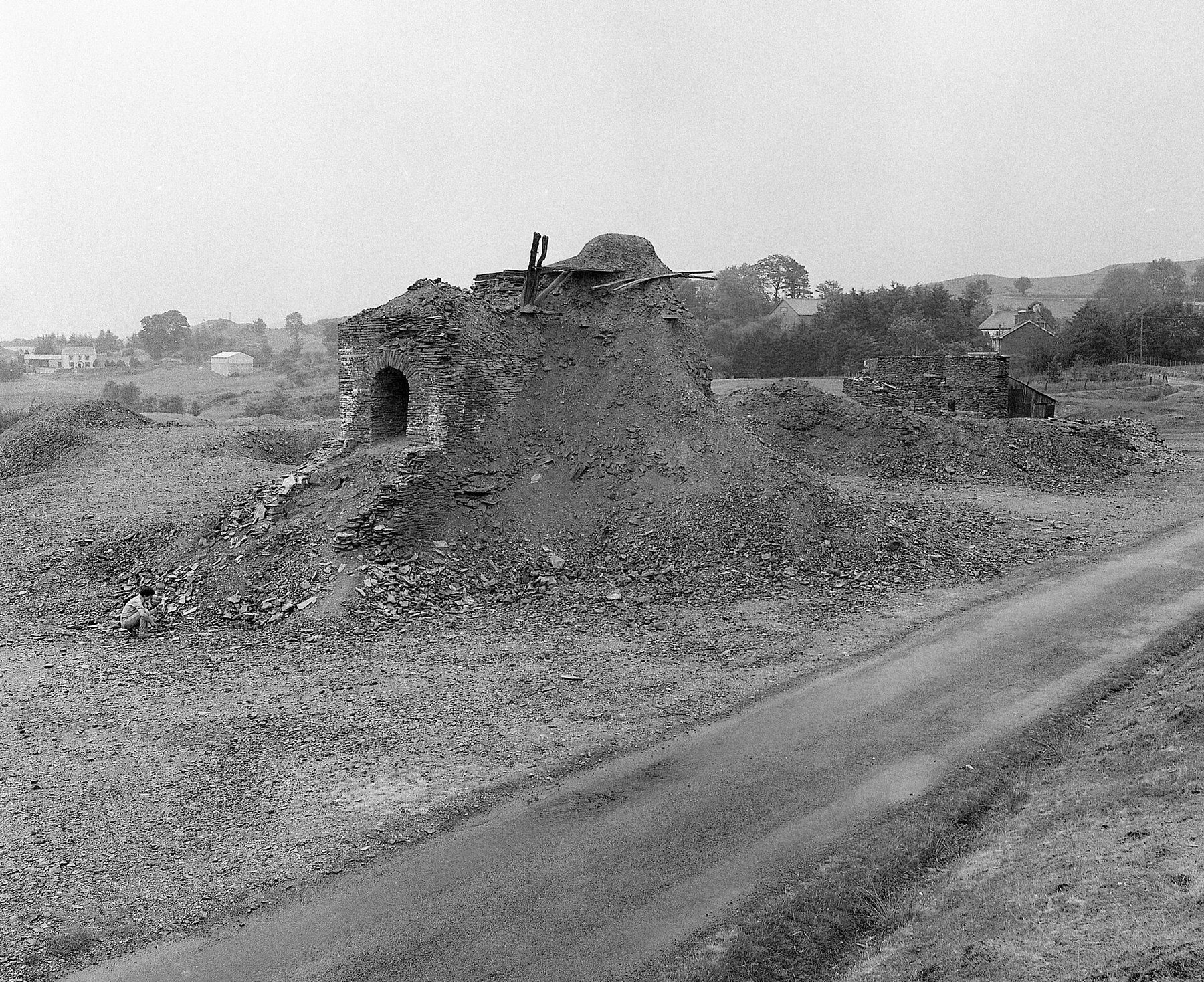
Surface features are largely restricted to the remains of a crusher house and an adjacent wheelpit, along with the now-neglected leat and pond system it shared with Bwlchgwyn.
A crusher house, an adjacent wheelpit, and a system of leats and ponds shared with the neighbouring Bwlchgwyn mine.
Related mines
- Bwlchgwyn Mine — Bwlchgwyn lies immediately west of Penrhiw and the two were worked together for much of the nineteenth century; by its end their workings were connected underground and drained through the same adits.
- Cwm Rheidol Mine — Penrhiw may have seen further use during Cwm Rheidol's neighbouring 1910-17 revival.
- Ystumtuen Mine — Penrhiw began as a chance discovery around 1727 when Ystumtuen's own miners, following the lode east as its lease expired, found ore on the neighbouring ground.
Nearby mines
- Bwlchgwyn Mine — 0.2 miles (0.2 km) NE
- Ystumtuen Mine — 0.3 miles (0.4 km) W
- Cwm Rheidol Mine — 1.2 miles (1.9 km) W
- Llywernog Mine — 1.4 miles (2.3 km) N
- Bwa-Drain Mine — 1.7 miles (2.7 km) W
Straight-line distance, within 9 miles (15 km). Show on the map.
Recorded claims
Individual factual claims, each attached to the source(s) that support it below. Where sources disagree, both are kept.
- Penrhiw was discovered around 1727 by Ystumtuen's own miners following the lode east beyond their lease boundary, on ground then known as Pen y Berth or Berth Ddu; the same search led them to discover the Bwlchgwyn lode around 1735. 1
- In the mid-19th century Penrhiw passed out of the Nanteos estate into the hands of the Williams family of Llanfrothen, who held it separately from Ystumtuen and Bwlchgwyn from around 1845-50 until at least 1870, possibly as part of a marriage settlement. 1
- In 1845 Penrhiw was worked jointly with Ystumtuen as the 'Nanteos Mine' under John Taylor & Son, producing 46 tons of rather inferior-grade lead ore by the labour of 36 people. 1
- Surface features at Penrhiw are largely restricted to the remains of a crusher house and an adjacent wheelpit. 2
- The British Geological Survey holds Aberystwith Mines Ltd's letters and notes on the Bwlch United Mines, Penrhiw and Bwlchgwyn, for 1845 to 1917 (KP169565), catalogued for lead, deposited by the National Coal Board and viewable online. 3
Photographs & further reading
Covers Penrhiw's own discovery and working life alongside its neighbours Ystumtuen and Bwlchgwyn.
View sourceThe RCAHMW's own site record, with grid reference, condition and surviving surface features.
View sourceThe scanned papers, viewable online.
View sourceSources
- (secondary) A brief history of the Ystumtuen Mines — Simon J.S. Hughes / Welsh Mines Preservation Trust, 1993 (via RCAHMW)
- (primary) Penrhiw Lead and Zinc Mine (Coflein NPRN 33895) — RCAHMW
- (primary) Aberystwith Mines Ltd, Bwlch United Mines (Penrhiw-Bwlchgwyn) 1845-1917: letters and notes, KP169565 (BGS mine plans catalogue) — British Geological Survey
Record created: 31 August 2026 · Last researched: 24 September 2026