 MineArchive
Parkfield Colliery
| Location | Pucklechurch, Kingswood, Bristol — 51.4970, -2.4361 (exact) |
|---|---|
| Commodity | Coal |
| Type | Coal |
| Worked | 1851 (sinking)–15 August 1936 |
| Maximum depth | 840 feet. |
| Operators | Handel Cossham (1851–1890), Bristol United Collieries (1890–1914), East Bristol Collieries Ltd (1914–1936) |
Overview
A long-lived Kingswood-district Bristol coalfield colliery, sunk by the industrialist Handel Cossham in 1851 and worked until 1936, whose Brandy Bottom engine house survives as a scheduled monument.
History
Parkfield Colliery was sunk in 1851 under the ownership of the industrialist and future MP Handel Cossham, reaching coal in 1853 at a shaft depth of 840 feet; only the upper series of the coalfield's veins were worked here -- the Hard, Top, Hollybush and Great veins -- producing coal noted for its quality, prized for both gas manufacture and household use. By 1896 the colliery employed 292 men underground and 49 on the surface under manager J. T. Onions, its workings served by over 16,000 feet of underground rail and powered by winding engines and Lancashire boilers. After Cossham's death in 1890 the pit was sold, along with his Deep Pit, South Pit and Speedwell collieries, to Bristol United Collieries, which in 1900 formed the Bedminster, Easton, Kingswood and Parkfield Collieries Ltd to manage its holdings; in 1914 the pit passed again, to Sir Frank Beauchamp -- already a substantial owner of collieries around Radstock -- whose new East Bristol Collieries Ltd operated it thereafter. By the 1930s worsening flooding, increasing pumping costs and dwindling reserves had made the pit uneconomic, and it closed on 15 August 1936.
Geology
Coal of the Bristol field in the Kingswood district: only the upper series of the coalfield's veins were worked here — the Hard, Top, Hollybush and Great veins.
Workings
Worked the upper series of the coalfield's veins -- the Hard, Top, Hollybush and Great veins -- from an 840-foot shaft, with over 16,000 feet of underground rail and steam-powered winding and pumping.
Closure
Closed on 15 August 1936 as flooding, pumping costs and dwindling reserves made the pit uneconomic.
What remains
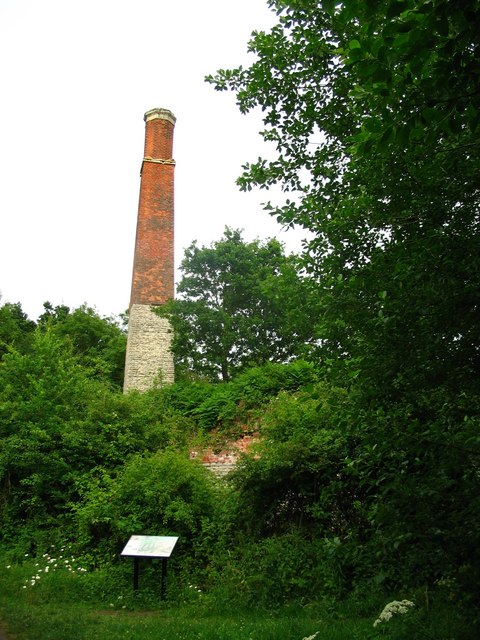
The colliery's Brandy Bottom engine house survives and is a scheduled ancient monument.
The Brandy Bottom engine house, scheduled as an ancient monument.
Related mines
- Clandown Colliery — Both passed in 1924 to the same owner, Sir Frank Beauchamp, via his East Bristol Collieries Ltd.
- Easton Colliery — Both were brought into Bedminster, Easton, Kingswood and Parkfield Collieries Ltd in 1900 — the company took its name in part from Parkfield — and were worked under one ownership thereafter.
- Speedwell Colliery — Both were Handel Cossham's pits, run together as the Kingswood and Parkfield Collieries from 1879 and closing in the same year, 1936; Parkfield's abandonment then flooded the last deep mine in the district.
Nearby mines
- Brandy Bottom Colliery — 1.1 miles (1.7 km) W, Gloucestershire
- Shortwood Colliery — 1.2 miles (1.9 km) SW, South Gloucestershire
- Serridge Pit — 1.8 miles (2.9 km) N, Gloucestershire
- Ram Hill Colliery — 2.0 miles (3.2 km) NW, Gloucestershire
- Coalpit Heath Colliery — 2.5 miles (4.0 km) NW, South Gloucestershire
Straight-line distance, within 9 miles (15 km). Show on the map.
Disasters & major incidents
-
Parkfield Colliery fall of clod, 1893
12 January 1893 · Collapse / Roof Fall · 2 fatalities
Two colliers at Parkfield Colliery, near Bristol, were killed on 12 January 1893 when a clod with an unseen slip at its back fell over and knocked out their sprags.
Recorded claims
Individual factual claims, each attached to the source(s) that support it below. Where sources disagree, both are kept.
- Parkfield was sunk in 1851 by Handel Cossham, reaching coal in 1853 at a depth of 840 feet, and worked the upper series of the coalfield's veins -- the Hard, Top, Hollybush and Great veins -- producing coal valued for gas manufacture and household use. 1
- By 1896 the colliery employed 292 men underground and 49 on the surface under manager J. T. Onions, served by over 16,000 feet of underground rail. 1
- After Cossham's 1890 death the pit passed to Bristol United Collieries and then, in 1914, to Sir Frank Beauchamp's East Bristol Collieries Ltd, before closing on 15 August 1936 as flooding and dwindling reserves made it uneconomic. 1
- The colliery's Brandy Bottom engine house survives and is a scheduled ancient monument. 2
- Located at about 51.497 N, 2.436 W. 1
Sources
- (secondary) Parkfield Colliery — Wikipedia
- (primary) Brandy Bottom Colliery, part of Parkfield Colliery, Pucklechurch (Historic England list entry 1019400) — Historic England
Record created: 31 August 2026 · Last researched: 31 August 2026