 MineArchive
Pantyffynnon Colliery
| Location | Pantyffynnon, Ammanford, Carmarthenshire — 51.7833, -4.0005 (exact) |
|---|---|
| Commodities | Anthracite, Coal |
| Type | Coal |
| Worked | 1902–31 January 1969 |
| Maximum depth | No shaft depth applies to the modern slant, which was driven 500 yards to reach the Stanllyd seam; the earlier pit alongside it was 45 feet deep. |
| Operators | Blaina Colliery Company Limited (1902–?), Henderson's Welsh Anthracite Collieries Limited (?–1947), Amalgamated Anthracite Collieries Ltd (?–1947), National Coal Board (1947–1969) |
Overview
Pantyffynnon was one of the larger anthracite mines of the Amman valley, a slant driven at Pantyffynnon near Ammanford. Small workings under the name go back to the 1850s, but the colliery that mattered was opened in 1902 by the Blaina Colliery Company half a mile east of Wernos, and its slant was driven 500 yards before it struck the Stanllyd seam. It grew from 38 people in its first year to more than 600 by the late 1920s, and was still employing nearly 500 in the mid-1950s. The National Coal Board reconstructed it in 1957 to give it another twenty-five years, closing Saron, Gelliceidrim and Llandebie and moving their men here — then put it on the closure list in 1968 and shut it on 31 January 1969.
History
The name attaches to several workings before the modern colliery. Daniel Perry and Company owned a Pant Ffynon mine in 1858-60 and David Lloyd owned Pant-y-Ffynon in 1865-70; a Pantyffynnon slant worked the Middle seam around 1866 under John Lloyd, abandoned the Upper Pumpquart before November 1874, and was owned by the Lloyd Brothers of Pontyclerc in 1886-87 with John Lloyd as manager. In 1893 it belonged to the Pantyffynnon Anthracite Colliery Syndicate Limited of London but was listed as standing. A description of 1901 has the colliery as a slant working the Rocket seam together with a pit 45 feet deep and 8 feet across, worked on the pillar and stall system with naked lights still in use and ventilated by a furnace. The Blaina Colliery Company Limited opened a new anthracite slant in 1902, about half a mile east of Wernos Colliery, and this is the Pantyffynnon that appears in the twentieth-century record. Manpower went from 38 in 1902 to 348 in 1909 and 476 in 1910, fell back sharply to 138 in 1913, and then climbed again through the 1920s to a peak of 615 in 1928. Ownership passed to the Blaina and Raven Anthracite Company Limited and then to Henderson's Welsh Anthracite Collieries Limited of Gresham Street, London, which by 1934 controlled ten collieries employing 2,714 miners; later the colliery came under Amalgamated Anthracite Collieries and, in 1947, the National Coal Board. In August 1928 the colliery was closed until the workmen accepted reduced rates of pay the following January. Two men were killed and four badly burned by an explosion in the No. 1 East Level of the Upper Pumpquart seam on 28 January 1908, with 200 men underground at the time; the manager was fined £10 for failing to maintain proper ventilation (see Disasters, below). Other deaths recorded here include the colliery's first, seventeen-year-old Llewellyn Watkins, run over by drams in June 1905, and the rider Thomas Rees, killed in 1913 by a tram that ran back down a dip.
Geology
Pantyffynnon worked the anthracite seams of the northern crop of the South Wales coalfield: the Stanllyd, which averaged 78 inches, the Rock at about 60 inches, the Upper and Lower Pumpquart, the Little Vein and the Brynlloi, the last used only for training. The slant had to be driven 500 yards before it reached the Stanllyd, and dipped at between 1 in 2.1 and 1 in 5.5 over its 1,000-yard length.
Geological setting: Sedimentary Beds and Seams (well documented example)
Workings
A slant 1,000 yards long, dipping at 1 in 2.1 to 1 in 5.5, with a shallow pit alongside it in the earlier period. In February 1954 the main slant engine was converted from steam to a 700 horsepower electric haulage that could take seven journeys of 17 tons an hour at 12.5 miles per hour, men being wound at half that speed. By nationalisation the colliery's ventilation was worked in conjunction with the Jubilee Slant, and it housed the central workshops for the group. Of 485 people employed in 1955, 248 worked at the coalfaces.
Closure
In 1954-55 Pantyffynnon was one of 42 collieries whose accident rate worried both the National Union of Mineworkers and the National Coal Board. The Board nevertheless reconstructed the mine in 1957 to give it another twenty-five years of production, closing Saron, Gelliceidrim and Llandebie for want of men and transferring their workers here and to other long-life mines. In April 1968 it was put on the Board's jeopardy list, the Board citing absenteeism of 39.4 per cent in March that year, and it was closed on 31 January 1969.
What remains
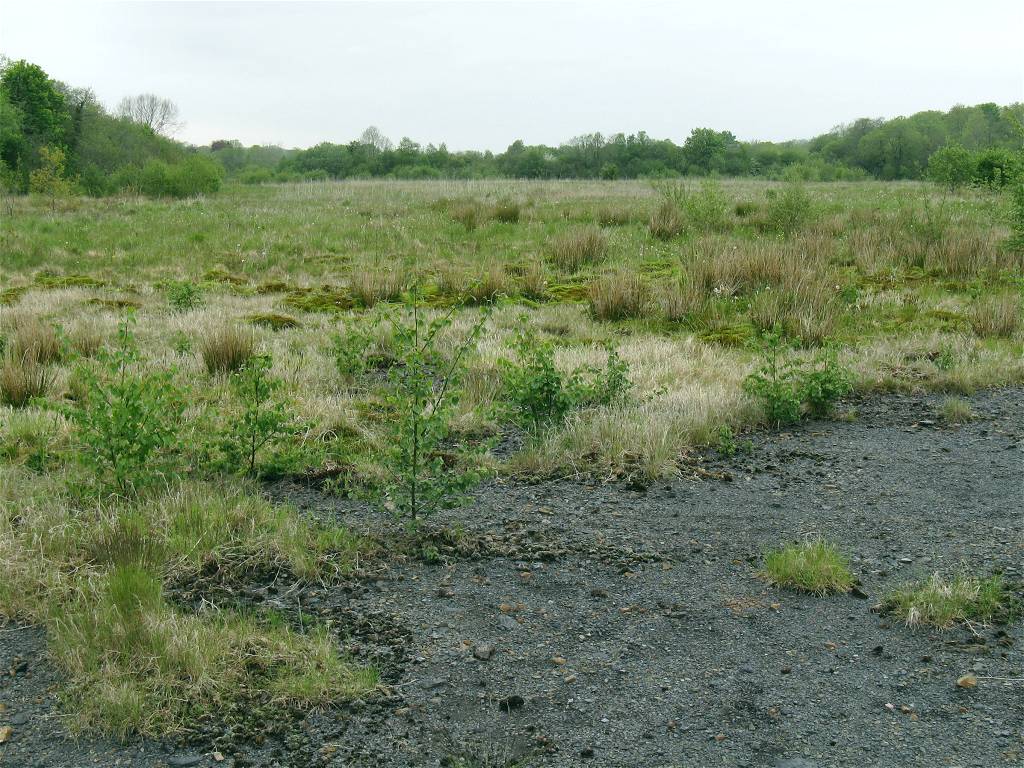
The colliery has been cleared. The site is open ground beside the Loughor, photographed in 2012, and the rail bridge that served it has been demolished; a memorial stands beside the Fferws Brook nearby.
The site has been cleared to open ground beside the Loughor; the rail bridge that served it has been demolished.
Related mines
- Gellyceidrim Colliery — Gellyceidrim was one of three collieries the National Coal Board closed in 1957 for want of men, transferring its workers to Pantyffynnon, which had just been reconstructed for another twenty-five years of production.
- Park and Blaina Colliery — The Blaina Colliery Company, earlier the Blaina and Park Colliery Company, opened Pantyffynnon slant in 1902; both later passed to the Blaina and Raven company and to Henderson's (NMRS; WCM).
- Pontyclerc Colliery — Neighbours at Pantyffynnon; the Lloyd Brothers of Pontyclerc owned the Pantyffynnon slant in 1886-87 and the plans are combined.
- Pwllbach Colliery — Both passed to Henderson's Welsh Anthracite Collieries Ltd of Gresham Street, London, the combine that by 1934 controlled ten anthracite collieries employing 2,714 miners.
- Saron Colliery — Ammanford anthracite slants of the Blaina Colliery Company.
- Trimsaran Colliery — Both held by Henderson's Welsh Anthracite Collieries before nationalisation.
Nearby mines
- Pontyclerc Colliery — 0.1 miles (0.1 km) W
- Park and Blaina Colliery — 0.8 miles (1.3 km) NW
- Wernos Colliery — 0.8 miles (1.3 km) N
- Ammanford Colliery — 0.8 miles (1.4 km) N
- Bodyst Uchaf Colliery — 1.2 miles (1.9 km) NE
Straight-line distance, within 9 miles (15 km). Show on the map.
Disasters & major incidents
-
Pantyffynnon Colliery explosion, 1908
28 January 1908 · Explosion · 2 fatalities
On the afternoon of 28 January 1908 gas exploded in the No. 1 East Level of the Upper Pumpquart seam at Pantyffynnon Colliery, Ammanford, while 200 men were underground. Gas had been troubling the district for weeks, and the men had been told that morning not to fire shots. The explosion was put down to shotfiring. Two colliers, Gwilym Griffiths and William Roberts, died of their burns and four others were badly burnt. The owner and manager were prosecuted over ventilation, and the manager was fined £10. -
Pantyffynnon Colliery runaway tram, 1909
14 December 1909 · Haulage / Transport · 2 fatalities
A tram broke loose from a journey in the return airway slant at the Blaina Colliery Company's Pantyffynnon slant, near Ammanford, on 14 December 1909, killing the colliery surveyor and a mining pupil.
Culture
- Gwilym Myrddin (Literature)
Gwilym Myrddin worked as lampman at Pantyffynnon until 1924.
Recorded claims
Individual factual claims, each attached to the source(s) that support it below. Where sources disagree, both are kept.
- A Pantyffynnon anthracite slant was opened in 1902 by the Blaina Colliery Company Limited about half a mile east of Wernos Colliery; earlier workings under the name go back to Daniel Perry and Company in 1858-60. 1
- The colliery passed from the Blaina Colliery Company to the Blaina and Raven Anthracite Company, then to Henderson's Welsh Anthracite Collieries Ltd, then to Amalgamated Anthracite Collieries and, in 1947, the National Coal Board. 1,2
- The slant was driven 500 yards before it struck the Stanllyd seam, which averaged 78 inches thick; the Rock seam averaged 60 inches and the Brynlloi was worked for training purposes only. 1
- Manpower rose from 38 in 1902 to a peak of 615 in 1928, and the colliery produced 135,708 tons with 596 people in 1961. 1,2
- The National Coal Board reconstructed the mine in 1957 to give it another twenty-five years, then placed it on the jeopardy list in April 1968 citing 39.4 per cent absence, and closed it on 31 January 1969. 1
- The BGS mine-plans catalogue holds a Mining Remediation Authority abandonment plan titled 'Pantyffynnon' (catalogue SWA1079, Rock, dated 1969). 3
Photographs & further reading
The fullest account of the colliery: the nineteenth-century workings under the same name, the 1902 slant, owners, managers, seams, the 1954 haulage conversion and year-by-year manpower to closure.
View sourceOwners and workforce from the Inspector of Mines lists, with named accounts of the 1908 explosion and several other fatal accidents at the colliery.
View sourceSources
- (secondary) Pantyffynnon Colliery — Northern Mine Research Society (read via a 2024 Wayback Machine capture)
- (primary) Pantyffynnon Colliery — Welsh Coal Mines, from the Inspector of Mines lists
- (primary) BGS / Mining Remediation Authority mine plans: PANTYFFYNNON — British Geological Survey / Mining Remediation Authority
- (observational) Site of former Pant-y-Ffynnon Colliery (photographed 2012) — Geograph Britain and Ireland, Nigel Davies
Record created: 9 September 2026 · Last researched: 9 September 2026