 MineArchive
New Copley Colliery
| Location | Near Cockfield, County Durham — 54.6106, -1.8242 (approximate) |
|---|---|
| Commodity | Coal |
| Type | Coal |
| Worked | from 1867 |
| Maximum depth | 423 ft 10 in (129 m) to the Brockwell seam in the John Pit, 1868. |
| Operators | Thomas Vaughan, Woodland Colliery Company, Woodland Collieries Co. Ltd, New Copley Collieries Ltd, New Copley Colliery Company |
Overview
A coking-coal colliery near Cockfield, opened in 1867 when the John Pit was sunk to the Brockwell; worked by the Woodland Collieries company with over 200 men, it dwindled after the 1920s and was being sunk afresh in 1950.
History
New Copley Colliery lay near Cockfield, close to the Cockfield coalfield in County Durham. Borings on Wigglesworth Farm proved the Brockwell seam in 1866, and in 1867 the John Pit was sunk from the surface to it; the colliery also had a Hutton Pit. Thomas Vaughan owned it in the 1860s. A tramway carried its coal to coke ovens on the Barnard Castle railway, where it was sent away from a group of sidings; the site had a single winding shaft and a large reservoir beside it.
In December 1872 three miners were killed when the brakesman began to lower them down the shaft with the engine not in gear. In the 1880s the Woodland Colliery Company, later Woodland Collieries Co. Ltd, worked New Copley. From the 1890s it raised coking and manufacturing coal, by the 1900s from the Five Quarter, Harvey, Hutton and Main Coal seams; the workforce rose from 160 in 1883 to 267 in 1900 and stayed over 200 until 1920, managed for most of that time by J. J. C. Allison. New Copley Collieries Ltd held it in the 1910s.
By 1935 the New Copley Colliery Company was working the Victoria seam with 13 men, and 20 in 1940, when it raised 10,000 tons. In 1950 four men were sinking to the Three Quarter seam. The boundary of the site and a heap can still be seen, though much of the ground has been reclaimed.
Geology
The John Pit, sunk in 1868 from about 735 feet above sea level, passed through boulder clay and shale to the Hutton (Butterknowle Four-Foot) seam at 32 feet, then down through sandstone and shale with thin ironstone bands to the Brockwell seam, 5 feet 11 inches thick, at 423 feet 10 inches. A second section records the Five Quarter at about 340 feet and the Main Coal at about 412 feet. The colliery worked the Five Quarter, Harvey, Hutton, Main Coal, Victoria and Three Quarter seams.
Workings
The John Pit (sunk 1867 to the Brockwell) and the Hutton Pit, with a winding engine, a reservoir and a tramway to coke ovens and sidings on the Barnard Castle railway.
Closure
Working on a small scale in 1940, and sinking to the Three Quarter seam with four men in 1950; the closing date is not recorded.
What remains
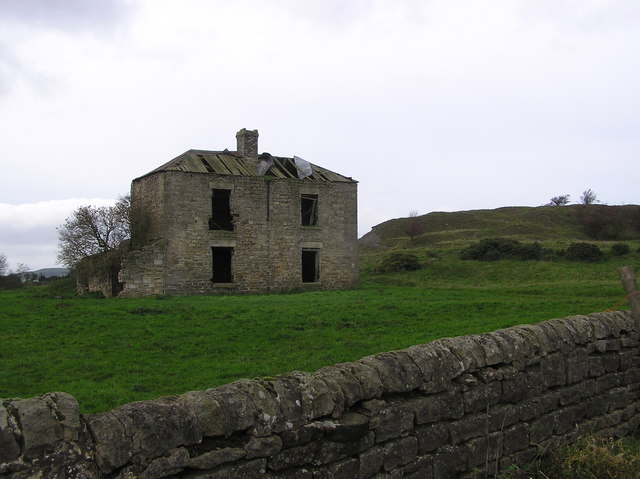
The site boundary and a spoil heap remain; much of the ground has been reclaimed. A derelict stone building stands at the southern end of the site.
Spoil tips and a derelict stone building.
Related mines
- Woodland Colliery — Both worked by the Woodland Collieries company, whose record names New Copley among its pits.
Nearby mines
- Gordon House Colliery — 1.1 miles (1.7 km) E
- Butterknowle Colliery — 1.2 miles (1.9 km) N
- Wham Colliery — 1.7 miles (2.7 km) N
- Arnghyll Colliery — 2.0 miles (3.3 km) W
- Randolph Colliery, Evenwood — 2.7 miles (4.4 km) E
Straight-line distance, within 9 miles (15 km). Show on the map.
Recorded claims
Individual factual claims, each attached to the source(s) that support it below. Where sources disagree, both are kept.
- The John Pit at New Copley was sunk from the surface to the Brockwell seam in 1867, after borings at Wigglesworth Farm in 1866. 1
- New Copley Colliery was linked by tramway to coke ovens on the Barnard Castle railway, with one winding shaft and a large reservoir. 2
- New Copley was owned by Thomas Vaughan in the 1860s and by the Woodland Colliery Company, later Woodland Collieries Co. Ltd, in the 1880s. 1
- New Copley employed 267 people in 1900 and in 1920, and 13 in 1935. 1
- On 11 December 1872 three miners at New Copley died after the brakesman started to lower them down the shaft with the engine not in gear. 1
- J. J. C. Allison managed New Copley from 1894 to 1910. 3
- A derelict stone building stands at the southern end of the former New Copley Colliery, beside its spoil tips. 2,4
- The John Pit section of 1868 reaches the Brockwell seam, 5 feet 11 inches thick, at 423 feet 10 inches. 5
- A New Copley section records the Five Quarter seam at about 340 feet and the Main Coal at about 412 feet. 6
Photographs & further reading
Coals Archive record: the shaft, winding machine and reservoir, the tramway to the coke ovens and what remains.
View sourceSources
- (primary) New Copley Colliery — Durham Mining Museum
- (secondary) New Copley Colliery — North East Heritage Library (Coals Archive)
- (primary) New Copley Colliery: colliery management — Durham Mining Museum
- (observational) Mine Building: New Copley Colliery (Hugh Mortimer) — Geograph
- (primary) New Copley Colliery: John Pit section, 1868 — Durham Mining Museum
- (primary) New Copley Colliery: section of strata — Durham Mining Museum
Record created: 22 October 2026 · Last researched: 22 October 2026