 MineArchive
Randolph Colliery, Evenwood
| Also known as | Randolph Colliery |
|---|---|
| Location | Evenwood, near Bishop Auckland, County Durham — 54.6195, -1.7576 (approximate) |
| Commodity | Coal |
| Type | Coal |
| Worked | 1893–1962 |
| Maximum depth | About 579 feet (No. 2 Randolph Pit, to the Brockwell) |
| Operators | North Bitchburn Coal Company (1893–1927), Pease & Partners Ltd. (1927–1933), Randolph Coal Co. Ltd (1933–1947), National Coal Board (1947–1962) |
Overview
The colliery near Evenwood, south-west Durham, opened in 1893 when the North Bitchburn Coal Company sank the Randolph Pit. It employed over a thousand in 1914, fed the Randolph coke and chemical works and a brickworks, and closed on 17 February 1962.
History
The Randolph Pit was sunk to the Brockwell in 1893 by the North Bitchburn Coal Company, as part of its Evenwood Colliery, and Randolph Colliery dates from that year; it had a No. 1 and a No. 2 Pit. Employment rose fast, from 333 in 1894 to 1,035 in 1910 and a peak of 1,039 in 1914, 782 of them underground. It worked the Brockwell, Busty, Harvey and Hutton, later the Low Main or Chatham and the Marshall Green. In 1910 the Randolph Coke and Chemical Company was set up beside it to coke its coal.
Pease and Partners took the colliery over in 1927 and the Randolph Coal Company in 1933. The Low Main was abandoned in 1932, and the workforce fell from 856 in 1930 to 591 in 1935. In the early 1930s a brickworks opened at the colliery making common bricks from its shale, with sixteen Newcastle kilns; it stayed in private hands after nationalisation and closed in 1958. The National Coal Board took over the colliery in 1947 with 493 men. The Marshall Green was abandoned in 1946, the Harvey in 1951 and the Busty and Brockwell in 1959, and the colliery closed on 17 February 1962 with the loss of over 200 jobs. The coke works carried on until 1984.
Geology
Durham Coal Measures: the Brockwell, Busty, Harvey, Hutton, Low Main or Chatham and Marshall Green, with ganister clay; Hutton seggar made red bricks.
Workings
No. 1 and No. 2 pits; the Randolph coke and chemical works alongside from 1910; a brickworks with sixteen Newcastle kilns (early 1930s to 1958).
Closure
Closed on 17 February 1962; the Randolph coke works continued until 1984.
What remains
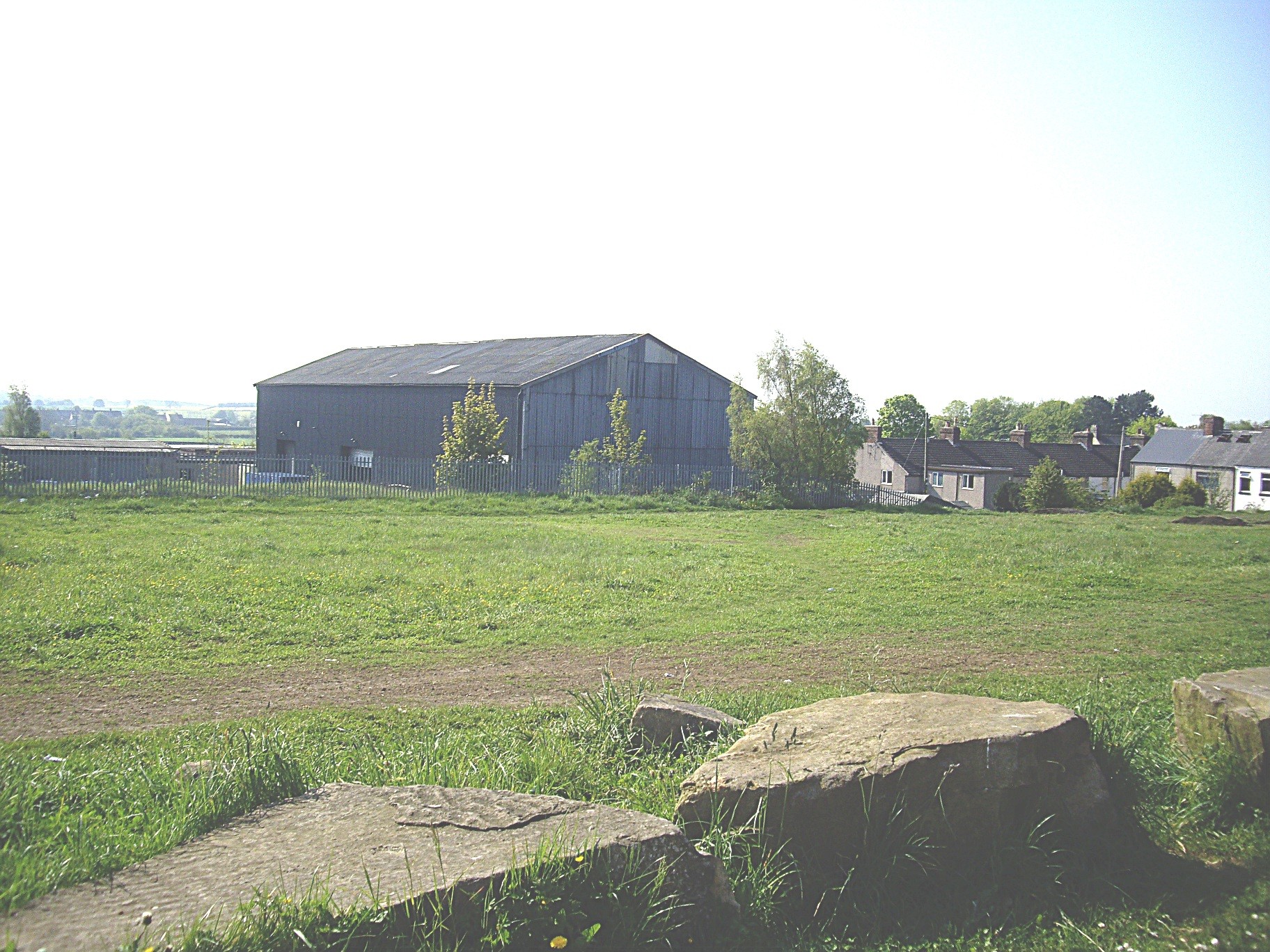
The colliery site is open grassland beside the village.
Redevelopment
Unknown.
Related mines
- North Bitchburn Colliery — North Bitchburn Coal Company collieries; the company sank Randolph in 1893.
Nearby mines
- Brusselton Colliery — 3.1 miles (5.0 km) E
- Woodhouse Close Colliery — 3.5 miles (5.6 km) NE
- Witton Park Colliery — 3.6 miles (5.9 km) N
- Toronto Colliery — 4.6 miles (7.5 km) NE
- Auckland Park Colliery — 4.8 miles (7.8 km) NE
Straight-line distance, within 9 miles (15 km). Show on the map.
Recorded claims
Individual factual claims, each attached to the source(s) that support it below. Where sources disagree, both are kept.
- Randolph Colliery opened in 1893, when the Randolph Pit was sunk to the Brockwell. 1,2,3
- At its peak in 1914 the colliery employed 1,039, 782 of them below ground. 2,4
- The Randolph Coke and Chemical Company was established in 1910 in association with the colliery and worked until 1984. 2,5
- A brickworks opened at the colliery in the early 1930s and closed in 1958. 6
- The colliery closed on 17 February 1962 with the loss of over 200 jobs. 1,2
- The No. 2 Randolph Pit met the Harvey at about 378 feet, the Busty at about 477 feet and the Brockwell, 10 feet 3 inches with bands, at about 569 feet. 7
Photographs & further reading
Owners, employment, seams and those killed at the colliery.
View sourceThe Randolph colliery brickworks and its kilns.
View sourceSources
- (primary) Randolph Colliery — Durham Mining Museum
- (secondary) Randolph Colliery (1893 - 1962) — Co-Curate (Newcastle University)
- (primary) Evenwood Colliery — Durham Mining Museum
- (secondary) Evenwood — Wikipedia
- (secondary) D-Day and coke works reflections — Teesdale Mercury
- (secondary) Brick and Tile Works around the Evenwood Area — Evenwood and Ramshaw District History Society
- (primary) Evenwood Colliery: No. 2 Randolph Pit shaft details — Durham Mining Museum
Record created: 4 October 2026 · Last researched: 4 October 2026