 MineArchive
Milfraen Colliery
| Location | Cefn Coch, above Blaenavon, Torfaen — 51.7828, -3.1339 (exact) |
|---|---|
| Commodity | Coal |
| Type | Coal |
| Worked | 1843–1933 |
| Maximum depth | 250 yards (the shaft); the Old Coal seam was reached at 236 yards |
| Operators | Jayne and Co. (1865–1884), Blaenavon Company |
Overview
Milfraen stood on the open mountain of Cefn Coch three miles north-west of Blaenavon, one of the highest and bleakest colliery sites in South Wales. It was opened about 1843, given a new shaft by Jayne and Co. in 1865, closed in 1884 and reopened by the Blaenavon company, which sank it 236 yards to the Old Coal seam. Two accidents define its record: five men tipped out of an ascending cage in 1902 when it fouled ironwork in the shaft, and nine killed in 1929 when firedamp was fired by sparking at the switch of a coal cutter. The colliery closed in 1933, four years after the second.
History
Milfraen was originally opened in 1843. Jayne and Co. sank a new shaft in 1865 and worked the colliery until 1884, when it closed; it was reopened some years later by the Blaenavon Iron and Steel Company, which by 1900 employed 199 people underground and 23 on the surface working the Old Coal seam, reached at 236 yards. In 1908 it was returned together with the No. 2 Garn pit and Kay's Slope under the manager Caradog Davies, and in 1918 the Milfraen slant and pit with Kay's Slope employed 1,084 people between them. A list of 1923 gives 677 at Milfraen working the No. 2 and Yard seams, and the figure for the colliery alone that year is 494. On 4 March 1902 a cage carrying men up the shaft struck a girder and tipped five of them out to their deaths (see Disasters, below). The colliery had employed five or six hundred people and had been standing closed for a period; it was in the course of being reopened when, on 10 July 1929, an explosion in the Mapstones District killed nine (see Disasters, below). Employment collapsed afterwards: 24 in 1933 and five in 1937.
Geology
Milfraen worked the Old Coal seam at 236 yards under the moorland of Cefn Coch, with the No. 2 and Yard seams named in 1923. This is the high northern rim of the South Wales coalfield above Blaenavon, where the measures come to the surface on open mountain and the collieries sat far above their villages.
Geological setting: Sedimentary Beds and Seams (well documented example)
Workings
A shaft 250 yards deep with a slant alongside it, returned in the Inspector's lists together with the No. 2 Garn pit and Kay's Slope. A branch railway climbed the mountain to the colliery from the Blaenavon to Waunafon line. Coal cutters were in use underground by 1929.
Closure
The colliery closed in 1933, four years after the 1929 explosion; the Lists of Mines return 24 people in 1933 and five in 1937 and 1940, the last of them keeping the site rather than working it.
What remains
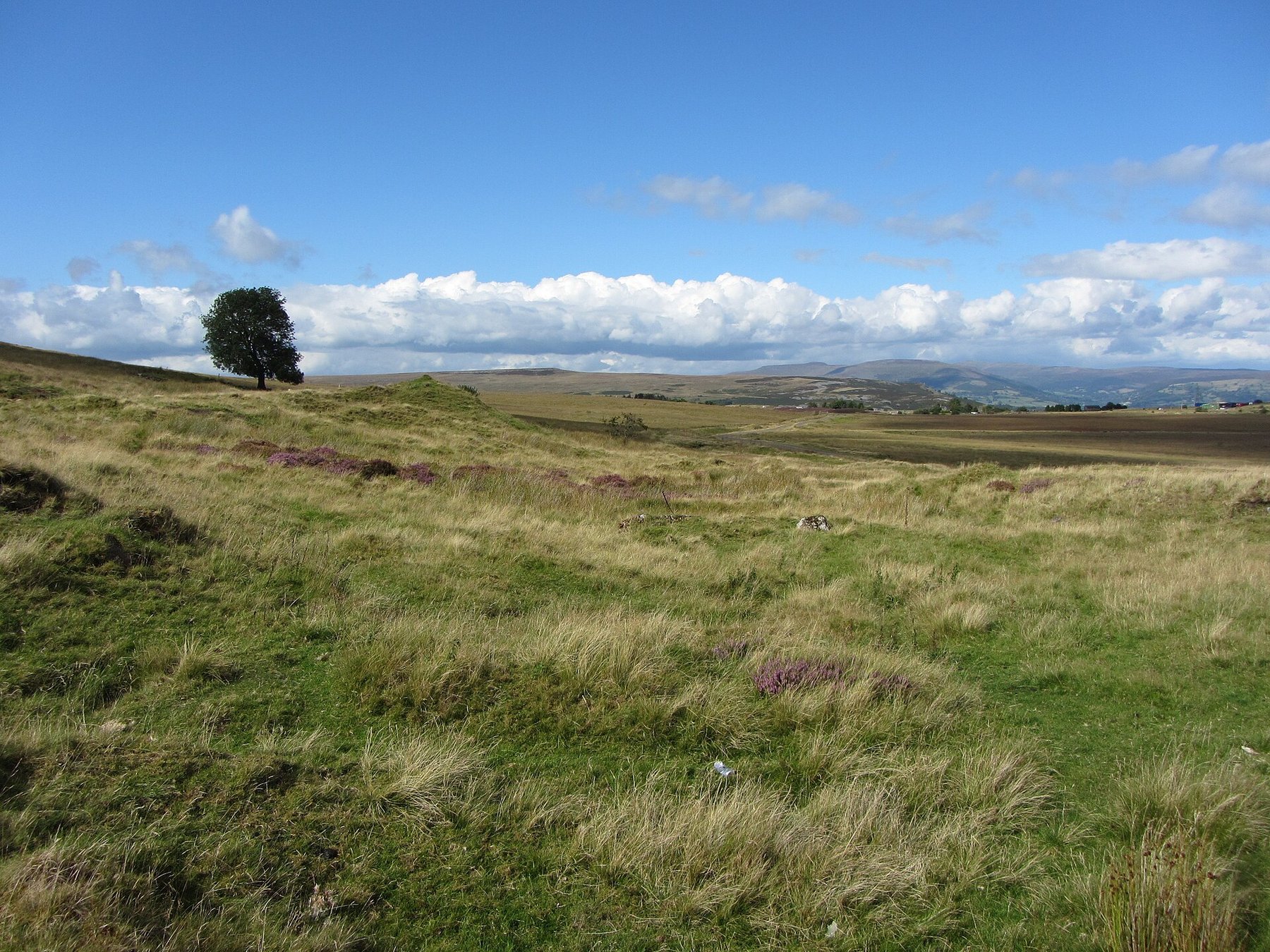
The site is open moorland with concrete and stone foundations still showing, sheets of asbestos roofing lying about, and the disused shaft used as a dump for rubbish. The trackbed of the Milfraen Colliery branch can be walked across Waun Afon.
Concrete and stone foundations on open moorland, with the disused shaft and the trackbed of the colliery branch across Waun Afon.
Related mines
- Garn Colliery, Blaenavon — Garn Slope was connected underground to Milfraen, and the two were returned together with Kay's Slope in 1908.
- Kay's Slope — Worked as one mine; Kay's Slope the intake, Milfraen the upcast; merged 1933.
Nearby mines
- East Blaina Red Ash Colliery — 0.3 miles (0.4 km) SE, Blaenau Gwent
- Garn Colliery, Blaenavon — 0.4 miles (0.7 km) E
- Garn Colliery, Nantyglo — 0.7 miles (1.1 km) NW, Blaenau Gwent
- Forge Colliery, Nantyglo — 0.9 miles (1.5 km) NW, Blaenau Gwent
- Kay's Slope — 1.0 miles (1.6 km) E
Straight-line distance, within 9 miles (15 km). Show on the map.
Disasters & major incidents
-
Milfraen Colliery cage accident, 1902
4 March 1902 · Winding / Shaft Accident · 5 fatalities
On 4 March 1902 a cage carrying men up the shaft of Milfraen Colliery, above Blaenavon, swung as it rose and struck an iron girder about 78 yards from the bottom, throwing five of them out to their deaths. Among them were two fathers and sons, the Griffiths and the Stallards, two of the dead being boys of thirteen and fifteen. The Inspector blamed slack rope jerking the cage off the bottom. -
Milfraen Colliery explosion, 1929
10 July 1929 · Explosion · 9 fatalities
At 8.30 on the morning of 10 July 1929 gas exploded in the Mapstone's district of Milfraen Colliery above Blaenavon, killing eight men outright and one more who died of his burns. The formal investigation, held with the inquest, found that roof falls had spoiled the ventilation of two conveyor faces, gas had gathered at a fall, the fireman had missed it, and a defective Hopkinson coal cutter had sparked it off. The jury returned misadventure.
Recorded claims
Individual factual claims, each attached to the source(s) that support it below. Where sources disagree, both are kept.
- Milfraen was originally opened in 1843; Jayne and Co. sank a new shaft in 1865 and worked it until 1884, when it closed, and it was reopened some years later by the Blaenavon Iron and Steel Company. 1
- The colliery was sunk to the Old Coal seam at a depth of 236 yards, in a shaft 250 yards deep. 1
- The colliery employed 494 people in 1923, 24 in 1933 and five in 1937. 2
Photographs & further reading
The opening and reopening, the depth to the Old Coal seam, the Inspector of Mines returns and full accounts of both the 1902 cage accident and the 1929 explosion.
View sourceEmployment for each Lists of Mines year and the names of those killed in the 1902 and 1929 disasters.
View sourceSources
- (primary) Milfraen Colliery, Blaenavon — Welsh Coal Mines, from the Inspector of Mines lists
- (primary) Durham Mining Museum: Milfraen Colliery — Durham Mining Museum, from the Lists of Mines
- (observational) Site of Milfraen Colliery (photographed 2015) — Geograph Britain and Ireland, Gareth James
Record created: 10 September 2026 · Last researched: 10 September 2026