 MineArchive
Michael Colliery
| Location | East Wemyss, Fife — 56.1547, -3.0736 (approximate) |
|---|---|
| Commodity | Coal |
| Type | Coal |
| Worked | 1892 (sunk)–1967 |
| Maximum depth | 462 fathoms (No. 2 shaft, to the Bowhouse seam) |
| Operators | Wemyss Coal Company Ltd (1898–1946), National Coal Board (1947–1967) |
Overview
Michael Colliery, on the Firth of Forth shore at East Wemyss, was one of Scotland's largest and most productive coal mines, employing over 3,000 people at its 1960s peak. A fire that broke out underground on 9 September 1967 killed nine miners — three of whose bodies were never recovered — and closed the pit for good, ending deep coal mining at Michael and costing around 2,000 jobs.
History
Sinking of the No. 1 and No. 2 shafts began in 1892, reaching the Chemiss coal seam at 136 fathoms by 1898, when commercial production began under the Wemyss Coal Company. A third, circular shaft, 24 feet 2 inches in diameter and lined with concrete, was sunk from 1928, eventually reaching 300 fathoms; No. 2 shaft was later deepened to 462 fathoms to reach the Bowhouse seam. The colliery passed to the National Coal Board at nationalisation in 1947. By 1938 the workforce had grown to over 2,600, and by the 1960s the mine employed around 3,300 people, producing roughly 16,750 tons of coal a week from mechanised shearer-loader faces across five active seams.
Geology
The colliery worked a sequence of Fife coalfield seams — Chemiss, Barncraig, Bowhouse, Branxton, Dysart Main and Lower Dysart among them — with an aggregate worked thickness of some 84 feet across sixteen seams pierced by the shafts over the mine's working life.
Geological setting: Sedimentary Beds and Seams (well documented example)
Workings
Three shafts served the colliery: No. 1 (20 by 16 ft) and No. 2 (13 by 10.5 ft), both sunk to 136 fathoms by 1898, with No. 2 later deepened to 462 fathoms; and the circular, concrete-lined No. 3, sunk from 1928 to 300 fathoms and later extended to reach deeper seams.
Closure
The pit was permanently closed following the September 1967 fire — see this site's own disaster record. The closure, and the National Coal Board's decision not to attempt to reopen and reclaim the sealed workings, was raised more than once in Parliament in the following two years, and put around 2,000 miners out of work.
What remains
The pithead winding gear was demolished in the 1990s; the underground workings, sealed after the 1967 fire, have never been reopened. A memorial to the nine men who died stands in East Wemyss, unveiled in 1992, and is the site of an annual remembrance service.
Little remains above ground of the colliery itself beyond its former site and the 1992 memorial; the winding gear and surface buildings were cleared in the 1990s.
Redevelopment
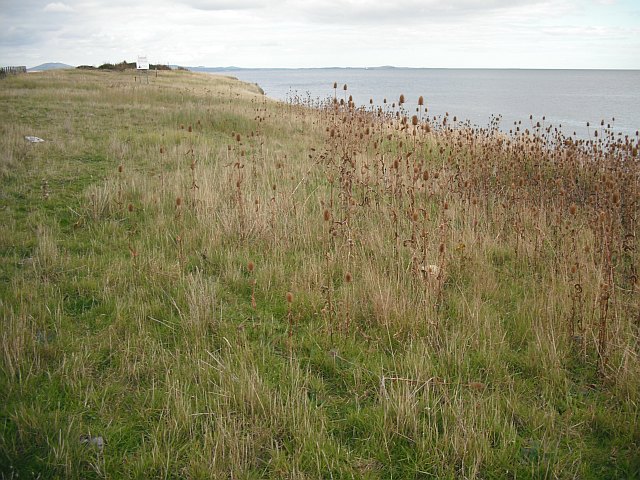
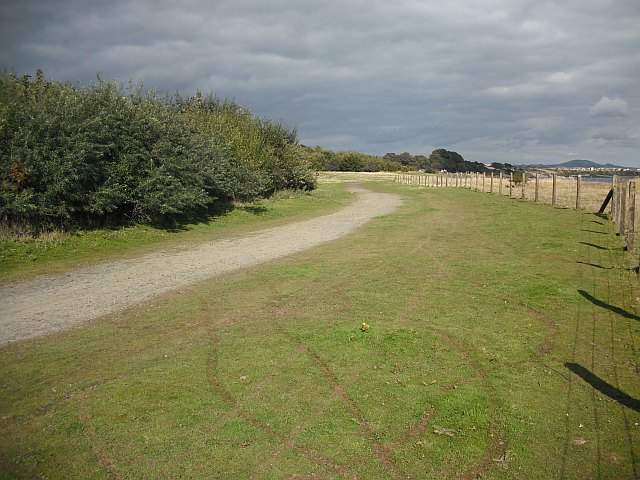
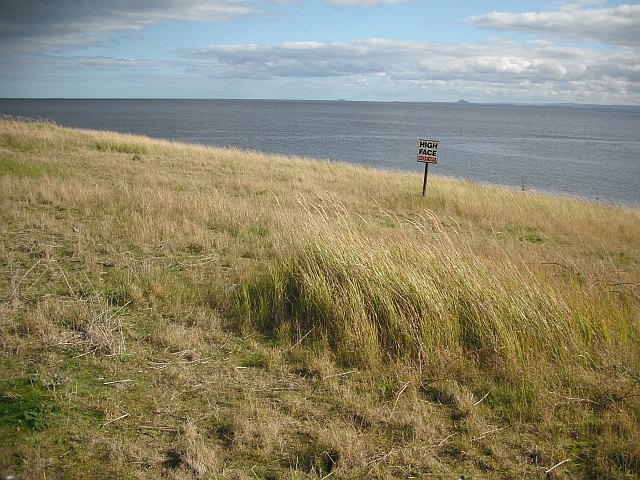
None of the colliery buildings was kept. The spoil bing beside the Firth of Forth remains the most visible trace of the pit, and the cleared ground beside it is open land.
Related mines
- Earlseat Colliery — Both Wemyss Coal Company pits in east Fife, served by the same private railway.
- Frances Colliery — After the 1967 Michael Colliery disaster closed that pit, Frances took over working its remaining reserves.
- Lochhead Colliery — Lochhead's ventilation was partly shared with Michael, the Wemyss Private Railway linked them, and Michael's 1967 closure prolonged Lochhead's life to 1970.
- Muiredge Colliery — Muiredge's ventilation was partly shared with Michael, Wellesley, Rosie and Lochhead collieries.
- Rosie Colliery — Michael supplied electric power to Rosie and its ventilation was partly shared with Rosie's.
- Wellesley Colliery — Both were Wemyss Coal Company pits on the Fife coast, worked under the same owner until nationalisation in 1947.
Nearby mines
- Rosie Colliery — 1.1 miles (1.8 km) NE
- Victoria Pit, West Wemyss — 1.3 miles (2.0 km) SW
- Wellsgreen Colliery — 1.2 miles (2.0 km) N
- Earlseat Colliery — 1.4 miles (2.2 km) NW
- Randolph Colliery — 2.0 miles (3.2 km) W
Straight-line distance, within 9 miles (15 km). Show on the map.
Disasters & major incidents
-
Michael Colliery fire, 1967
9 September 1967 · Fire · 9 fatalities
A fire broke out underground during the night shift at Michael Colliery on 9 September 1967, filling the workings with thick smoke as some 300 miners fought their way to the surface. Nine men died; the bodies of three were never recovered, and remain in the sealed workings to this day. The fire closed the colliery for good.
What's uncertain
Points where sources disagree or the record could not be settled; both accounts are kept. All open questions in the archive.
- The BGS mine-plans catalogue holds a Mining Remediation Authority abandonment plan titled 'Michael' (catalogue S611, Wemyss Parrot, dated 1958); the catalogue gives no location and the plan's details do not clearly tie it to this working, so it may belong to another of the same name. (uncertain) 3
Recorded claims
Individual factual claims, each attached to the source(s) that support it below. Where sources disagree, both are kept.
- Three shafts served the colliery: No. 1 and No. 2 (both to 136 fathoms by 1898, No. 2 later deepened to 462 fathoms), and the circular No. 3 (sunk from 1928 to 300 fathoms). 1
- By the 1960s the colliery employed around 3,300 people and produced roughly 16,750 tons of coal a week from five active mechanised faces. 1
- The colliery was run by the Wemyss Coal Company Ltd from 1898 until nationalisation in 1947, then by the National Coal Board until its 1967 closure. 1
- A memorial to the nine men killed in the 1967 fire was unveiled in East Wemyss in 1992 and is the site of an annual remembrance service. 1,2
- The BGS mine-plans catalogue holds a Mining Remediation Authority abandonment plan titled 'Michael' (catalogue S611, Wemyss Parrot, dated 1958); the catalogue gives no location and the plan's details do not clearly tie it to this working, so it may belong to another of the same name. (uncertain) 3
Photographs & further reading
The fullest account of the colliery online — the sinking of all three shafts, the seams worked, the workforce and output figures, and the 1967 fire that closed it.
View sourceThe Commons debate two years after the fire on whether the sealed workings could be reopened and reclaimed, and on what the closure did to employment in East Wemyss.
View sourceSources
- (secondary) Pit M-4: Michael Colliery, East Wemyss — fifepits.co.uk
- (secondary) Fifty years on community remembers Michael Colliery disaster which killed nine — The Courier
- (primary) BGS / Mining Remediation Authority mine plans: MICHAEL — British Geological Survey / Mining Remediation Authority
- (primary) Michael Colliery, West Fife (Closure) (Hansard, 10 July 1969) — Hansard, House of Commons
- (secondary) Michael Colliery Fire - Fife - 1967 — Northern Mine Research Society
- (secondary) Michael Colliery pit disaster: 55 years on from the darkest day in Fife's mining history — The Courier
Record created: 20 August 2026 · Last researched: 9 September 2026