 MineArchive
Llanymynech Hill Mines and Quarries
| Also known as | The Ogof, Llanymynech Rocks, Llanymynech Limeworks |
|---|---|
| Location | Llanymynech Hill, Carreghofa, on the Powys–Shropshire border, Powys — 52.7924, -3.0905 (approximate) |
| Commodities | Copper, Limestone |
| Type | Metal |
| Worked | From later Bronze Age–Around 200 AD |
| Maximum depth | Unknown. At least ten shafts were visible on the southern part of the hill before the golf course was laid out. |
Overview
A hill worked for copper before the Romans arrived, then worked much harder by them — and defended, which tells you what they thought it was worth — and later cut away wholesale for limestone. Its Roman workings survive as a cave called the Ogof, and eighteenth-century visitors were still finding skeletons and coins in it.
History
Copper was being taken from Llanymynech Hill by the later Bronze Age, the ore broken out by fire-setting, and excavation on the hillfort defences in 1981 found evidence of metalworking from a local source from around 200 BC. With the Roman conquest the cavern was extended and worked far more intensively: Romano-British material has been found throughout the copper workings — chambers, galleries and shafts — including coin hoards and burials of the second to fourth centuries AD. The Romans also fortified the hill to protect the workings, which is the clearest evidence there is of how much the mine mattered to them, and the mine was probably abandoned around 200 AD. Discoveries kept coming for centuries afterwards: several skeletons with tools and coins of Antoninus were found in 1761, two more burials near the entrance in 1849 — one with a bracelet still on the arm bones, the other with a metal axe beside it — and a hoard of some thirty first- and second-century Roman silver coins by schoolboys in 1965, now in the National Museum of Wales. Limestone quarrying became the hill's main industry from the eighteenth century: a map of 1753 already shows three banks of lime kilns, and the hill was eventually scarped and pierced with quarries on a scale that sent enormous quantities of limestone to Staffordshire as flux for iron smelting. The Montgomery Canal and, later, three separate railway lines carried it away.
Geology
The hill is a mass of Carboniferous Limestone standing above the Severn plain, with copper mineralisation in it that was rich enough to be worth working with Bronze Age and Roman technology. It was the limestone itself that turned out to be the hill's most valuable material in the long run: burnt in a kiln it makes quicklime, used by the Romans as a fertiliser on the acid farmland below and by the eighteenth and nineteenth centuries as mortar and as a flux in ironmaking.
Geological setting: Sedimentary Beds and Seams (well documented example)
Workings
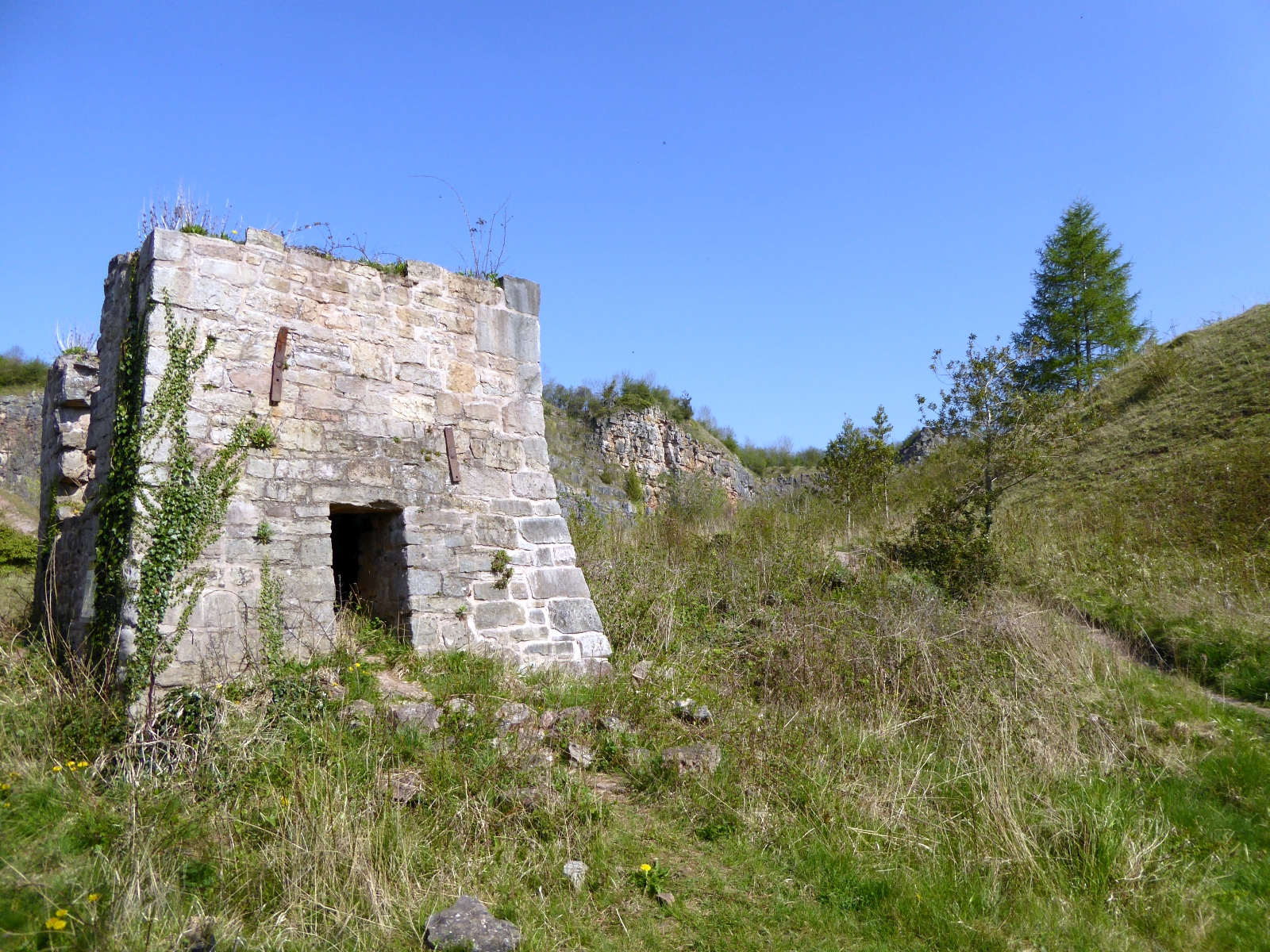
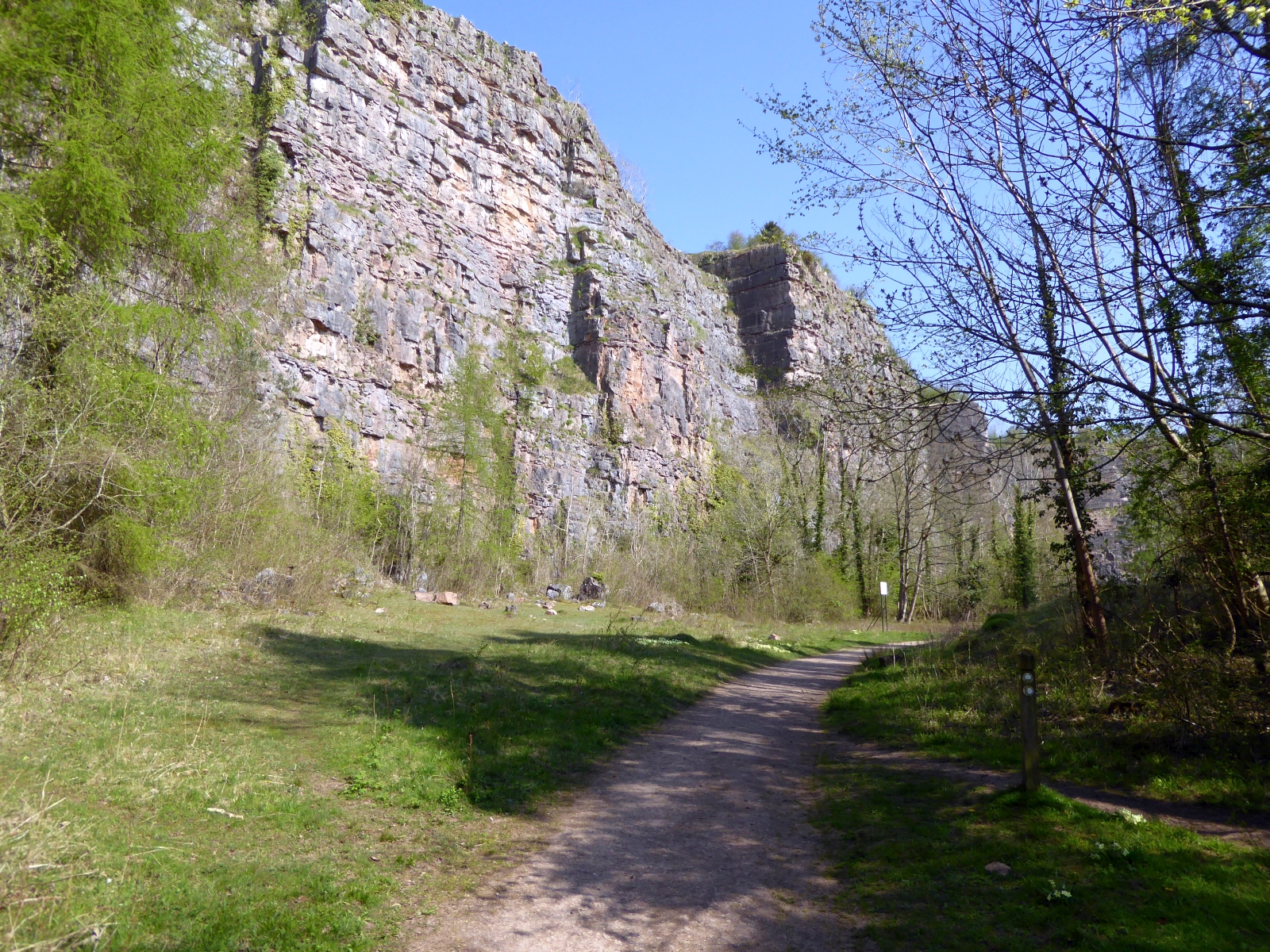
The surviving Roman working is the Ogof — the Welsh word simply means cave — a long artificial cavern with chambers, galleries and shafts running off it. Before the hilltop was landscaped for a golf course in 1933, at least ten shafts were visible on the southern part of the hill along with a large number of shallow pits and shaft-mounds, the ordinary surface signature of shallow prospecting and working. The limestone quarries are an entirely different order of thing: open faces up to two hundred feet high, worked in benches, served by tramways down to the canal and by three railways at the foot of the hill.
Closure
The copper mine was probably abandoned around 200 AD. Commercial quarrying and lime burning ran on into the twentieth century and have now ceased entirely; the golf course laid out on the hilltop in 1933 is the only commercial activity left on the hill.
What remains
The quarry faces are now the Llanymynech Rocks Nature Reserve, managed by the Shropshire Wildlife Trust, with over three hundred plant species recorded on the old workings and the two-hundred-foot faces popular with rock climbers. At the foot of the hill stands one of only three surviving Hoffmann kilns in the British Isles, and the only one that still has its chimney, at the centre of the Llanymynech Heritage Area. Offa's Dyke runs along the western edge of the hill.
The Ogof; extensive quarry faces and benches; the Hoffmann lime kiln and its chimney; tramway inclines; the Iron Age hillfort ramparts enclosing 57 hectares.
Redevelopment
A golf course was laid out over the hilltop workings in 1933; the quarry faces are now a nature reserve and the limeworks a heritage site.
Nearby mines
- Trefarclawdd Colliery — 3.3 miles (5.4 km) N, Shropshire
- Llwynymaen Colliery — 3.8 miles (6.2 km) N, Shropshire
- Quinta Colliery — 8.6 miles (13.8 km) N, Shropshire
Straight-line distance, within 9 miles (15 km). Show on the map.
Recorded claims
Individual factual claims, each attached to the source(s) that support it below. Where sources disagree, both are kept.
- Bronze Age miners worked copper on the hill by fire-setting, and excavation on the hillfort defences in 1981 indicated metalworking from a local source from around 200 BC. 1,2
- Romano-British material has been found throughout the copper workings — chambers, galleries and shafts — including coin hoards and burials of the 2nd to 4th centuries AD. 1
- The Romans fortified the hill to protect the workings, and the mine was probably abandoned around 200 AD. 2,3
- A hoard of some thirty first- and second-century Roman silver coins was found on the hill by schoolboys in 1965 and is now in the National Museum of Wales; skeletons with tools and coins of Antoninus had been found in the mine in 1761, and two further burials near the entrance in 1849. 2,3
- At least ten shafts were visible on the southern part of the hill, with a large number of shallow pits and shaft-mounds, before the ground was landscaped for a golf course in 1933. 2,3
- The quarry faces are now the Shropshire Wildlife Trust's Llanymynech Rocks Nature Reserve, and the Hoffmann kiln at the foot of the hill is one of only three surviving in the British Isles and the only one with its chimney. 2,3
Photographs & further reading
The heritage site's own account of the hill and its lime industry.
View sourceSources
- (primary) Ogof, Llanymynech Hill, Alleged Roman Copper Mine — Coflein — Royal Commission on the Ancient and Historical Monuments of Wales / Coflein
- (secondary) Llanymynech — Wikipedia
- (secondary) Llanymynech Hill and Heritage Limeworks — Llanymynech and Pant Parish Council
Record created: 25 August 2026 · Last researched: 25 August 2026