 MineArchive
Lightmoor Colliery
| Location | Near Ruspidge, Forest of Dean — 51.8283, -2.4744 (approximate) |
|---|---|
| Commodity | Coal |
| Type | Coal |
| Worked | c. 1832 (gale awarded 1841)–8 June 1940 |
| Maximum depth | 936 feet |
| Operators | Moses Teague (1832–1840), William Crawshay (1841–?) |
Overview
One of the largest collieries in the Forest of Dean, worked from about 1832 by the ironmaster William Crawshay and the free miner Moses Teague to supply coal and ore to the Cinderford ironworks, growing to four shafts before closing in 1940.
History
Work at Lightmoor began around 1832, with the mining gale formally awarded to Moses Teague and William Crawshay — owner of the great Cyfarthfa ironworks at Merthyr Tydfil, who took a lead in mining coal and ore on the east side of the Forest, alongside his son Henry, to feed the family's furnaces at Cinderford — in 1841. Two shafts were operating by 1835, and pumping and winding engines were at work by 1841. The colliery expanded steadily over the following decades, reaching four shafts by 1854 and eventually deepened to 936 feet, growing into one of the largest collieries in the Forest of Dean. It worked seams at the top of the Upper Coal Measures — the Twenty Inch, Lowery, Starkey, Rocky and Churchway High Delf, producing mainly household coal — and output reached 86,508 tons in 1856 and 800-900 tons a day by 1906, with 594 men working underground and a further 110 on the surface by 1899. Coal was carried out first by tramroad to the Forest of Dean Tramroad at Ruspidge, replaced from 1854 by a private line to the Forest of Dean Branch near Cinderford, with a further connection to the Severn and Wye Railway's mineral loop. Persistent water problems in the district eventually led Lightmoor's management to acquire the neighbouring Speech House Hill and Trafalgar Collieries to protect its own workings (see Related mines, and Trafalgar Colliery's own record, for the circumstances). The closure of two other Forest of Dean collieries, Crump Meadow and Foxes Bridge, put further strain on Lightmoor, and combined with the general slump in coal demand through the 1930s, nearly forced its closure before that; the pit finally closed on 8 June 1940, and its buildings were used for military purposes for a time afterward.
Geology
Coal of the Forest of Dean, worked under a free miner's gale awarded in the 1830s.
Workings
Four shafts by 1854, eventually deepened to 936 feet, working the Twenty Inch, Lowery, Starkey, Rocky and Churchway High Delf seams at the top of the Upper Coal Measures.
Closure
Closed on 8 June 1940 after the closure of neighbouring Crump Meadow and Foxes Bridge Collieries put further strain on the pit, compounding the effects of the 1930s slump in coal demand; the buildings saw military use for a time afterward.
What remains
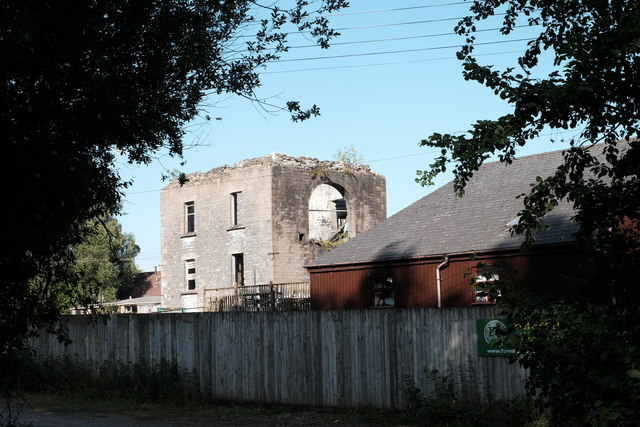
The stone-built pumping engine house — now roofless, but the last of its kind to survive in the Forest of Dean — still stands, along with some offices, the spoil tip and a pond; the site is now a sawmill. A pre-1830s beam engine from the colliery is preserved at the Dean Heritage Museum.
Related mines
- Foxes Bridge Colliery — Under common Crawshay ownership from 1904; Foxes Bridge bought part of the Lightmoor gale in 1892 because that coal could be worked more cheaply from its own shafts, and the two collieries bought Trafalgar jointly in 1919 to keep it pumping. The Forestry Commission was warned in 1924 that if Foxes Bridge flooded, Lightmoor would follow.
- Trafalgar Colliery — Trafalgar's 1919 flooding threatened Lightmoor's own workings badly enough that Lightmoor's (and Foxes Bridge's) management bought Trafalgar outright to control the water, rather than simply because the two collieries were neighbours.
Nearby mines
- Trafalgar Colliery — 0.5 miles (0.8 km) SW
- Haywood Colliery — 1.1 miles (1.8 km) W, Gloucestershire
- Westbury Brook Ironstone Mine — 1.5 miles (2.4 km) NW
- Addis Hill Colliery — 1.7 miles (2.8 km) NW, Gloucestershire
- Plump Hill Dolomite Quarry — 1.8 miles (2.9 km) NW
Straight-line distance, within 9 miles (15 km). Show on the map.
Recorded claims
Individual factual claims, each attached to the source(s) that support it below. Where sources disagree, both are kept.
- Work at Lightmoor began around 1832; the gale was formally awarded to Moses Teague and William Crawshay in 1841, by which point two shafts were already operating. 1
- The colliery grew to four shafts by 1854, deepened to 936 feet, becoming one of the largest in the Forest of Dean, producing 86,508 tons in 1856 and 800-900 tons a day by 1906. 1
- Lightmoor closed on 8 June 1940 after the closure of neighbouring Crump Meadow and Foxes Bridge Collieries added further strain during the 1930s slump in coal demand. 1
- Coal was carried out first by tramroad to the Forest of Dean Tramroad at Ruspidge, replaced from 1854 by a private line to the Forest of Dean Branch near Cinderford, with a further connection to the Severn and Wye Railway's mineral loop. 2
Photographs & further reading
Detailed transport and seam history for the colliery.
View sourceSources
- (primary) Lightmoor Colliery — Forest of Dean Local History Society — Forest of Dean Local History Society
- (secondary) Forest of Dean Coal Mining — Forest of Dean Local History Society (lightmoor.co.uk)
Record created: 2 September 2026 · Last researched: 2 September 2026