 MineArchive
Leasingthorne Colliery
| Location | Leasingthorne, near Coundon, County Durham — 54.6685, -1.6100 (approximate) |
|---|---|
| Commodity | Coal |
| Type | Coal |
| Worked | 1836–October 1967 |
| Maximum depth | 1,078 feet (329 m), the No. 1 pit sinking of 1901-03 |
| Operators | Black Boy Coal Company (1860–1869), Bolckow, Vaughan and Company (1870–1929), Dorman, Long and Company (1929–1947), National Coal Board (1947–1967) |
Overview
A colliery near Coundon, east of Bishop Auckland, opened in 1836, owned from the 1870s by the ironmasters Bolckow, Vaughan and then Dorman Long, and employing over 1,500 in the 1920s; it was merged with Dean and Chapter in 1950 and closed in October 1967.
History
Leasingthorne Colliery lay on rising ground three miles east of Bishop Auckland and a mile south of Kirk Merrington, and the village of Leasingthorne owed its origin to it. It opened in 1836 under King, Mearse and Campion, and passed through several hands, among them Backhouse and Co. in the 1840s, Nicholas Wood in the 1850s and the Black Boy Coal Company in the 1860s. A ten-foot shaft was sunk to the Main Coal, 459 feet down, in 1842. On 2 January 1853 an explosion of gas killed four, among them the deputies Thomas Barrass and Thomas Stones.
In the 1870s the ironmakers Bolckow, Vaughan and Co. took it over. In 1894 it worked the Five Quarter, five feet thick, and the Main Coal at 68 fathoms, raising 700 tons a day with about 800 men and boys. The No. 1 pit was sunk in 1901-03 to 1,078 feet, and the colliery then worked the Brockwell, Busty and Harvey as well; it employed 1,466 in 1915 and 1,555 in 1925. Dorman, Long and Co. took over on 1 November 1929. In 1937 the colliery raised 1,000 tons a day, the Busty and Hutton by machine and the Brockwell and Harvey by hand, and sent its coal for washing to Chilton by private railway.
An explosion on 26 December 1942 killed a deputy and two electricians. The colliery was merged with Dean and Chapter in 1950, and two men died in a man-riding accident in May 1955. It closed in October 1967.
Geology
Durham coalfield: the Five Quarter (5 ft) and Main Coal (4 ft 6 in) at 68 fathoms, and later the Brockwell, Busty, Harvey, Hutton, High Main and Beaumont.
Workings
The 10-foot Pit (1842, to the Main Coal at 459 ft) and the No. 1 Pit (1901-03, to 1,078 ft), with a Busty drift; coal sent by private railway to Chilton for washing.
Closure
Worked in conjunction with Dean and Chapter Colliery from 1950; closed in October 1967.
What remains
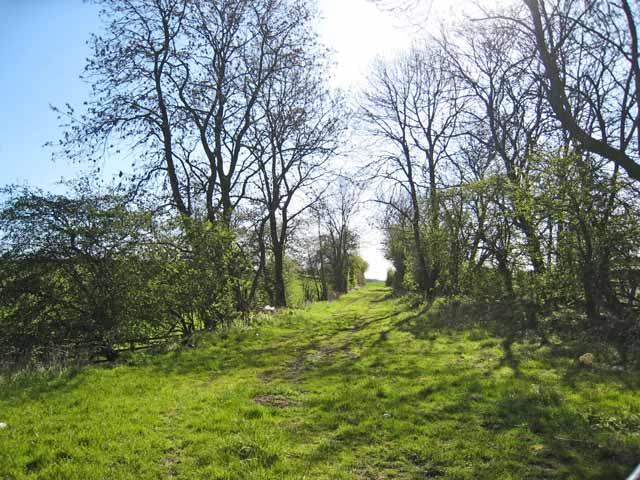
Part of the trackbed of the mineral railway that served Westerton and Leasingthorne collieries survives as a path off Windlestone Lane.
Redevelopment
Unknown.
Related mines
- Dean and Chapter Colliery — Merged in 1950 and worked in conjunction until the 1960s.
Nearby mines
- Chilton Colliery — 1.7 miles (2.7 km) E
- Eldon Colliery — 1.7 miles (2.7 km) SW
- Auckland Park Colliery — 2.0 miles (3.2 km) SW
- Windlestone Colliery — 2.3 miles (3.7 km) E
- Byers Green Colliery — 2.6 miles (4.2 km) NW
Straight-line distance, within 9 miles (15 km). Show on the map.
What's uncertain
Points where sources disagree or the record could not be settled; both accounts are kept. All open questions in the archive.
- Leasingthorne Colliery was sunk in 1835. (disputed) 1
Recorded claims
Individual factual claims, each attached to the source(s) that support it below. Where sources disagree, both are kept.
- Leasingthorne Colliery opened in 1836 under Messrs. King, Mearse and Campion, came to Bolckow, Vaughan and Co. in the 1870s and to Dorman, Long and Co. in 1929, and closed in October 1967. 1,2
- Leasingthorne Colliery was sunk in 1835. (disputed) 1
- In 1894 the colliery worked the Five Quarter and Main Coal at 68 fathoms, raising 700 tons a day with about 800 men and boys. 1,2
- In 1930 the colliery employed 1,537 men and boys, 1,280 below ground, and raised about 1,000 tons a day. 1,2
- In 1937 the Busty and Hutton were machine-mined and the Brockwell and Harvey hand-won, and the coal for washing went by private railway to Chilton. 1
- The No. 1 Pit was sunk in 1901-1903 to 1,078 feet. 3
- Leasingthorne's Brockwell and Harvey workings were abandoned in 1952, and its Main Coal in 1922. 4
Photographs & further reading
Owners from 1836, employment, output and seams by year, the sinkings and the men killed at the colliery.
View sourceA summary of the colliery with links to local articles on its railways.
View sourceSources
- (primary) Leasingthorne Colliery — Durham Mining Museum
- (secondary) Leasingthorne Colliery (1836 - 1967) — Co-Curate (Newcastle University)
- (primary) Leasingthorne Colliery: strata sunk through in the No. 1 Pit, 1901-1903 — Durham Mining Museum
- (primary) BGS mine plan: Leasingthorne, Brockwell, abandoned 1952 — BGS / Mining Remediation Authority mine plans
Record created: 6 October 2026 · Last researched: 6 October 2026