 MineArchive
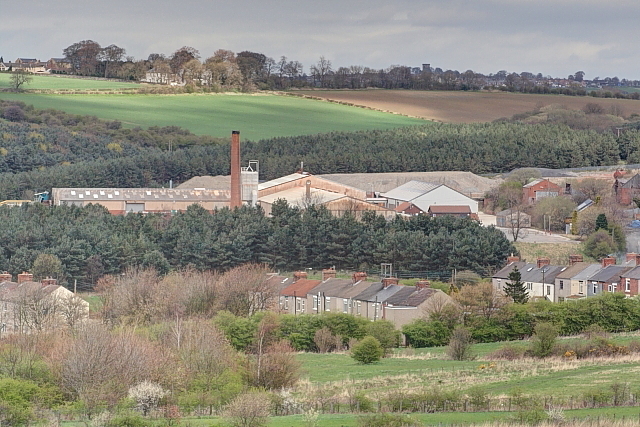
Eldon Colliery
| Also known as | South Durham Colliery |
|---|---|
| Location | Eldon, near Shildon, County Durham — 54.6470, -1.6304 (approximate) |
| Commodity | Coal |
| Type | Coal |
| Worked | 1829–1932 |
| Maximum depth | The Brockwell at 154 fathoms (1894) |
| Operators | South Durham Coal Company (?–1903), Pease & Partners Ltd. (1903–1932), Dorman, Long and Company (?–1947), National Coal Board (1947–?), Joseph Pease & Partners, Smithson & Co. |
Overview
A colliery at Eldon near Shildon, also called South Durham Colliery, sunk from 1829. Owned by the Peases and later the South Durham Coal Company and Pease and Partners, it employed nearly 2,000 in 1921 with coke ovens and a brickworks, and closed in October 1932.
History
The Northern Pit at Eldon was begun on 20 August 1829 and put down to the Main Coal seam, about a hundred feet below the surface; a New Winning was begun in December 1831 and sunk to the Main Coal in 1841, and in 1864 the fifteen-foot Harry Pit went down below the Brockwell. In the 1850s the colliery, also known as the South Durham Colliery, belonged to Joseph Pease, Joseph Whitwell Pease and Joseph Pease and Co.; Smithson and Co. held it in the 1860s and the South Durham Coal Company in the 1880s. In 1894 the company worked the Brockwell, 5 feet 3 inches to 6 feet thick, at 154 fathoms and the Harvey at 106, from three shafts, two drawing coal and one for ventilation, raising about 1,500 tons a day with 1,000 men and boys. Its coke ovens took some 2,000 tons of coal a week, and the pit was much troubled by large feeders of water. The owners built the village of Eldon, over 250 houses, for their work people.
Pease and Partners Ltd held the colliery from 1903. The John Henry Pit was deepened from the Main Coal to the Hutton in 1898, and by 1921 there were three pits, the Harry, the Harvey and the John Henry, with the Bank Drift in the Five Quarter, employing 1,973 between them, 1,493 below ground; a coking plant and brickworks worked alongside. The Busty and Brockwell were abandoned in November 1931 and the rest on 11 October 1932, when the colliery closed, and T. W. Ward dismantled it in 1933-34. A handful of men stayed on pumping, under Dorman Long in the 1940s and the National Coal Board from 1947, into the 1960s. Much of the site has since been planted with trees.
Geology
Durham Coal Measures: the Main Coal (6 feet 11 inches at the Northern Pit), the Brockwell at 154 fathoms (5 feet 3 inches to 6 feet), the Harvey at 106 fathoms (3 feet 8 inches to 4 feet, with a band), the Busty, Hutton, Five Quarter and Three Quarter.
Workings
The Northern Pit (1829), the New Winning (1831-41) and John Henry Pit (deepened 1898), the Harry Pit (1864) and the Harvey Pit; the Bank Drift in the Five Quarter by 1921; coke ovens and a brickworks.
Closure
Closed on 11 October 1932 and dismantled in 1933-34; pumping went on into the 1960s.
What remains
Much of the former colliery site has been planted with trees.
Redevelopment
Unknown.
Related mines
- Auckland Park Colliery — From 1950 Eldon's pumping was returned with Auckland Park Colliery.
Nearby mines
- Auckland Park Colliery — 0.9 miles (1.4 km) NW
- Middridge Colliery — 1.3 miles (2.0 km) SE
- Woodhouse Close Colliery — 2.3 miles (3.7 km) W
- Brusselton Colliery — 2.8 miles (4.4 km) SW
- Toronto Colliery — 2.8 miles (4.6 km) NW
Straight-line distance, within 9 miles (15 km). Show on the map.
Recorded claims
Individual factual claims, each attached to the source(s) that support it below. Where sources disagree, both are kept.
- Sinking of the Northern Pit at Eldon began on 20 August 1829. 1,2,3
- In 1894 the colliery raised about 1,500 tons a day from the Brockwell and Harvey with 1,000 men and boys. 1
- In 1921 the colliery employed 1,973, 1,493 of them below ground, in three pits and a drift. 1,3
- Joseph Pease and Co. owned the colliery in the 1850s and the South Durham Coal Company by the 1880s. 1,3
- The colliery closed on 11 October 1932 and was dismantled in 1933-34. 1,3
Photographs & further reading
Owners, pits, employment, seams and those killed at the colliery.
View sourceA summary of the colliery with links to photographs and the HER entry.
View sourceSources
- (primary) Eldon Colliery — Durham Mining Museum
- (primary) Eldon Colliery: Northern Pit shaft details — Durham Mining Museum
- (secondary) Eldon Colliery (1829 - 1932) — Co-Curate (Newcastle University)
Record created: 4 October 2026 · Last researched: 4 October 2026