 MineArchive
Black Boy Colliery
| Location | Coundon Grange, near Bishop Auckland, County Durham — 54.6516, -1.6520 (approximate) |
|---|---|
| Commodity | Coal |
| Type | Coal |
| Worked | 1830–1939 |
| Maximum depth | 360 feet (60 fathoms, 110 m) to the Main Coal, 1894 |
| Operators | Nicholas Wood & Co. (1830–?), Bolckow, Vaughan and Company (?–1929), Dorman, Long and Company (1929–1939), Black Boy Coal Company |
Overview
A colliery near Coundon Grange, south-east of Bishop Auckland, begun by Nicholas Wood and Co. in 1830 and served by the Black Boy branch of the Stockton and Darlington Railway; its Machine Pit became Auckland Park Colliery in 1864, and Black Boy itself closed in 1939.
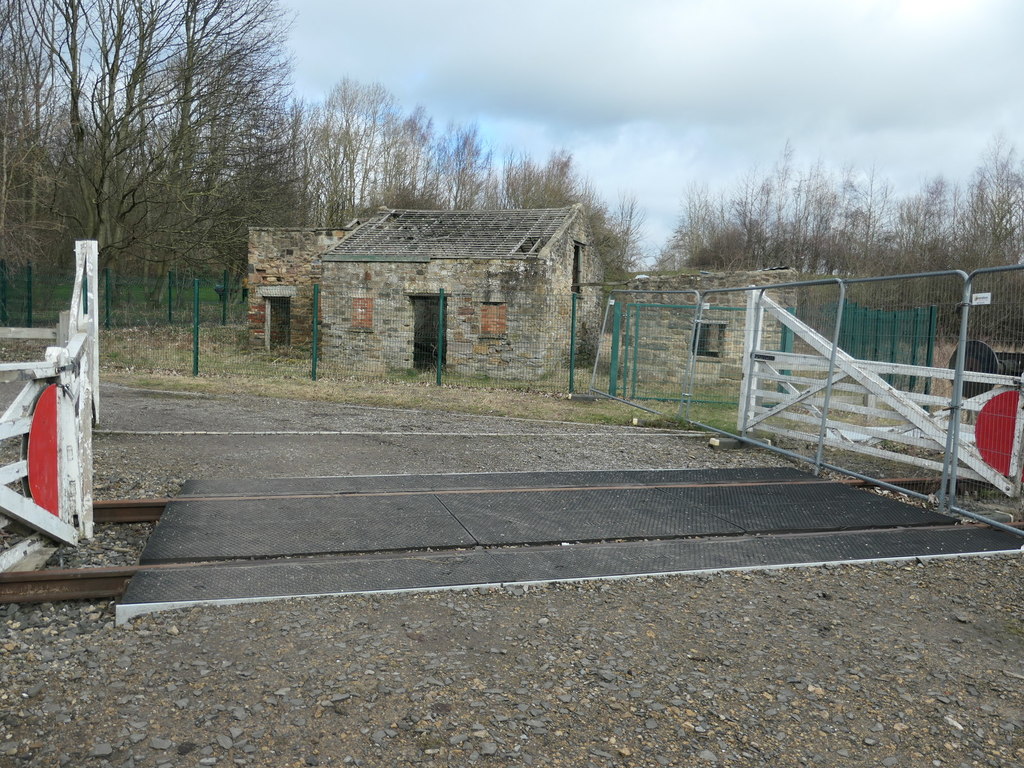
History
Black Boy Colliery lay in Coundon Grange township, about two miles south-east of Bishop Auckland. Nicholas Wood and Co. began it in 1830, and the Black Boy Coal Co. held it in the 1860s. The Black Boy branch of the Stockton and Darlington Railway ran into the township, meeting the Surtees Railway at Shildon. In 1864 the colliery's Machine Pit was renamed Auckland Park Colliery.
By the 1880s Bolckow, Vaughan and Co. Ltd held both collieries, about a mile apart. In 1894 the Black Boy Pit worked the Five Quarter, five feet thick at 42 fathoms, and the Main Coal, four feet six inches at 60 fathoms, raising 450 tons a day with 410 men and boys. The villages of Auckland Park, Brickyard, Black Boy and Close House were entirely inhabited by miners from the adjoining collieries; the owners built a school in 1859, enlarged three times to hold 700, and a reading room and library of 500 volumes in 1868.
Employment swung widely, from 92 in 1902 to 636 in 1905, and from 1910 only the Hutton was worked. The colliery closed in December 1924, reopened in May 1928, passed to Dorman, Long and Co. Ltd on 1 November 1929, and closed in 1939. The museum's list of those killed holds 64 names: three men and a boy of fifteen fell from the cage on 26 April 1855, and two were killed by explosions of firedamp on 21 January 1851, one of them a boy of eleven.
Geology
Durham coalfield: the Five Quarter (5 ft at 42 fathoms), Main Coal (4 ft 6 in at 60 fathoms) and Hutton, with the Low Main, Harvey, Busty, Brockwell and Three Quarter.
Workings
The North, Pasture and Gurney pits; the Machine Pit, renamed Auckland Park Colliery in 1864.
Closure
Closed in December 1924, reopened in May 1928, and closed in 1939.
What remains
Unknown.
Redevelopment
Unknown.
Related mines
- Auckland Park Colliery — Auckland Park Colliery was Black Boy's Machine Pit until it was renamed in 1864; both were later worked by Bolckow, Vaughan.
- Westerton Colliery — Both belonged to the Black Boy Coal Company, and Westerton's 1932 plans include old Black Boy workings.
Nearby mines
- Auckland Park Colliery — 0.1 miles (0.1 km) E
- Adelaide Colliery — 0.7 miles (1.1 km) S
- Eldon Colliery — 0.9 miles (1.5 km) E
- Etherley Dene Colliery — 1.3 miles (2.1 km) W
- Princes Street Drift — 1.4 miles (2.2 km) S
Straight-line distance, within 9 miles (15 km). Show on the map.
Recorded claims
Individual factual claims, each attached to the source(s) that support it below. Where sources disagree, both are kept.
- Begun in 1830 by Nicholas Wood and Co. 1
- In 1864 the Machine Pit of Black Boy Colliery was renamed Auckland Park Colliery. 1
- Branch lines from Black Boy Colliery and the Surtees Railway met at Shildon. 2
- In 1894 the Black Boy Pit raised 450 tons a day with 410 men and boys. 1
- Closed in 1939. 1
Photographs & further reading
Pits, owners, employment and seams from 1830 to 1939, with Whellan's account of the miners' villages.
View sourceSources
- (primary) Durham Mining Museum: Black Boy Colliery — Durham Mining Museum
- (secondary) Wikipedia: Shildon — Wikipedia
Record created: 6 October 2026 · Last researched: 6 October 2026