 MineArchive
Hodbarrow Mine
| Location | Millom, Cumbria — 54.1951, -3.2953 (approximate, low confidence) |
|---|---|
| Commodity | Iron |
| Type | Iron |
| Worked | 1856–1968 |
| Maximum depth | workings extended well below sea level, protected by two successive barriers |
| Operators | Hodbarrow Mining Company |
Overview
One of the richest and largest haematite iron mines in the world at its peak, worked directly beneath the Irish Sea and kept dry only by two increasingly massive artificial sea barriers — the second, a mile-long wall of stone and concrete completed in 1905, still stands and now encloses the RSPB's Hodbarrow nature reserve.
History
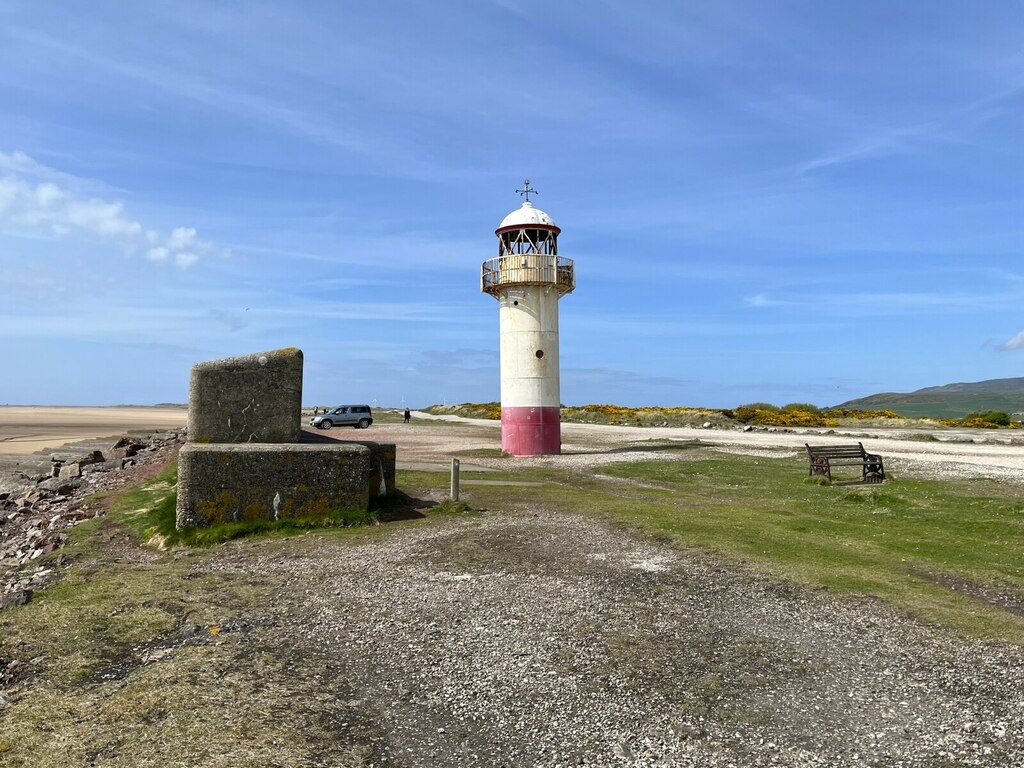
The Hodbarrow Mining Company was formed in 1853 after the Earl of Lonsdale granted Nathaniel Caine and John Barratt permission to search for iron ore near Millom, and mining began in 1856 once a solid mass of haematite was proved in the 'Old Mine' ground near Hodbarrow Point. For a dozen years the company worked irregular guts, masses and stringers of ore from numerous shallow shafts, shipping most of it from the quay at Borwick Rails a mile away, and by the mid-1860s some 265 men were employed underground; the ironworks that would take the ore was built at Millom in 1866–67 with two blast furnaces, six by 1874, and the town grew with it, from about 900 people to 10,426 by 1901. The main deposit was only fully proved in 1868–73, when seven shafts were sunk in or beside the great ore mass on the landward side of the later Inner Barrier, and annual output reached 343,194 tons in 1880 and about 400,000 tons by 1901. The richest ore lay under the foreshore and could only be worked by holding back the sea: a body of ore had to be left in place against it until the Inner Barrier was built. Earlier protective works were breached in 1885, and in 1898 the sea broke into the mine outside the wall near its western end, flooding workings on the seaward side; the company responded not by retreating but by enclosing a much larger area, building the Outer Barrier of 1900-05 — designed to carry the workings safely under ground that had previously been open water. By 1892-93 the mine employed around 1,000 men and raised over half a million tons of ore in a single year; across its 105-year working life it produced some 25 million tons of haematite, at times making it the largest iron mine in the world. Mining finally ceased in March 1968 with the loss of 103 jobs, and the nearby Millom Ironworks that the mine had long supplied closed the following year. Once pumping stopped, the deep workings inside the barrier flooded permanently, forming the lagoon seen today. Building the Outer Barrier had come with a condition that the company provide a lighthouse: the iron tower on the barrier was put up in February 1905 and lit by July, showed a flashing light said to be visible ten miles, and burned its paraffin lamp until declining trade at the wharves put it out in 1949.
Geology
Hodbarrow's haematite occurs as a large, exceptionally rich replacement deposit at the junction of Carboniferous limestone and later sediments near the mouth of the Duddon Estuary, with reported iron content around 60% metal by weight — unusually high grade even by the standards of Cumbria's other rich haematite orefields. Much of the workable ore lay directly beneath the foreshore and shallow inshore seabed, which is what forced the mine's defining engineering problem: extracting it meant excluding the sea itself.
Geological setting: Iron Replacement Deposits (well documented example)
Workings
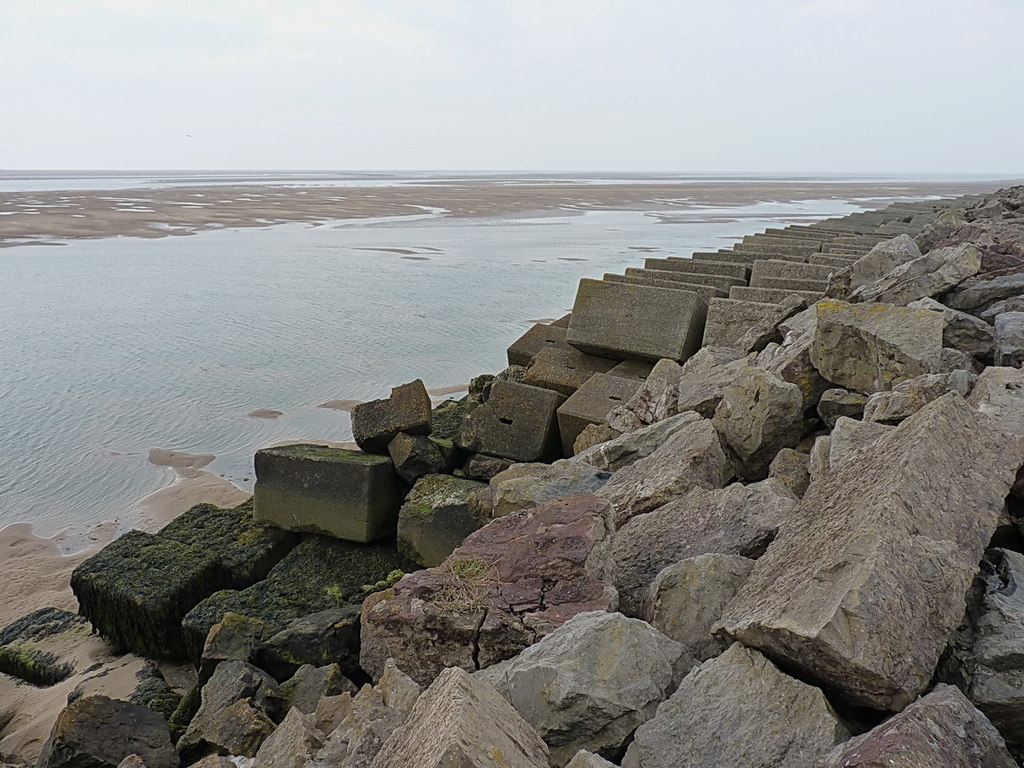
Ore was raised through numerous shafts sunk from the 1850s onward as successive ore bodies were proved. The great masses were mined by driving main haulage ways beneath the ore and cutting raises up into it, then taking the deposit out in slices twelve feet thick by a form of pillar-and-stall working known as top-slicing. The mine's defining works, though, were its two sea barriers rather than its shafts: an inner protective wall (rebuilt 1888-90 to a design by the engineer Sir John Coode after early breaches) held the sea back while the shallower ground was worked, and after a serious breach in 1898 the company built the much larger Outer Barrier of 1900-05 — over a mile of limestone rubble and tumbled concrete blocks around a puddled-clay and steel- or timber-pile core — 5,157 blocks, most of them 11 by 6 by 6 feet and 25 tons apiece, cast on site from a 6:1 aggregate mix, built at a cost of nearly £600,000, using slag from the ironworks as part of the fill.
Closure
Mining ceased in March 1968 with the loss of 103 jobs, and the Millom Ironworks it had supplied closed the following year. The pumps stopped with the mine and the workings inside the Outer Barrier were allowed to flood, forming the lagoon of the nature reserve.
What remains
The mine and ironworks site is now the RSPB's Hodbarrow reserve: the flooded former workings form Hodbarrow Lagoon, the largest coastal lagoon in north-west England, enclosed by the surviving Outer Barrier. The barrier itself remains a substantial engineered sea defence and public walking route. No underground access survives — the workings have been flooded and inaccessible since pumping stopped in 1968.
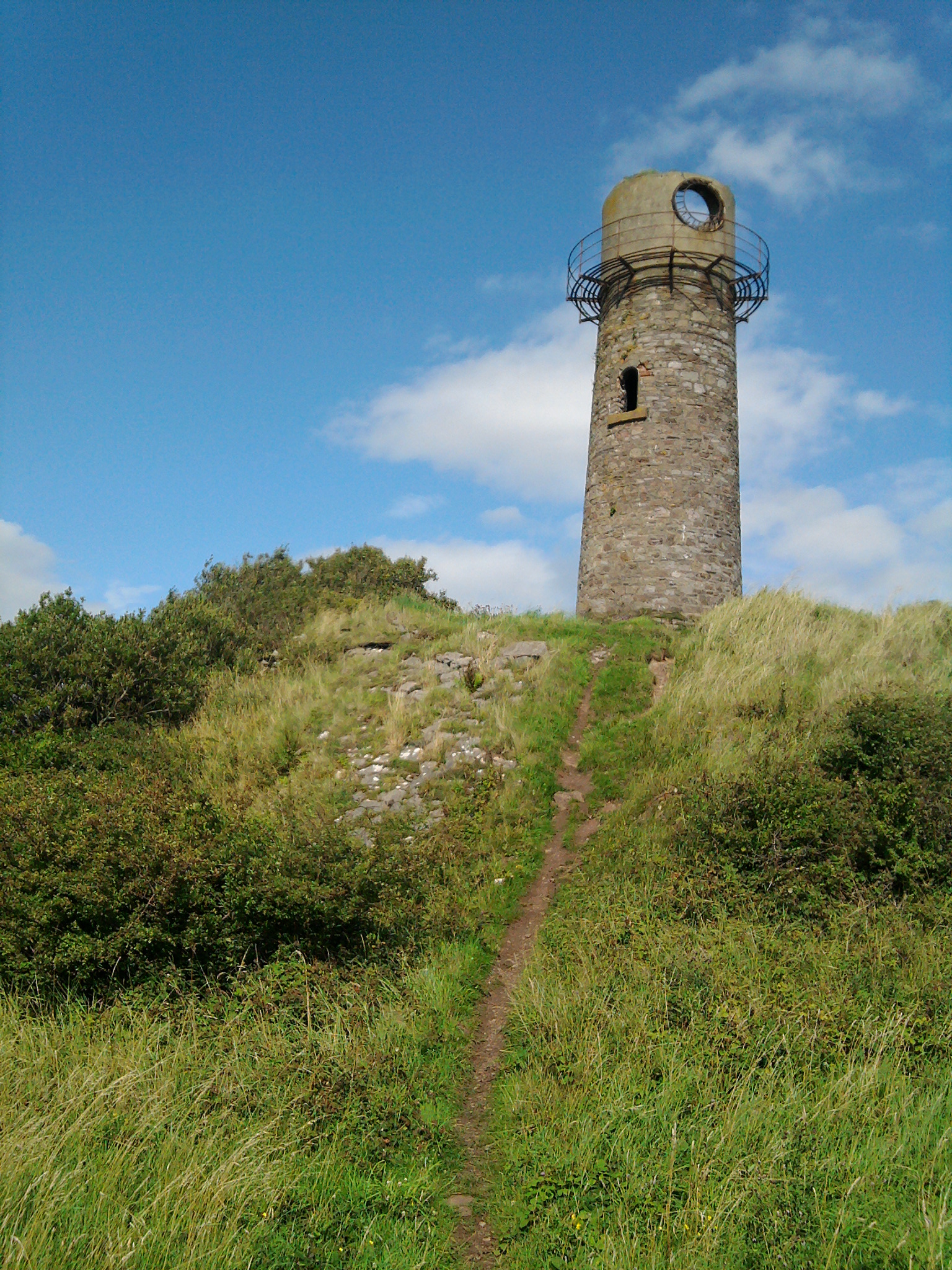
Two lighthouses stand on the reserve. The ruined stone tower of 1866 at Hodbarrow Point, built to guide shipping clear of the barrier and ore-loading works, is a well-known local landmark; the iron lighthouse of 1905 on the Outer Barrier, some 730 m to its south-west, was refurbished in 2003 with a new dome and glazing and a solar LED lantern. Scattered building foundations and the barrier itself are the only other visible remains, the shafts and deep workings being long flooded.
Nearby mines
- Roanhead Iron Mine — 3.0 miles (4.9 km) SE
- Park Mines — 4.1 miles (6.6 km) SE
- Margaret Mine — 4.8 miles (7.7 km) E
- Lindal Moor — 5.4 miles (8.7 km) SE
- Yarlside Mine — 6.4 miles (10.4 km) SE
Straight-line distance, within 9 miles (15 km). Show on the map.
Recorded claims
Individual factual claims, each attached to the source(s) that support it below. Where sources disagree, both are kept.
- Across its 105-year working life the mine raised roughly 25 million tons of haematite ore, at around 60% metallic iron content — among the richest ore raised anywhere in Britain. 1
- The Outer Barrier of 1900-05, designed to enclose a much larger area than the breached inner wall it replaced, ran for over a mile from Haverigg to Hodbarrow Point and cost close to £600,000 to build. 2
- A 2024 visit to the site found the old lighthouse ruin and sections of the barrier still accessible and intact, with the former mine workings themselves long since flooded and inaccessible. 3
- Annual output reached 343,194 tons of ore in 1880 and about 400,000 tons by 1901, with 538,979 tons raised in 1892–93 by a thousand men. 1,4
- The earlier protective works were breached by the sea in 1885 and again in 1898, after which the company enclosed a much larger area with the Outer Barrier. 1,5
- The ore masses were worked by driving haulage ways beneath them, cutting raises, and removing the deposit in twelve-foot slices by top-slicing. 1
- The iron lighthouse on the Outer Barrier was built in February 1905 as a condition of the barrier's construction, was lit until 1949, and was refurbished with a solar LED lantern in 2003. 5
Photographs & further reading
An edited account from Davies-Shiel and Marshall's Industrial Archaeology of the Lake Counties, with the society's photographs of the mine at closure in the 1960s.
View sourceA shared description across eleven Geograph photographs of the barrier, lighthouses and lagoon, with the block count and lighthouse dates.
View sourceSources
- (secondary) Hodbarrow Mines — Industrial History of Cumbria
- (secondary) Hodbarrow Outer Barrier — Co-Curate (Newcastle University)
- (observational) Hodbarrow Mine, Millom | Industrial and Abandoned #4 — Explore with Amie
- (secondary) Millom — Cumbria County History Trust
- (observational) The Hodbarrow Mining Co at Millom (shared description) — Geograph (Richard Law)
- (primary) Abandoned mine plan catalogue entry: HODBARROW MINES, MILLOM, CUMBERLAND — British Geological Survey
- (primary) Hodbarrow (Iron Ore) — Durham Mining Museum
- (secondary) History of Hodbarrow Iron Ore Mines (1850-1968) — Co-Curate (Newcastle University)
- (secondary) Hodbarrow RSPB reserve — Wikipedia
Record created: 21 August 2026 · Last researched: 22 September 2026