 MineArchive
Hickleton Main Colliery
| Also known as | Hickleton Colliery |
|---|---|
| Location | Thurnscoe, in the Dearne valley north of Doncaster, South Yorkshire — 53.5412, -1.3069 (exact) |
| Commodity | Coal |
| Type | Coal |
| Worked | 1892–1994 |
| Maximum depth | 492 m (about 538 yards) to the Barnsley seam, reached in June 1894. |
| Operators | Hickleton Main Coal Company (1892–1947), Doncaster Amalgamated Collieries Ltd (1937–1947), National Coal Board (1947–1994) |
Overview
A Doncaster-coalfield colliery at Thurnscoe, sunk to the Barnsley seam in the 1890s and among the largest in the district — 2,560 people underground and 500 at surface in 1933. George VI and Queen Elizabeth came to thank the men for their war effort in 1944, and its union lodge was the four-hundredth recipient of the Order of Industrial Heroism. A memorial in Thurnscoe cemetery names the 161 miners who died at the pit.
History
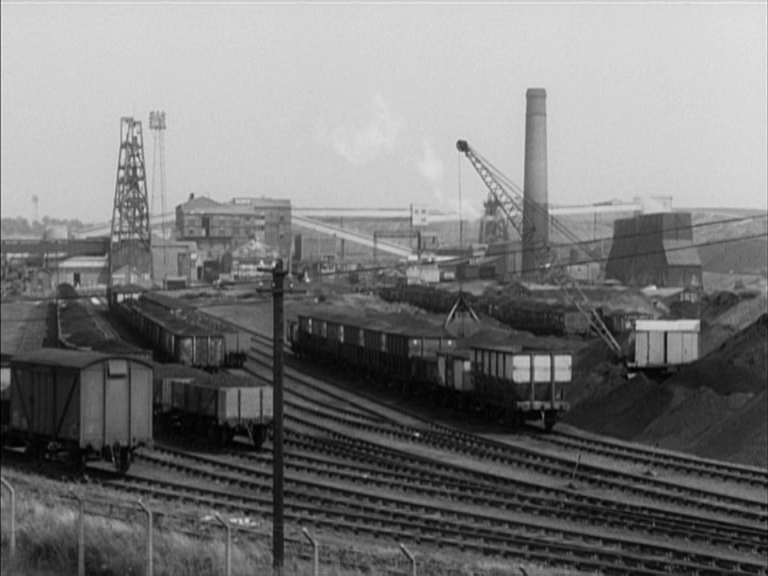
The Hickleton Main Coal Company began sinking two shafts to the Barnsley seam in December 1892, and they were completed at 492 metres in June 1894. No. 1 shaft had a steel headgear; No. 2's was made of timber.
The colliery grew to be one of the largest in the Dearne valley: in 1933 it employed 2,560 people underground and 500 on the surface. On 9 February 1944 King George VI and Queen Elizabeth visited and thanked the miners for their war effort. The colliery's union lodge was the four-hundredth recipient of the Order of Industrial Heroism, the award instituted for acts of courage by working people.
From 1 January 1986 Goldthorpe and Hickleton collieries were merged into a single unit, and production finally ceased on 4 February 1994.
Employment climbed from 387 in 1894 to 3,059 in 1910 and 3,600 in 1940. A third shaft was sunk to 848 metres between 1921 and 1923, and the Parkgate seam at 789 yards was worked from 1925 to 1982, with the Newhill from 1941 and the Meltonfield from 1943; the Barnsley seam was last worked in May 1956. The company became part of Doncaster Amalgamated Collieries Ltd in 1937. In the 1960s electric winders replaced steam, and a 1,417-metre drift driven in 1967-69 joined the pit to the Goldthorpe-Highgate workings; the shafts were filled and the site cleared between 1991 and 1994.
Geology
The colliery was sunk to the Barnsley seam, reached at 492 metres in June 1894 — the thick and productive seam that the whole Doncaster coalfield was opened up to work, and the same one pursued at Bullcroft, Brodsworth and Thorne.
Geological setting: Sedimentary Beds and Seams (well documented example)
Workings
Two shafts sunk from December 1892 and completed to the Barnsley seam at 492 metres in June 1894, No. 1 with a steel headgear and No. 2 with a timber one. A third shaft is recorded photographically as surviving into 1991. From 1986 the workings were run as one unit with Goldthorpe Colliery.
Closure
Goldthorpe and Hickleton collieries were merged into a single unit from 1 January 1986, and production ceased on 4 February 1994. Some accounts give the colliery's span as 1892 to 1988, which appears to reflect the end of winding at Hickleton itself rather than the end of production from the combined unit. The Northern Mine Research Society's account has the pit merged with Highgate on care and maintenance in January 1986 and closed in 1988, its shafts filled and the site cleared between 1991 and 1994, which fits the 1892-1988 span.
What remains
The site of the colliery now forms Phoenix Park in Thurnscoe. A black granite memorial was erected in Thurnscoe cemetery in 2006 bearing the names of the 161 miners who died at the pit over the years. The colliery's National Union of Mineworkers banner survives and has been photographed.
None of the colliery; the ground is now Phoenix Park, and the 2006 memorial stands in Thurnscoe cemetery.
Redevelopment
The colliery site was reclaimed as Phoenix Park, Thurnscoe.
Related mines
- Goldthorpe Colliery — Joined underground by a drift of 1967-69 and merged into one unit from 1986.
Nearby mines
- Goldthorpe Colliery — 0.4 miles (0.7 km) S
- Highgate Colliery — 0.6 miles (1.0 km) SW
- Barnburgh Main Colliery — 1.1 miles (1.8 km) SE
- Wath Main Colliery — 2.4 miles (3.9 km) SW
- Houghton Main Colliery — 2.5 miles (4.1 km) W
Straight-line distance, within 9 miles (15 km). Show on the map.
Disasters & major incidents
-
Hickleton Main Colliery roof fall, 1909
25 November 1909 · Collapse / Roof Fall · 2 fatalities
A sharp bump threw out the props in a faulty, over-wide place at Hickleton Main Colliery on 25 November 1909 and brought down a large area of roof on two colliers.
What's uncertain
Points where sources disagree or the record could not be settled; both accounts are kept. All open questions in the archive.
- Accounts differ: the colliery is described as working from 1892 to 1988, while Goldthorpe and Hickleton were merged into one unit from 1 January 1986 and production ceased on 4 February 1994. (disputed) 1
Recorded claims
Individual factual claims, each attached to the source(s) that support it below. Where sources disagree, both are kept.
- The Hickleton Main Coal Company began sinking two shafts to the Barnsley seam in December 1892; they were completed at a depth of 492 metres in June 1894, No. 1 with a steel headgear and No. 2 with a timber one. 1
- In 1933 the colliery employed 2,560 people underground and 500 on the surface. 1
- King George VI and Queen Elizabeth visited the colliery on 9 February 1944 and thanked the miners for their war effort. 1
- The colliery's union lodge was the four-hundredth recipient of the Order of Industrial Heroism. 1
- Accounts differ: the colliery is described as working from 1892 to 1988, while Goldthorpe and Hickleton were merged into one unit from 1 January 1986 and production ceased on 4 February 1994. (disputed) 1
- A black granite memorial bearing the names of the 161 miners who died at the pit over the years was erected in Thurnscoe cemetery in 2006. 1
- The site of the colliery now forms Phoenix Park in Thurnscoe. 1,2
- The inspectors' returns show employment climbing from 387 in 1894 to 3,059 in 1910 and 3,600 in 1940; the owners were the Hickleton Main Coal Co., then Hickleton Main Colliery Co. Ltd, Doncaster Amalgamated Collieries Ltd and, from 1947, the National Coal Board, and output in 1947 was 945,000 tons. 3
- A third shaft was sunk to 848 metres between 1921 and 1923; the Parkgate seam at 789 yards was worked from 1925 to 1982, the Newhill from 1941 and the Meltonfield from 1943, both to 1982, and the Barnsley seam was last worked in May 1956. 3,4
- The Hickleton Main company became part of Doncaster Amalgamated Collieries Ltd in 1937; a 1,417-metre drift joined the pit to the Goldthorpe-Highgate workings in 1967-69; it was merged with Highgate on care and maintenance in January 1986 and closed in 1988, and the shafts were filled and the site cleared between 1991 and 1994. 4
- Located at about 53.541 N, 1.307 W. 1
Photographs & further reading
The sinking, the colliery's scale in the 1930s, the 1944 royal visit, the lodge's Order of Industrial Heroism and the 2006 memorial naming its 161 dead.
View sourceSources
- (secondary) Hickleton Main Colliery — Wikipedia
- (secondary) Phoenix Park, Thurnscoe — Wikipedia
- (primary) Hickleton Main Colliery (Durham Mining Museum) — Durham Mining Museum
- (secondary) Hickleton Colliery (Northern Mine Research Society) — Northern Mine Research Society
Record created: 3 September 2026 · Last researched: 24 September 2026