 MineArchive
Hamilton Palace Colliery
| Also known as | Bothwellhaugh Colliery, The Pailice |
|---|---|
| Location | Bothwellhaugh, near Hamilton, South Lanarkshire — 55.7969, -4.0472 (exact) |
| Commodity | Coal |
| Type | Coal |
| Worked | 1884–May 1959 |
| Maximum depth | The shafts were sunk to at least 97 fathoms (roughly 580 feet) to reach the Ell seam, later deepened by a further 60 fathoms; an inrush accident in 1911 described the shaft depth as close on 100 fathoms (600 feet). |
| Operators | Bent Colliery Co., Ltd (1884–1959) |
Overview
One of the largest collieries in Scotland, sunk by the Bent Colliery Company at Bothwellhaugh from 1884, whose exploitation of a rich coal seam beneath Hamilton Palace itself led directly to the demolition of that 300-year-old stately home -- and whose own closure by flooding in 1959 was followed, in turn, by the demolition of the mining village built to house its workers.
History
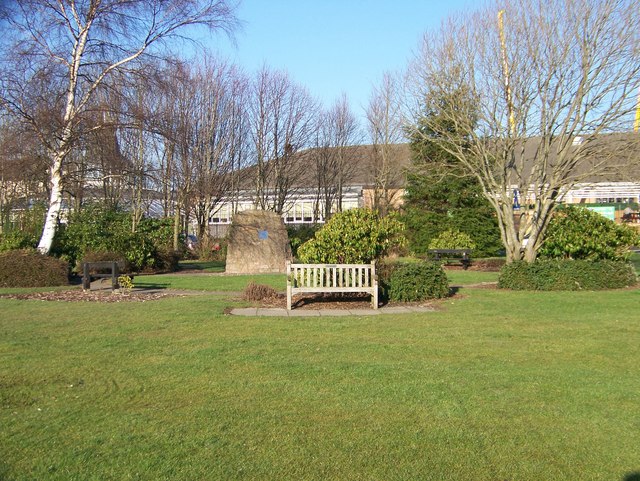
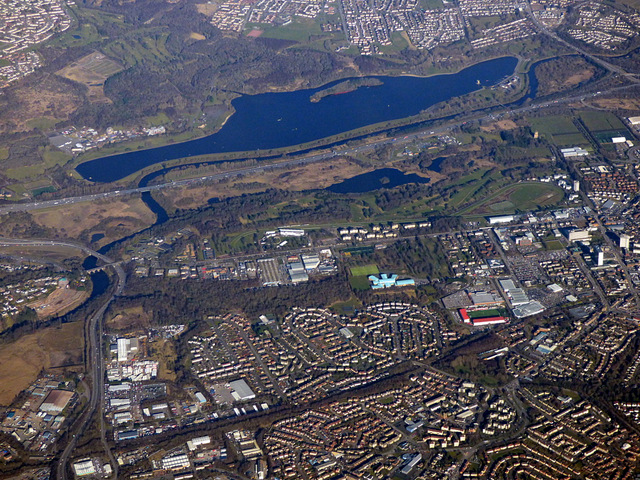
James Stedman Dixon, who had leased the neighbouring Bent Colliery in 1872, went on to acquire the coalfield lying under the grounds of Hamilton Palace, and the Bent Colliery Company sank a pair of shafts at Bothwellhaugh from 1884 to work it as Hamilton Palace Colliery. The company built an entire model village for its workforce alongside the pits, known locally as 'The Pailis' for its proximity to the Duke of Hamilton's ancestral home: 450 houses, two churches, two schools, a Miners' Welfare Association, a co-operative shop and allotments, but deliberately no public house, since neither the Duke nor the company would permit the sale of alcohol in the village. By 1913 the colliery -- the largest coalfield in Lanarkshire, if not in Scotland -- employed around 1,400 workers (1,120 underground and 280 at the surface and in the offices) and produced around 2,000 tons of coal a day; an 1899 account records an average output nearer 1,000 tons a day with a recorded best of 1,161 tons, electric and tail-rope haulage running underground for distances up to 1,400 yards, and Stanley compressed-air heading machines working at four times hand-driving speed. The colliery's most consequential feature, however, lay directly above it: in 1915 the company began working a rich seam of coal that ran beneath Hamilton Palace itself. The Duke's trustees were warned that continuing to extract this coal would undermine and ultimately destroy the Palace's structure, and with the Duke's own approval the decision was taken to demolish the building rather than sacrifice the coal beneath it; demolition began in 1919 and the Palace -- home to the Dukes of Hamilton for around three hundred years, and reckoned the grandest stately home in Britain -- had been entirely levelled by 1932. Dixon himself did not live to see this: he died in July 1911, having served as president of both the Mining Institute of Scotland and the Institution of Mining Engineers, and having endowed first a lectureship and then a chair of mining at Glasgow University. The colliery's workforce fell substantially over its later life -- to around 605 by 1948 -- and it finally closed in 1959, when major flooding in workings running under the bed of the River Clyde made further pumping and repair too costly to justify. The colliery's closure was followed by a rapid decline of Bothwellhaugh village: the remaining population was evacuated in 1965 and the village itself demolished in 1966, its former residents rehoused chiefly in Hamilton, Motherwell and Bellshill, with some emigrating to America and Australia. The site was flooded in the early 1970s to create Strathclyde Country Park and Strathclyde Loch, with the M74 motorway built immediately to its west; the village's former waste heap is now occupied by the M&D's theme park, and the site of the village itself is marked today by a memorial cairn and garden, and by displays in the Countryside Ranger Service's visitor centre in Strathclyde Park.
Geology
Coal of the Lanarkshire field, in a rich seam lying under the grounds of Hamilton Palace — working it is what undermined the house.
Workings
A pair of shafts, each 24 by 8 feet, sunk to 97 fathoms to work the Ell seam and later deepened a further 60 fathoms to reach the main and splint seams; underground haulage by electric and tail-rope systems over distances up to 1,400 yards, with Stanley compressed-air heading machines used to speed development driving.
Closure
Closed in 1959 after major flooding in workings running beneath the River Clyde made continued pumping and repair uneconomic; the supporting village was evacuated in 1965 and demolished in 1966, and the whole site flooded in the early 1970s to create Strathclyde Loch.
What remains
Nothing survives above ground of either the colliery or the village it supported -- the site now lies beneath Strathclyde Loch and the surrounding Strathclyde Country Park, with the M&D's theme park occupying the former colliery waste heap.
No surface remains of the colliery itself; the former village site is marked by a memorial cairn and garden in Strathclyde Country Park.
Redevelopment
The colliery and village site was flooded in the early 1970s to create Strathclyde Country Park and Strathclyde Loch, with the M74 motorway built immediately to the west and the M&D's theme park later built on the former colliery waste heap.
Related mines
- Bent Colliery — Bent was the Bent Colliery Company's original pit; the company sank Hamilton Palace Colliery from 1883 and the same general manager ran both.
- Home Farm Colliery, Hamilton — Both on the Duke of Hamilton's ground by the Clyde; Hamilton Palace Colliery was the later and larger pit.
Nearby mines
- Bothwell Castle Colliery — 1.1 miles (1.7 km) NW
- Greenfield Colliery — 1.6 miles (2.5 km) SW
- Cadzow Colliery — 1.6 miles (2.6 km) S
- Auchinraith Colliery — 1.8 miles (2.8 km) SW
- Bent Colliery — 1.7 miles (2.8 km) S
Straight-line distance, within 9 miles (15 km). Show on the map.
Recorded claims
Individual factual claims, each attached to the source(s) that support it below. Where sources disagree, both are kept.
- By 1913 Hamilton Palace Colliery employed around 1,400 workers (1,120 underground, 280 at the surface) and produced around 2,000 tons of coal a day, making it one of the largest collieries in Scotland. 1
- A contemporary account of the colliery records average output nearer 1,000 tons a day (with a best of 1,161 tons in nine hours), electric and tail-rope underground haulage over distances up to 1,400 yards, and Stanley compressed-air heading machines driving development around four times faster than by hand. 2
- In 1915 the colliery began working a rich coal seam beneath Hamilton Palace itself; warned that continued extraction would destroy the building's structure, the Duke of Hamilton's trustees approved its demolition, which began in 1919 and was complete by 1932. 1
- The colliery closed in 1959 after major flooding in workings beneath the River Clyde made further pumping and repair uneconomic; the remaining population of its supporting village, Bothwellhaugh, was evacuated in 1965 and the village demolished in 1966, with the whole site flooded in the early 1970s to create Strathclyde Loch. 1
- The Scottish Mining Website's full run of newspaper-reported accidents at Hamilton Palace Colliery, spanning 1887 to 1941, records a long series of routine single-fatality mining accidents (falls of roof, haulage and cage incidents, entanglement in machinery) typical of a very large Victorian and twentieth-century colliery, but no single incident killing two or more men at once. 3
Sources
- (secondary) Bothwellhaugh – A village lost under a loch — CultureNL Museums
- (primary) Hamilton Palace Colliery — Scottish Mining Website (reproducing contemporary newspaper reports)
- (primary) Accidents at Hamilton Palace Colliery — Scottish Mining Website (reproducing contemporary newspaper reports)
- (observational) A Memorial Garden at Strathclyde Park — Geograph Britain and Ireland (Elliott Simpson)

Record created: 30 August 2026 · Last researched: 30 August 2026