 MineArchive
Grinkle Mine
| Location | Near Roxby, North Yorkshire — 54.5492, -0.8239 (exact) |
|---|---|
| Commodity | Iron |
| Type | Ironstone |
| Worked | 1875–1930 (site abandoned 1934) |
| Operators | Palmer's Shipbuilding & Iron Company (1875–1899), Grinkle Mining Co. Ltd. (1899–1930) |
Overview
Grinkle Mine, near Roxby, worked the main Cleveland ironstone seam from 1875, its ore hauled by narrow-gauge tramway through two tunnels and across viaducts to a purpose-built harbour at Port Mulgrave.
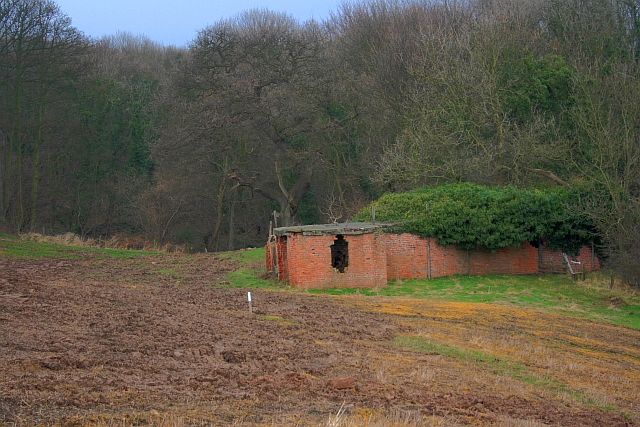
History
Grinkle Mine opened in 1875 near Roxby in North Yorkshire, working the main Cleveland Seam of ironstone under Palmer's Shipbuilding & Iron Company, which had the harbour at Port Mulgrave built specifically to export the mine's ore directly to its own works on the Tyne at Jarrow. A 3-mile narrow-gauge tramway, costing £40,000 to build in 1875, connected the mine to Port Mulgrave via two tunnels -- the 376-yard Ridge Lane Tunnel and the 1,729-yard Port Mulgrave Tunnel -- and wooden viaducts. Output peaked at 3,000 short tons a week in 1899, the year the mine passed from Palmer's to independent operation under the Grinkle Mining Co. Ltd. During the First World War, the threat of enemy action against the harbour at Port Mulgrave led to a new electric incline being built in 1917, connecting the mine directly to the Whitby-Loftus railway line and allowing the harbour itself to close to shipping in 1917, though the tramway stayed in use to carry miners between Port Mulgrave and the mine. The mine first ceased production in 1921, saw brief resumptions in 1927 and 1929 (by which point annual output had fallen to around 4,000 tonnes), and closed for good in 1930, the site being abandoned in June 1934.
Geology
The main Cleveland ironstone seam, worked near Roxby from 1875.
Geological setting: Sedimentary Ironstones (historical documentary reference)
Workings
Worked the main Cleveland Seam of ironstone, ore hauled by a 3-mile narrow-gauge tramway through two tunnels and across viaducts to a purpose-built harbour at Port Mulgrave; a 1917 electric incline connected the mine directly to the Whitby-Loftus railway line.
Closure
Production first ceased in 1921, with brief resumptions in 1927 and 1929, by which time annual output had fallen to around 4,000 tons.
What remains
Part of the site now lies beneath the surface workings of the Boulby Mine complex, though some buildings survive at ground level; culvert collapse at the site required £1.5 million of remediation work in 2015.
The Fan House (formerly housing an electric Sirocco ventilation fan), sections of the tramway's culverts, and other scattered relics survive.
Related mines
- Port Mulgrave Mine — Joined by the extended tunnel in the 1870s so Grinkle's ore could ship through Port Mulgrave.
Nearby mines
- Boulby Mine — 0.3 miles (0.5 km) N
- Boulby Alum Quarries — 1.2 miles (1.9 km) NW
- Port Mulgrave Mine — 2.6 miles (4.3 km) E
- Loftus Mine — 3.2 miles (5.2 km) W
- Carlin How Mine — 3.3 miles (5.4 km) W
Straight-line distance, within 9 miles (15 km). Show on the map.
Recorded claims
Individual factual claims, each attached to the source(s) that support it below. Where sources disagree, both are kept.
- A 3-mile narrow-gauge tramway, built in 1875 at a cost of £40,000, connected the mine to Port Mulgrave through two tunnels -- the 376-yard Ridge Lane Tunnel and the 1,729-yard Port Mulgrave Tunnel -- and wooden viaducts. 1
- Output peaked at 3,000 short tons a week in 1899, the year ownership passed from Palmer's to the independent Grinkle Mining Co. Ltd; by 1929 annual production had fallen to around 4,000 tonnes. 1
- In 1917, the threat of wartime action against the harbour at Port Mulgrave led to a new electric incline connecting the mine directly to the Whitby-Loftus railway line, allowing the harbour to close to shipping that year, though the tramway remained in use to carry miners. 1
- Four mine plan records survive in the BGS/Mining Remediation Authority catalogue under the name Grinkle, independent confirmation of the mine as a formally catalogued working. 2
Photographs & further reading
A fuller account of the mine's tramway, tunnels and wartime rail connection to Port Mulgrave.
View sourceSources
- (secondary) Grinkle Mine — Wikipedia
- (primary) Grinkle Mine (mine plan) — BGS / Mining Remediation Authority mine plans catalogue
Record created: 2 September 2026 · Last researched: 2 September 2026