 MineArchive
Loftus Mine
| Also known as | Skinningrove Mine, Skinningrove Ironstone Mine |
|---|---|
| Location | Skinningrove, near Loftus, North Yorkshire — 54.5630, -0.9004 (approximate) |
| Commodity | Iron |
| Type | Ironstone |
| Worked | 1859–1958 |
| Maximum depth | Drift mine (no shaft) — worked via the North Drift into the hillside |
| Operators | Pease & Partners Ltd. (1865–1947), Skinningrove Iron Company (1880–1958) |
Overview
A drift mine at Skinningrove worked by the Skinningrove Iron Company, one of the largest producers in the Cleveland ironstone field that fed the North East's Victorian iron and steel industry; part of its underground workings survive as the Land of Iron museum.
History
Loftus Mine opened in 1859, extracting Cleveland ironstone via a drift driven into the hillside above Skinningrove rather than a vertical shaft. Ownership passed through the Loftus Iron Company (formed 1874, liquidated) to the newly formed Skinningrove Iron Company in 1880, which built a jetty at Skinningrove and ran the mine alongside its ironworks. Output peaked at 654,000 tons in 1881; by 1896 the mine employed 781 people, 676 of them underground.
Accounts of the ownership differ. The East Cleveland industrial-heritage site has ironstone gathered from the shore from 1830, a Skinningrove mine opened under the Maynard royalty in 1848, and Pease and Partners moving the mine south to meet the new railway in 1865, when it took the Loftus name; by that account Pease and Partners held it until 1947 and the Skinningrove Iron Company from 1947 to the closure in 1958. A new South Drift was started in 1871. The Tom Leonard Mining Museum opened on the site in 1983.
Geology
Cleveland ironstone, reached by a drift driven into the hillside above Skinningrove rather than by shaft.
Geological setting: Sedimentary Ironstones (historical documentary reference)
Workings
Ironstone was worked from the drift entrance, known as the North Drift, which during the First World War also served as an air-raid shelter for the neighbouring steelworks during Zeppelin raids.
Closure
The mine closed in 1958 as cheaper imported ore undercut Cleveland ironstone, part of the wider collapse of the North East's home-grown ironstone industry in the mid-20th century.
What remains
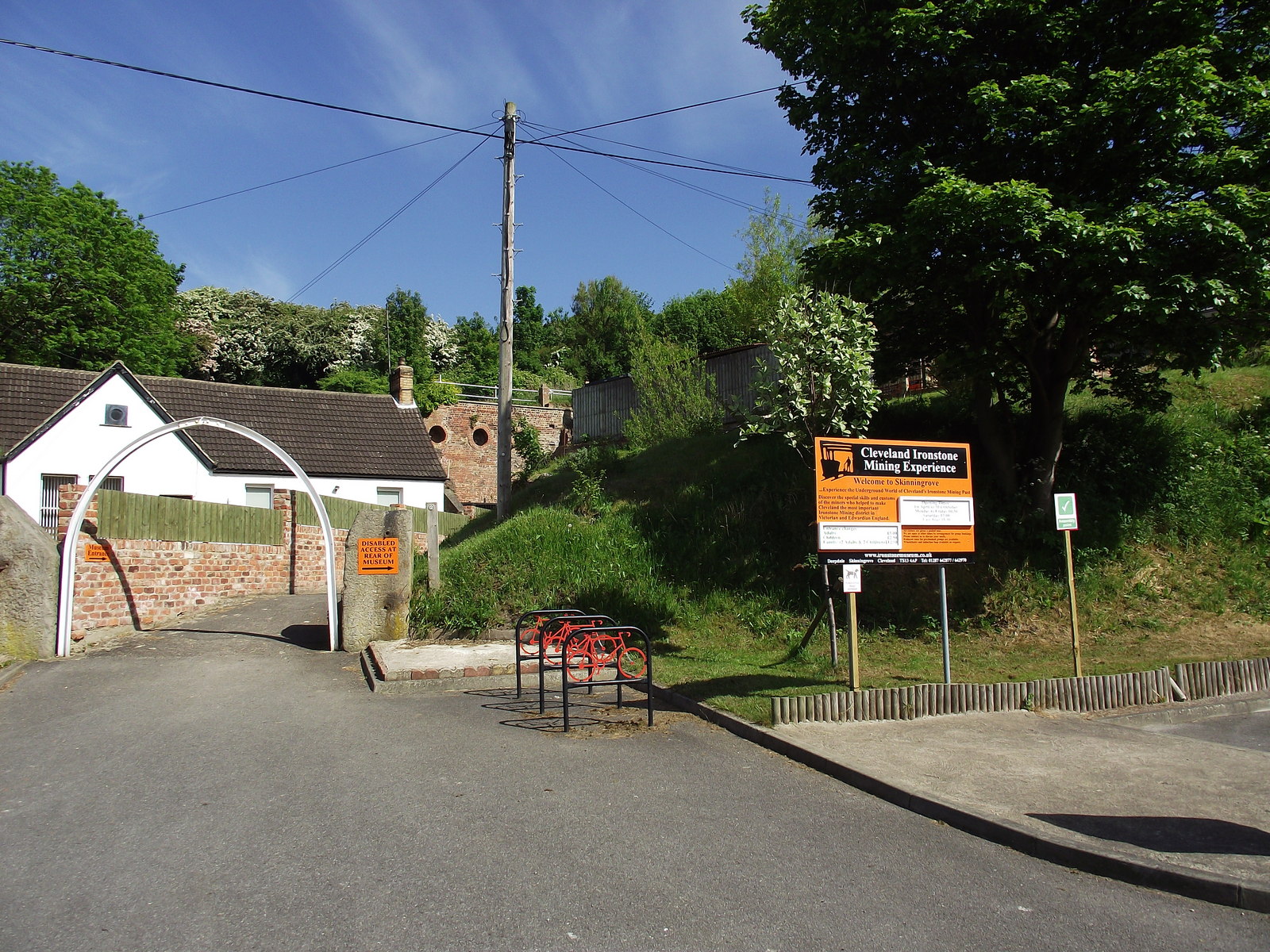
Part of the original workings reopened to the public as the Cleveland Ironstone Mining Museum, now the Land of Iron museum, where visitors can tour the North Drift underground.
Nearby mines
- Carlin How Mine — 0.1 miles (0.2 km) W
- Kilton Mine — 1.2 miles (1.9 km) W
- Lumpsey Mine — 1.6 miles (2.6 km) W
- Huntcliffe Mine — 1.7 miles (2.7 km) NW
- Cliff Mine — 2.1 miles (3.3 km) NW
Straight-line distance, within 9 miles (15 km). Show on the map.
What's uncertain
Points where sources disagree or the record could not be settled; both accounts are kept. All open questions in the archive.
- Loftus Mine's output peaked at 654,000 tons of ironstone in 1881, and by 1896 employed 781 people, 676 of them underground. (uncertain) 1
- The mine's North Drift was used as an air-raid shelter for the Skinningrove steelworks during Zeppelin raids in the First World War. (uncertain) 3
- The East Cleveland industrial-heritage account gives a different succession: ironstone gathered from the shore from 1830, a Skinningrove mine opened under the Maynard royalty in 1848, Pease and Partners moving the mine south in 1865 to meet the new railway and giving it the Loftus name, a new South Drift in 1871, and Pease and Partners as lessees until 1947, with the Skinningrove Iron Company from 1947 to 1958. (disputed) 1
Recorded claims
Individual factual claims, each attached to the source(s) that support it below. Where sources disagree, both are kept.
- The Skinningrove Iron Company was formed in 1880 after the liquidation of the earlier Loftus Iron Company (formed 1874). 1,2
- Loftus Mine's output peaked at 654,000 tons of ironstone in 1881, and by 1896 employed 781 people, 676 of them underground. (uncertain) 1
- The mine's North Drift was used as an air-raid shelter for the Skinningrove steelworks during Zeppelin raids in the First World War. (uncertain) 3
- The East Cleveland industrial-heritage account gives a different succession: ironstone gathered from the shore from 1830, a Skinningrove mine opened under the Maynard royalty in 1848, Pease and Partners moving the mine south in 1865 to meet the new railway and giving it the Loftus name, a new South Drift in 1871, and Pease and Partners as lessees until 1947, with the Skinningrove Iron Company from 1947 to 1958. (disputed) 1
- The mine closed in 1958 and the Tom Leonard Mining Museum opened on the site in 1983. 1
Sources
- (secondary) Loftus Ironstone Mine — East Cleveland's Industrial Heartland
- (secondary) Skinningrove Steelworks — Wikipedia
- (observational) Land Of Iron Museum In Skinningrove — Fabulous North
- (primary) Mine plan: LOFTUS (FORMERLY LOFTUS INCLUDING WHITECLIFFE) — BGS / Mining Remediation Authority mine plans catalogue
Record created: 25 August 2026 · Last researched: 24 September 2026