 MineArchive
Huntcliffe Mine
| Also known as | Huntcliff Mine |
|---|---|
| Location | Near the coast between Saltburn and Skinningrove, North Yorkshire — 54.5844, -0.9223 (exact) |
| Commodity | Ironstone |
| Type | Ironstone |
| Worked | 1871–22 September 1906 |
| Operators | Bell Brothers (1871–1906, owner) |
Overview
Bell Brothers opened Huntcliffe next to their worked-out Cliff mine in 1871 and drove it as an adit, the stone won by hand throughout. It closed on 22 September 1906 with the mineral exhausted.
History
Bell Brothers opened Huntcliffe in 1871, adjacent to the Cliff mines they had begun eleven years earlier, near the coast between Saltburn and Skinningrove. Bulmer's directory of 1890 describes it as worked by an adit drift, the stone won by hand mining, with a hundred hands employed. The Brotton trades entry in the same directory lists Bell Bros., Ltd., ironmasters, of the Lumpsey and Huntcliffe mines, with A. L. Steavenson as agent and D. W. Dixon as manager.
The official returns run from 1873 to 1905 and show the mine shrinking: 199 employed in 1883, 121 in 1894, 117 in 1900, and 54 by 1905, of whom 38 were below ground. The Durham Mining Museum gives the closing date as 22 September 1906 and the reason in two words — mineral exhausted.
Geology
The Cleveland Ironstone Formation at the coast, reachable from the cliff and valley sides, which is why this and its neighbours were adits and drifts rather than deep pits. Huntcliff itself, the headland the mine takes its name from, stands 336 feet above the shore.
Workings
Worked by an adit drift, the stone won by hand mining, with a hundred hands employed at the time Bulmer's described it. The Durham Mining Museum holds a catalogue of abandonment plans for the mine.
Closure
The mine closed on 22 September 1906, the official note against it reading simply 'Mineral exhausted'.
What remains
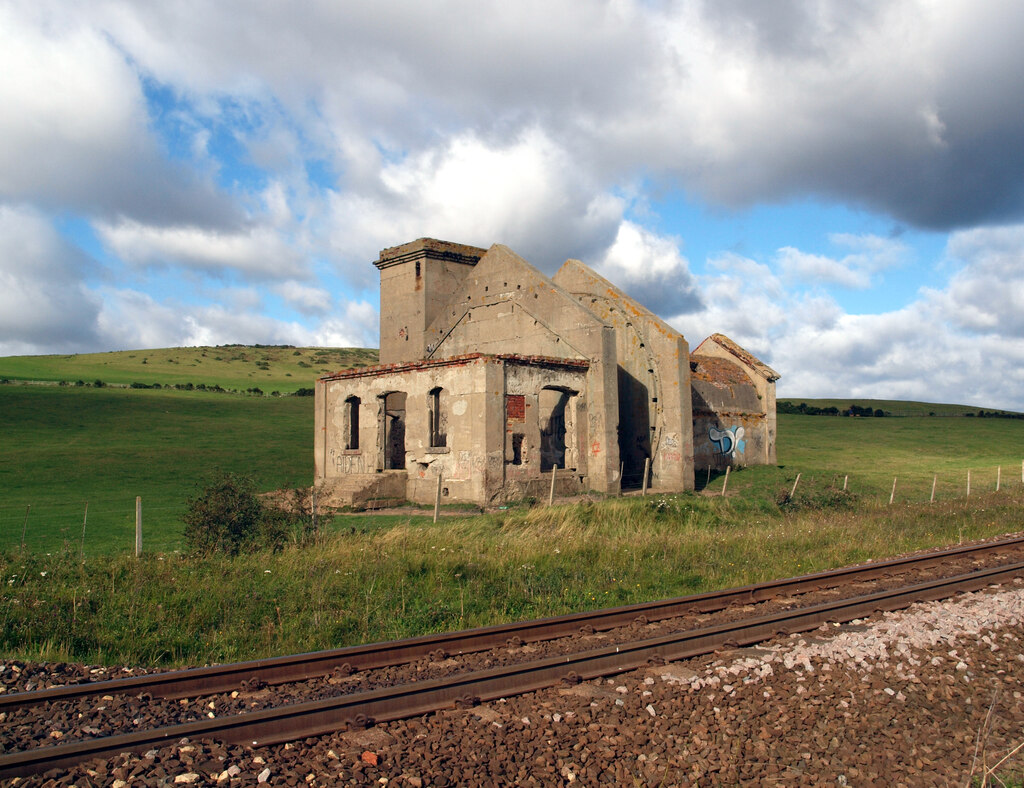
Nothing is recorded of the mine site as it now stands.
None recorded.
Related mines
- Carlin How Mine — One of Bell Brothers' four east Cleveland ironstone mines, described together in Bulmer's directory of 1890 as a single undertaking spread along the coast: Cliff from 1860, Huntcliffe from 1871, Carlin How from 1873 and Lumpsey from the early 1880s, all passing to Dorman, Long and Company in April 1923.
- Cliff Mine — Huntcliffe was opened adjacent to the Cliff mines in 1871 and took over from them as their ironstone was worked out; Bulmer's describes the two in the same breath.
- Goldsborough Ironstone Mine — Both fed the Cleveland ironworks from mines driven into this coast; Huntcliffe was one of the big ones and Goldsborough one of the smallest and last.
Nearby mines
- Cliff Mine — 0.5 miles (0.8 km) W
- Kilton Mine — 1.3 miles (2.1 km) S
- Carlin How Mine — 1.6 miles (2.6 km) SE
- Loftus Mine — 1.7 miles (2.8 km) SE
- Lumpsey Mine — 1.9 miles (3.0 km) S
Straight-line distance, within 9 miles (15 km). Show on the map.
What's uncertain
Points where sources disagree or the record could not be settled; both accounts are kept. All open questions in the archive.
- The BGS mine-plans catalogue holds a Mining Remediation Authority abandonment plan titled 'Huntcliffe' (catalogue OM4990, Ironstone Main, dated 1906); the catalogue gives no location and the plan's details do not clearly tie it to this working, so it may belong to another of the same name. (uncertain) 3
Recorded claims
Individual factual claims, each attached to the source(s) that support it below. Where sources disagree, both are kept.
- Bell Brothers opened the Huntcliffe Mine adjacent to the Cliff mines in 1871. It is worked by an adit drift, and the stone is won by hand mining; a hundred hands are employed. 1
- Bulmer's trades directory for Brotton in 1890 lists Bell Bros., Ltd., ironmasters, of the Lumpsey and Huntcliffe mines, with A. L. Steavenson as agent and D. W. Dixon as manager. 1
- The official returns give 199 employed in 1883, 121 in 1894, 109 in 1896, 117 in 1900, 108 in 1902 and 54 in 1905, of whom 38 were below ground. The mine closed on 22 September 1906 with the note 'Mineral exhausted'. 2
- The BGS mine-plans catalogue holds a Mining Remediation Authority abandonment plan titled 'Huntcliffe' (catalogue OM4990, Ironstone Main, dated 1906); the catalogue gives no location and the plan's details do not clearly tie it to this working, so it may belong to another of the same name. (uncertain) 3
Photographs & further reading
The official returns from 1873 to 1905, the closing date and its one-line reason, and a catalogue of abandonment plans.
View sourceThe description of the mine as an adit drift worked by hand with a hundred hands, and the trades entry naming its agent and manager.
View sourceSources
- (primary) Bulmer's History and Directory of North Yorkshire (1890), Brotton parish — Bulmer's Directory, transcribed by GENUKI
- (primary) Huntcliffe (Ironstone) — Durham Mining Museum
- (primary) BGS / Mining Remediation Authority mine plans: HUNTCLIFFE — British Geological Survey / Mining Remediation Authority
Record created: 11 September 2026 · Last researched: 11 September 2026