 MineArchive
Gloucester Furnace, Lamberhurst
| Location | Furnace Mill, Lamberhurst, Kent — 51.0996, 0.3730 (exact) |
|---|---|
| Commodity | Iron |
| Type | Iron |
| Worked | 1548–1787 |
| Operators | William Benge (1695–?), John Legas (1720–1752), Richard Tapsell (1752–1765) |
Overview
A major Wealden iron furnace and forge at Lamberhurst, on the Kent-Sussex border, named for the Duke of Gloucester after a royal visit in 1698 and rebuilt in 1695 by William Benge into the largest ironworks of its kind in the Weald — at 28 feet, four feet taller than any other furnace in England at the time. Adapted for cannon casting around 1724, it produced ordnance for government and merchants alike through most of the eighteenth century, and cast the great iron railings and gates around St Paul's Cathedral churchyard in 1710.
History
An iron-working site at Lamberhurst is first recorded in 1548, but the furnace that made the place famous was built new in 1695 by William Benge, who rebuilt and enlarged an older furnace on the site into the most extensive ironworks in the Weald. It took its alternative name, Gloucester Furnace, from a visit by the young Duke of Gloucester, Queen Anne's son, from Tunbridge Wells in 1698. In 1710 the furnace cast one of its most celebrated commissions: the iron railings and seven ornamental gates enclosing the churchyard of St Paul's Cathedral in London, five feet six inches high and weighing upwards of 200 tons, at a cost of over £11,000. Around 1724 the furnace was adapted for casting cannon, becoming, at 28 feet, four feet taller than any other furnace in England at the time, with a larger hearth for gun-casting (5 feet by 21 inches) alongside a smaller one for ordinary work (4 feet by 18 inches); besides cannon for government and merchant customers it also produced fire-backs and other domestic castings, working both good local ore and poorer, brittler ore blended with reprocessed cinder from earlier smelting. The furnace and its associated forge were owned by the Gott family and leased out to a succession of ironmasters: John Legas and Thomas Hussey took the lease in the early 1720s, and from 1741 Legas ran it, alongside several other Wealden ironworks, in partnership with the London merchant William Harrison. After Legas's death in 1752 the lease passed to his nephew-in-law Richard Tapsell, who continued supplying cast-iron ordnance to the Board of Ordnance through the Seven Years' War in partnership with Harrison's sons. When Tapsell's bankruptcy in 1765 broke up the wider Harrison-Tapsell partnership and idled most of its furnaces and forges at a stroke, Gloucester Furnace was the one exception: it alone stayed in use, passing to George Rumens and then, from about 1769, to Joseph Wright and Thomas Prickett. A 1795 map of the site shows a boring mill in addition to the furnace itself, and the furnace was still standing as late as 1787.
Geology
Not a mine: a Wealden charcoal blast furnace working both good local ore and poorer, brittler ore brought in, with bloomery slag and shelly limestone still on the furnace site.
Workings
A furnace and a separate forge, roughly a third of a mile apart and each with its own pond: the furnace site (bloomery slag, brick and shelly limestone still traceable) and the forge site, where the forge's great supply leat — locally known as the Great Ditch, around 850 metres long — survives along with remains of its pond. The furnace hearth was enlarged for cannon casting to 5 feet by 21 inches, alongside a smaller 4-foot by 18-inch hearth kept for ordinary ironwork.
Closure
No exact closure date survives; the furnace was still standing in 1787, later than most other Wealden gunfounding furnaces, several of which had already been idled by Richard Tapsell's 1765 bankruptcy.
What remains
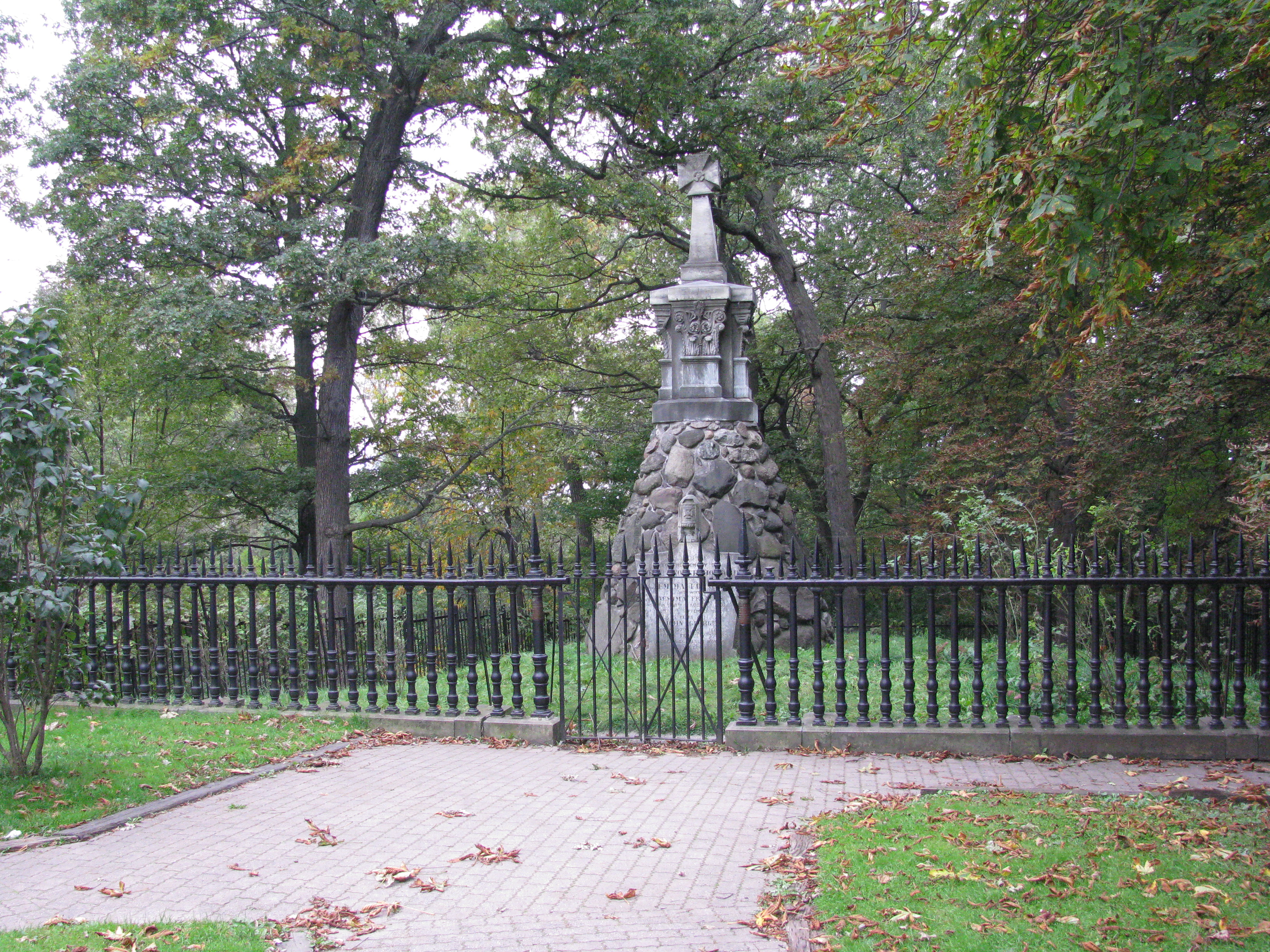
The furnace and forge sites themselves survive only as low earthworks, slag and the forge's long supply leat. The surviving listed building called Furnace Mill, nearby, is an eighteenth-century corn mill on part of the same site; documentary evidence shows it milling corn from at least the mid-nineteenth century, and it is not certain whether that specific building itself ever had an ironworking function. Further afield, a portion of the furnace's most famous product survives in an unexpected place: when St Paul's Cathedral's 1710s churchyard railings were dismantled in the 1870s, the Toronto architect John George Howard bought a section and shipped it to Canada; the ship carrying it sank in the St Lawrence River, and only after a costly two-year salvage effort was enough recovered to enclose one side of Howard's own tomb in Toronto's High Park, installed on 18 November 1875 and still standing there today.
Nearby mines
- Brightling and Mountfield Gypsum Mines — 9.0 miles (14.5 km) S, East Sussex
- Robertsbridge Furnace — 9.2 miles (14.8 km) SE, East Sussex
Straight-line distance, within 9 miles (15 km). Show on the map.
Recorded claims
Individual factual claims, each attached to the source(s) that support it below. Where sources disagree, both are kept.
- William Benge rebuilt and enlarged the furnace in 1695; it took the alternative name Gloucester Furnace from a visit by the Duke of Gloucester, Queen Anne's son, in 1698. 1,2
- In 1710 the furnace cast the iron railings and seven ornamental gates around St Paul's Cathedral churchyard, five feet six inches high, weighing upwards of 200 tons and costing over £11,000. 1
- Adapted for cannon casting around 1724, the furnace stood 28 feet high, four feet taller than any other in England at the time, with an enlarged 5-foot by 21-inch hearth for guns alongside a smaller 4-foot by 18-inch hearth for ordinary work. 1,2
- Owned by the Gott family and leased from the early 1720s to John Legas and Thomas Hussey; from 1741 Legas ran it in partnership with William Harrison, and after Legas's death in 1752 the lease passed to Richard Tapsell, who continued supplying the Board of Ordnance in partnership with Harrison's sons. 3
- Tapsell's bankruptcy in 1765 idled most of the wider Harrison-Tapsell partnership's furnaces and forges at once, but Gloucester Furnace alone remained in use, passing to George Rumens and then, from about 1769, to Joseph Wright and Thomas Prickett. 3
- A 1795 map of the site shows a boring mill in addition to the furnace itself; the furnace was still standing as late as 1787, and no exact closure date is recorded. 3,2
- The furnace and forge sites survive as slag, earthworks and the forge's long supply leat (the Great Ditch, c. 850 m); the nearby listed Furnace Mill building is an 18th-century corn mill on part of the same site, though it is uncertain whether that specific building itself ever had an ironworking function. 2
- When St Paul's Cathedral's 1710s churchyard railings were dismantled in the 1870s, Toronto architect John George Howard bought a section; the ship carrying it sank in the St Lawrence River, and after a two-year salvage effort enough was recovered to enclose one side of Howard's own tomb in Toronto's High Park, installed on 18 November 1875. 4
Sources
- (primary) Parishes: Lamberhurst (The History and Topographical Survey of the County of Kent, vol. 5) — British History Online
- (primary) Monument record TQ 63 NE 3 - Lamberhurst (Gloucester) Furnace, Furnace Mill, Lamberhurst — Kent County Council Historic Environment Record
- (secondary) The Iron Industry in the Weald in the Period of the Seven Years' War, 1750-1770 (M.A. dissertation) — Jeremy Spencer Hodgkinson, University of Brighton (1993), via the Wealden Iron Research Group
- (observational) The Architect's Tomb — High Park Nature Centre, Toronto
Record created: 26 August 2026 · Last researched: 26 August 2026