 MineArchive
Glenboig Fireclay Mines
| Also known as | Glenboig-Inchneuk Mine, Star Works, Glenboig Union Fireclay Company |
|---|---|
| Location | Glenboig, near Coatbridge, North Lanarkshire — 55.8926, -4.0435 (approximate) |
| Commodity | Fireclay |
| Type | Mineral |
| Worked | 1830s–1956 |
| Operators | James Dunnachie (1865–1900), Glenboig Union Fireclay Company (1882–1956) |
Overview
An ordinary Lanarkshire village that lined the furnaces of the world. Glenboig's fireclay was so nearly free of iron and lime that its bricks would not crack under repeated firing, and by 1900 the company working it was reckoned the largest fireclay concern on earth, turning out a quarter of a million bricks a day.
History
Fireclay brickmaking began around Glenboig in the 1830s, with production at Cardowan from 1833-34 and the Glenboig Fire Brick and Tile Works under John Thomson from 1843, its Old Works built beside the Monkland and Kirkintilloch railway. When Thomson's partnership dissolved in 1865 James Dunnachie took control, forming the Glenboig Fire-Clay Company with John Hurll and John Young; in 1872 Dunnachie split away and built the Star Works immediately next door, so that two rival firms worked the same clay side by side. They merged in 1882 as the Glenboig Union Fireclay Company Limited with Dunnachie as managing director, and went on to acquire works at Cumbernauld, Gartcosh and Gartverrie. Dunnachie was the maker of the business twice over: as an organiser, and as the inventor of a gas-fired kiln patented in 1891 that cut fuel use by more than half and brought firing time down from days to under a day. By 1890 the company was producing about 100,000 bricks daily and sending more than a million a year to Germany, Russia and Belgium alone.
Geology
The fireclay lies in the Carboniferous Coal Measures as seatearth — the fossil soil beneath a coal seam, leached of its soluble minerals by the forest that grew in it. That leaching is exactly what makes a good fireclay, and Glenboig's was unusually well leached: remarkably free of the bases, iron oxide and lime especially, that cause a firebrick to soften and break down under heat. Bricks made from it would take repeated extreme firing without cracking, which is why steelmakers wanted them and why an ordinary-looking clay under a Lanarkshire field became a world commodity.
Geological setting: Sedimentary Beds and Seams (well documented example)
Workings
Underground mining of the fireclay seams rather than open digging, on a scale that ran under much of the parish — the Glenboig-Inchneuk complex alone was extensive. Fourteen abandonment plans for the Glenboig mines survive in the national catalogue, lodged by the Glenboig Union Fireclay Company and its successors, with abandonment dates running from 1932 to 1981. At surface the clay went to the Old Works and the Star Works, and after 1891 through Dunnachie's gas-fired kilns.
Closure
The Glenboig-Inchneuk mine, worked from the 1880s, was abandoned in 1956; other fireclay mines in the group ran on into the 1980s, the last abandonment plans dated 1981. The industry went the way of the furnaces it supplied.
What remains
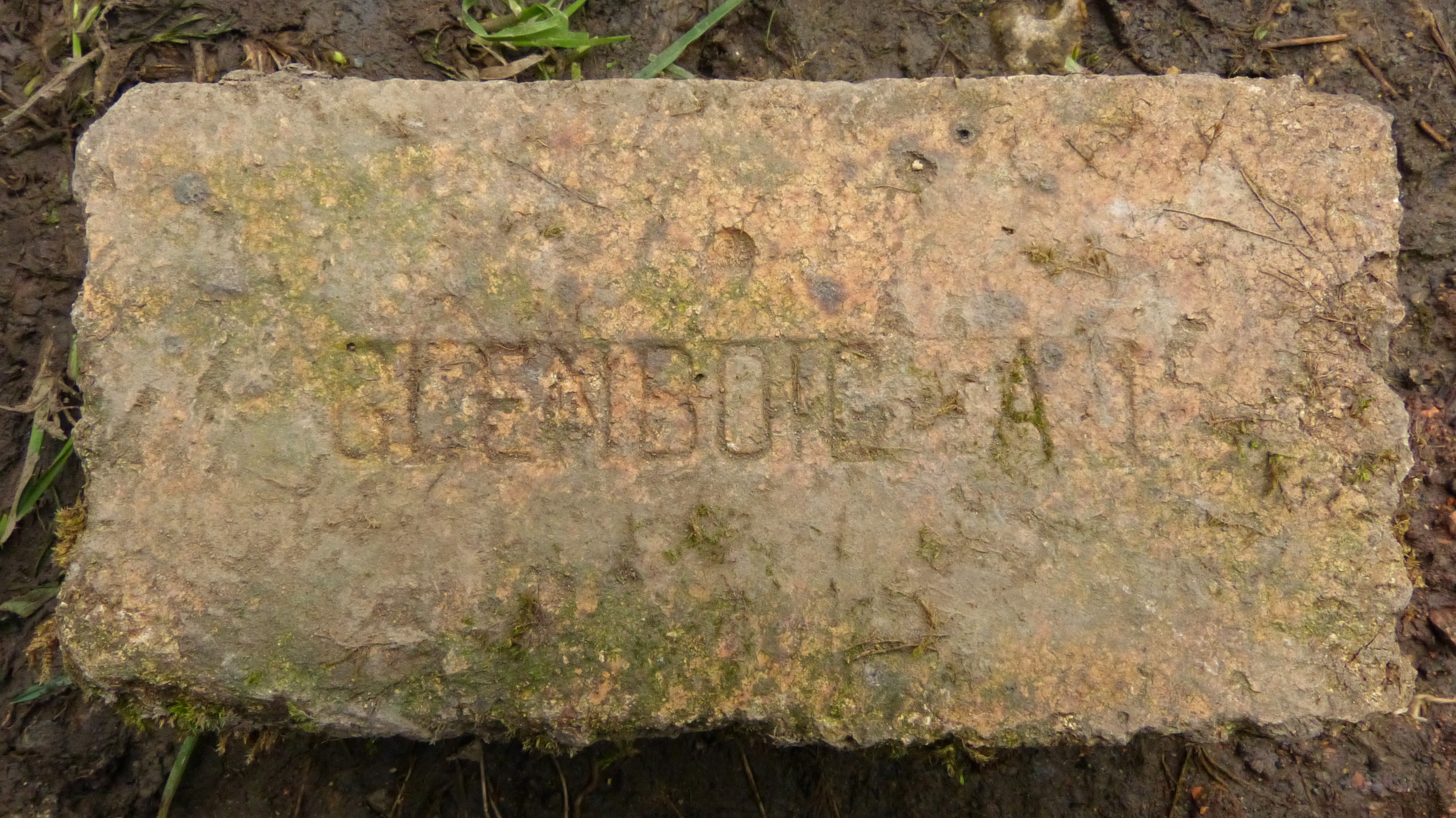
The works have gone and Glenboig is a residential village; the ground is undermined and the sites cleared. Glenboig bricks, however, are everywhere — they turn up in furnace linings and buildings across the world and are collected for their stamps.
Little on the ground. The most numerous survivals are the bricks themselves, stamped GLENBOIG or with the Star Works mark, found wherever the company exported.
Redevelopment
Housing and open ground; the loch at Garnqueen and the village park occupy part of the old industrial landscape.
Nearby mines
- Bedlay Colliery — 1.3 miles (2.1 km) N
- Auchengeich Colliery — 2.8 miles (4.5 km) NW
- Cardowan Colliery — 3.5 miles (5.7 km) W
- Carnbroe Colliery — 3.8 miles (6.0 km) S
- Boglea Colliery — 4.2 miles (6.8 km) E
Straight-line distance, within 9 miles (15 km). Show on the map.
Disasters & major incidents
-
Glenboig Fireclay Mine roof fall, 1909
5 August 1909 · Collapse / Roof Fall · 4 fatalities
Four men were buried by a roof fall in the Glenboig Union Fireclay Company's mine on 5 August 1909 while robbing a stoop in ground that had stood untouched for twenty years.
Recorded claims
Individual factual claims, each attached to the source(s) that support it below. Where sources disagree, both are kept.
- Fireclay brickmaking began around Glenboig in the 1830s, with production at Cardowan from 1833-34 and the Glenboig Fire Brick and Tile Works under John Thomson from 1843. 1
- James Dunnachie took control in 1865 with John Hurll and John Young, split away to build the Star Works in 1872, and became managing director when the two firms merged as the Glenboig Union Fireclay Company Limited in 1882. 1
- The Glenboig fireclay was remarkably resistant to extreme heat and remarkably free of bases such as iron oxide and lime, so that its bricks did not crack after repeated firing — a decisive advantage in steel furnaces. 1
- By 1890 the company produced about 100,000 bricks a day, and more than a million a year went to Germany, Russia and Belgium. 1
- Dunnachie patented a gas-fired kiln in 1891 which saved upwards of 50 per cent of fuel and cut firing time from days to eighteen to twenty-four hours. 1
- The company won 22 prize medals at international exhibitions, including gold at Paris in 1878 and a diploma of honour at Brussels in 1897. 1
- The Glenboig-Inchneuk mine complex, first worked in the 1880s, was abandoned in 1956; abandonment plans for the Glenboig fireclay mines run from 1932 to 1981. 2,3
Photographs & further reading
The local museum service on what the village made.
View sourceSources
- (primary) Glenboig Union Fireclay Company — history — Scotland's Brick and Tile Manufacturing Industry
- (primary) Mine plans SWR2577 and SW209: Hopewell, Wimberry, Cannop and associated gales — British Geological Survey / Mining Remediation Authority mine plans catalogue
- (secondary) Glenboig Mine — Scottish Cave and Mine Database
- (secondary) Glenboig Union Fireclay Co — Grace's Guide
Record created: 24 August 2026 · Last researched: 24 August 2026