 MineArchive
Glebe Mine
| Location | Eyam, Derbyshire — 53.2852, -1.6730 (exact) |
|---|---|
| Commodities | Lead, Fluorspar |
| Type | Metal |
| Worked | From 1860s–1884 |
| Maximum depth | Unknown. |
| Operators | Glebe Mines Ltd (1937–2010), Laporte Minerals (1959–1989) |
Overview
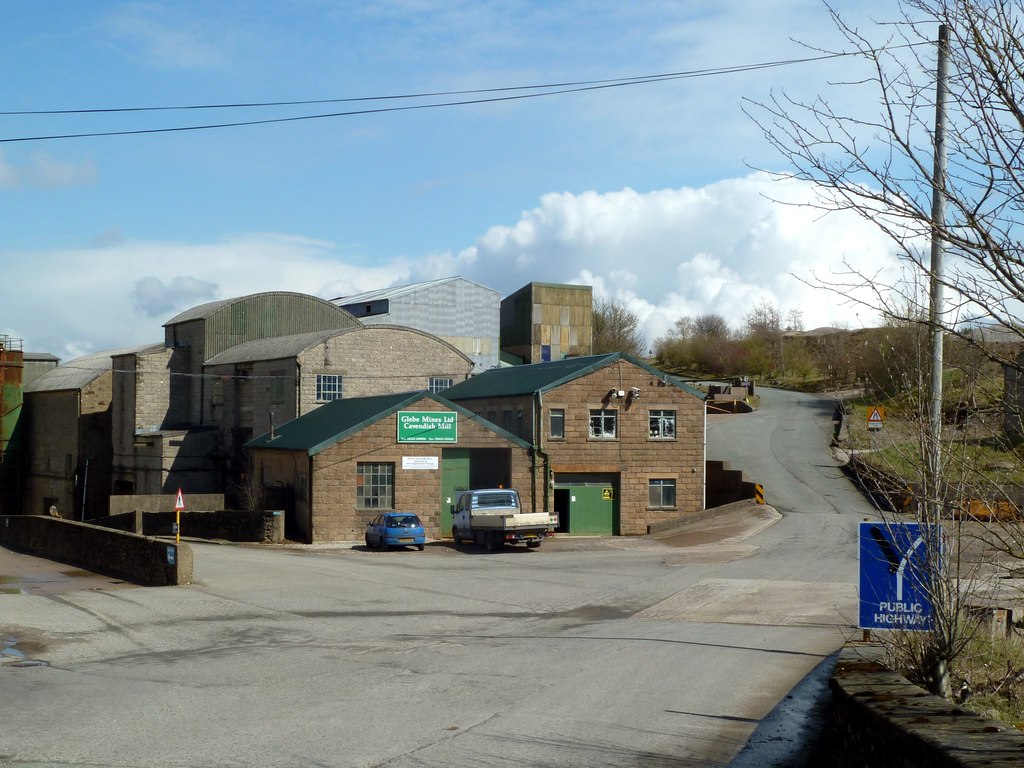
A lead mine at Eyam worked until 1884, whose name was carried forward by Glebe Mines Ltd, a company that reopened the site for fluorspar in 1937 and grew into a major Derbyshire fluorspar producer, processing ore at nearby Cavendish Mill until final closure in 2010.
History
Glebe Mine was worked for lead through the 19th century until operations ceased in 1884. The Glebe name was carried forward when the mine was reopened in 1937 to produce fluorspar, by which point the mineral once discarded as waste from lead working had become valuable in its own right; the reopened workings grew into Glebe Mines Ltd, one of Derbyshire's major fluorspar producers of the 20th century, which passed through Laporte ownership and an Italian takeover before closing for good in 2010.
The Derbyshire Historic Environment Record puts the origins of the lead mine far earlier than the 19th century: it may go back to the middle ages, the earliest records are of the 16th century, and 17th-century plans of the workings were used by prospectors at the start of the 20th. The mine's documented working life begins in 1849, when the Eyam Mining Company took over; it struck a rich vein of ore in 1855, and then declined through the 1870s and 1880s as reduced tariffs on imported lead, exhausted veins, damage and rising costs bore down together. The wider cause was the opening of the Broken Hill deposits in Australia, whose lead carried something like 150 ounces of silver to the ton against Derbyshire's two. Glebe Mine appears on the first edition Ordnance Survey 25-inch map of 1878 with only its southern shaft labelled, and is marked disused on the map of 1899.
What brought the site back was the waste. Around Eyam the hillocks of discarded fluorspar and barytes ran to more than a million tons on the Edge alone, and from 1895 fluorspar was being shipped to tin smelters in South Wales and from 1904 to the United States for the basic open-hearth furnace, until American tariffs of one dollar and then four dollars a ton killed the export trade. Demand for higher-grade material than the old hillocks could give is what reopened the mine itself. The chemical firm James Wilkinson Ltd and Sons reopened the workings and drove a new drift in 1936-37, and in 1938 Henry Ellison, who had a hydrofluoric acid plant at Rotherham, set up a small high-grade fluorspar plant in the village at the old Glebe lead mine, taking on Frank Robinson to manage it. Ellison's acid plant needed material of about 97 per cent purity, which no hillock could supply; Robinson's answer, brought in during 1939, was froth flotation, and the plant he designed went on to produce about seventy per cent of the country's high-grade fluorspar for the war effort, for hydrofluoric acid and for the electrolyte in aluminium smelting. In 1945 a rich vein of high-grade fluorspar was located and Glebe Mines Ltd took over the site. The techniques were refined through the 1950s, and in the middle of that decade the first separation anywhere in the world of barytes from fluorspar by flotation was carried out at Glebe; plants in other countries were later modelled on the work of Robinson and his mill manager Frank Bagshawe. Demand expanded sharply in 1959, there was no room to grow inside the village, and a new plant was built at Cavendish Mill in Stoney Middleton in 1965 — still within the old lead-mining liberty of Eyam and Stoney Middleton.
Geology
The mine worked the lead veins of the Eyam and Stoney Middleton liberty, in the Carboniferous limestone of the Derbyshire orefield, the Hucklow Side Vein discovered in 1777 having set off the local boom. The engine shaft was sunk through shale to reach them. Fluorspar and barytes, the gangue minerals thrown out as waste by the lead miners, are what made the site valuable again in the 20th century; Derbyshire lead is unusually poor in silver, about two ounces to the ton, which is why the mine could not survive competition from silver-rich imported ores.
Workings
Underground lead working through the 19th century; the site's 20th-century fluorspar output was processed first at the original Glebe plant and, from 1965, at the purpose-built Cavendish Mill nearby.
Closure
Original lead working ceased in 1884; the fluorspar processing operation that took the Glebe name closed for good at the end of 2010. The Historic Environment Record dates the end of the Eyam Mining Company's operations to 1888 rather than 1884, and attributes the closure of the Glebe site itself to the centralisation of processing that the new purification methods demanded, the plant moving away from the village.
What remains
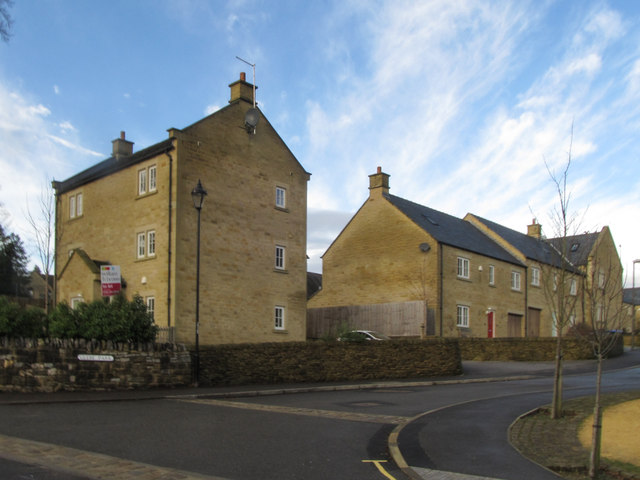
The mine site itself has been largely built over. The Derbyshire Historic Environment Record notes that the surface archaeology and the ecological interest of the 20th-century buddle dams and waste heaps were being destroyed by development, with the shaft retained for ventilation and potential access to the workings below; modern mapping shows housing on the southern part of the site and the northern part levelled for a football pitch. The housing, at Glebe Park off Church Street, dates from about 2008-9 and carries an interpretation panel on the mine's history. Below ground the record describes a grilled 19th-century engine shaft running down through shale to 20th-century and earlier workings, and extensive concrete platforms at the site of the large 20th-century dressing plant.
A steel headstock and pulley wheel over the disused engine shaft, recorded by the Historic Environment Record and kept for ventilation; concrete platforms where the dressing plant stood; and the mound beside the village school that still houses the shaft. The interpretation panel at Glebe Park explains the site to visitors.
Related mines
- Ladywash Mine — Ladywash was reworked for fluorspar by Glebe Mines Ltd, the company that grew out of this site, and both mines had earlier been worked for lead by the Eyam Mining Company.
- Nickergrove Mine — The two mines' underground passages connect via a natural chamber and stream cave.
- Sallet Hole Mine — Sallet Hole was worked for fluorspar under Laporte Minerals, which took over Glebe Mines, and its ore went to the Cavendish Mill that Glebe built in 1965.
Nearby mines
- Little Brookhead Mine — 0.2 miles (0.4 km) E
- Ladywash Mine — 0.3 miles (0.5 km) E
- Sallet Hole Mine — 0.4 miles (0.6 km) S
- Nickergrove Mine — 0.4 miles (0.7 km) SW
- Merlin Mine — 0.8 miles (1.3 km) NW
Straight-line distance, within 9 miles (15 km). Show on the map.
What's uncertain
Points where sources disagree or the record could not be settled; both accounts are kept. All open questions in the archive.
- Lead working is recorded as ceasing in 1884 by Mindat and in 1888, when the Eyam Mining Company ceased operations, by the Derbyshire Historic Environment Record. (disputed) 2
Recorded claims
Individual factual claims, each attached to the source(s) that support it below. Where sources disagree, both are kept.
- The mine was reopened in 1937 to produce fluorspar, with the reviving company also taking control of the nearby Ladywash and Black Hole mines, both reopened in 1939. 1
- Laporte Minerals, which acquired Glebe Mines in 1959, built Cavendish Mill in 1965 to replace the original processing plant; the Glebe Mines name was revived in 1999 to continue processing there until the operation finally closed at the end of 2010 with the loss of 65 jobs. 1
- The Derbyshire Historic Environment Record dates the lead mine's possible origins to the middle ages, with the earliest records in the 16th century and 17th-century plans of the workings used by 20th-century prospectors; the documented working period runs from the Eyam Mining Company's takeover in 1849. 2
- Lead working is recorded as ceasing in 1884 by Mindat and in 1888, when the Eyam Mining Company ceased operations, by the Derbyshire Historic Environment Record. (disputed) 2
- James Wilkinson Ltd and Sons reopened the workings and drove a new drift in 1936-37; Henry Ellison set up a high-grade fluorspar plant at the old lead mine in 1938; and Glebe Mines Ltd took over in 1945 after a rich high-grade vein was found. 2,3
- Frank Robinson designed a froth flotation plant brought in during 1939 which produced about seventy per cent of Britain's high-grade fluorspar for hydrofluoric acid and aluminium production during the Second World War. 3
- The first separation anywhere in the world of barytes from fluorspar by froth flotation was carried out at Glebe in the mid-1950s, and plants abroad were later modelled on the work done there. 3
- Demand expanded in 1959 and, with no room to grow inside the village, a new plant was built at Cavendish Mill in Stoney Middleton in 1965. 3
Photographs & further reading
A news account of Glebe Mines Ltd's corporate history and 2010 closure.
View sourceThe county record for the site, covering the medieval to Victorian lead mine, the 20th-century fluorspar working, the surviving headstock and shaft, and what the housing development destroyed.
View sourceA local history of mining in the parish, with the fluorspar story in detail: the American tariffs, Henry Ellison's plant at the old Glebe mine, Frank Robinson's froth flotation and the move to Cavendish Mill.
View sourceSources
- (secondary) Glebe Mines bought by Italian company — Insider Media
- (primary) MDR6770 — Glebe Mine, Glebe Park, Eyam — Derbyshire Historic Environment Record
- (secondary) Mining, Eyam Village — Eyam Village
- (observational) Glebe Mines at Cavendish Mill — Geograph Britain and Ireland (Graham Hogg)
- (secondary) Glebe Mine, Eyam — Mindat
Record created: 30 August 2026 · Last researched: 11 September 2026