 MineArchive
Denby Grange Colliery
| Location | Netherton, near Wakefield, West Yorkshire — 53.6417, -1.6239 (approximate) |
|---|---|
| Commodity | Coal |
| Type | Coal |
| Worked | c. 1790–1991 |
| Maximum depth | 215 yards (197 m), Hope Pit |
| Operators | Lister Kaye family (?–1917), Denby Grange Collieries Ltd. (1922–1947), National Coal Board (1947–?) |
Overview
The Lister Kaye family's estate colliery near Netherton in West Yorkshire, worked from the late eighteenth century until 1991; its Caphouse pit is now the National Coal Mining Museum for England.
History
Denby Grange Colliery lay on the Lister Kaye family's Denby Grange estate around Netherton, Overton and Midgley, some five and a half miles west-south-west of Wakefield, in ground where the coal lay close to the surface and had been worked for many years. The Flockton Thick seam was being mined by 1793, and the brick-lined Caphouse shaft was sunk about 1790 to work the Flockton Thick and Thin. The colliery was assembled out of leases rather than sunk as one undertaking. Timothy Smith held the lease of the original Denby Grange Colliery north of Flockton, and James Milnes mined at Emroyd and Old Flockton; Milnes's pits were tied to the Calder and Hebble Navigation at Horbury Bridge by a wooden wagonway, later relaid with iron rails, and while some coal went to local buyers much more was sent to markets east of Pontefract by water. Smith's pits were under Sir John Lister Kaye's control by 1817, managed by estate managers including John Blenkinsop of the Middleton Collieries, who oversaw the enlargement of the business in the 1820s. In 1827 his son Sir John Lister Lister-Kaye took over the lease of the Overton Colliery on his own estate from James Milnes's executors and began to expand. The pits came thick after that. Hope Pit was sunk in 1827 and drew coal from 1829, its shaft 215 yards deep and wound by horse gins right up to the 1920s, though it was also one of the earliest Yorkshire mines to use electrical coal cutters; the Blossom Pit across the Wakefield to Austerlands turnpike followed by 1840. The Inman water shaft was sunk about 1840 to ninety-seven yards to pump water out of Hope Pit, and was later deepened to the New Hards; its beam engine house survives. The pits were ventilated at first by furnaces at the shaft bottoms. By the 1850s these workings were being run collectively as Denby Grange colliery under Sir John Lister Lister-Kaye, and later by Miss Emma Lister-Kaye, whose initials are on the winding-engine house. The Durham Mining Museum records the colliery of this name as established in 1894, when it worked from two production shafts of 171 and 164 yards with a further shaft and a 1,200-yard drift for ventilation, raising household and manufacturing coal from the New Hards and Wheatley Lime seams. From 1922 it was worked by Denby Grange Collieries Ltd, a Wakefield company controlled by Terry, Greaves & Lister Kaye Ltd, which employed about 840 people in 1923. The pits passed to the National Coal Board at nationalisation in 1947. Caphouse closed in 1985 and reopened as the Yorkshire Mining Museum in 1988, becoming the National Coal Mining Museum for England in 1995, while the surviving Prince of Wales Pit at Netherton worked on until 16 August 1991.
Geology
Worked the Middle Coal Measures of the Yorkshire coalfield, drawing coal from the Flockton, New Hards, Wheatley Lime and Parkgate seams.
Workings
Several pits across the estate, including Caphouse, Hope, Blossom, Inman's and the Prince of Wales. Hope Pit's shaft is 215 yards deep and was wound by horse gin until the 1920s, though the colliery was among the first in Yorkshire to use electrical coal cutters; the Inman water shaft of about 1840 went to ninety-seven yards to pump Hope Pit and was afterwards deepened to the New Hards. Ventilation was originally by furnaces at the shaft bottoms. The 1894 return gives two production shafts of 171 and 164 yards with a further shaft and a 1,200-yard drift for ventilation; a conveyor drift was opened at Caphouse in 1974.
Closure
The estate pits passed to the National Coal Board in 1947. Caphouse was merged with Denby Grange in 1980 and, after further mergers with Bullcliffe Wood and the Calder Drift in 1985, the whole was renamed Denby Grange; Caphouse itself closed in October 1985, and the Prince of Wales Pit worked until 16 August 1991.
What remains
Caphouse and Hope Pit survive as the National Coal Mining Museum for England, open to the public.
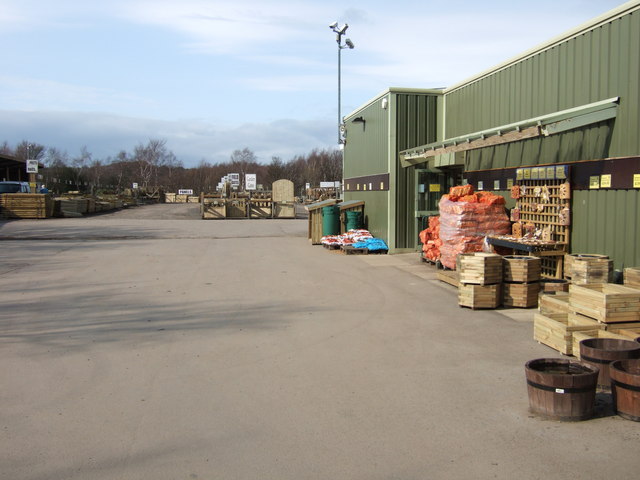
The Caphouse timber headgear, winding-engine house and furnace pit survive at the museum; the Netherton pits have been cleared, part of the site now occupied by a sawmill and fencing yard.
Redevelopment
Caphouse Colliery reopened as the Yorkshire Mining Museum in 1988 and is now the National Coal Mining Museum for England.
Related mines
- Bullcliffe Wood Colliery — Part of the Denby Grange complex; Bullcliffe Wood was merged into Denby Grange in 1985.
Nearby mines
- Caphouse Colliery — 1.1 km W
- Flockton Collieries — 1.2 km SW
- Shuttle Eye Colliery — 2.7 km W
- Hostingley Colliery — 2.9 km NE
- Combs Colliery — 3.0 km N
Straight-line distance, within 15 km. Show on the map.
Recorded claims
Individual factual claims, each attached to the source(s) that support it below. Where sources disagree, both are kept.
- Coal was worked on the Denby Grange estate from the late eighteenth century, the Caphouse shaft being sunk about 1790 and the Hope Pit between 1827 and 1829. 1
- Two production shafts, 171 and 164 yards deep, wound coal, with a further shaft and a 1,200-yard drift for ventilation. 2
- Worked the New Hards, Wheatley Lime and Parkgate seams of the Middle Coal Measures. 2
- Worked from 1922 by Denby Grange Collieries Ltd, which employed about 840 people in 1923, until the pits passed to the National Coal Board in 1947. 3
- The Caphouse pit reopened as a museum in 1988 and became the National Coal Mining Museum for England in 1995, while the Prince of Wales Pit worked until 16 August 1991. 1
- The colliery's abandonment plans are held in the mine-plans catalogue of the British Geological Survey. 4
- Timothy Smith held the lease of the original Denby Grange Colliery north of Flockton and James Milnes mined at Emroyd and Old Flockton, sending much of his coal to markets east of Pontefract by the Calder and Hebble Navigation, to which his pits were linked at Horbury Bridge by a wooden wagonway later laid with iron rails. Smith's pits were under Sir John Lister Kaye by 1817, and in 1827 Sir John Lister Lister-Kaye took the Overton Colliery lease from Milnes's executors. 5
- Hope Pit was sunk in 1827 and produced coal after 1829. Its shaft descends 215 yards and was wound by horse gins until the 1920s, although the colliery was one of the earliest Yorkshire coal mines to use electrical coal cutters. 5
- The Inman water shaft was sunk to ninety-seven yards about 1840 to pump water from Hope Pit and was later deepened to the New Hards seam; its beam engine house survives. The pits were originally ventilated by furnaces at the shaft bottoms. 5
- Sir John Lister Kaye's pits were managed by estate managers including John Blenkinsop of the Middleton Collieries, who oversaw the enlargement of the enterprise in the 1820s. 5
Photographs & further reading
Owners, output, employment, seams worked and the roll of those killed at the colliery.
View sourceHistory of the Caphouse pit and the Lister-Kaye ownership, now the National Coal Mining Museum.
View sourceSources
- (secondary) Caphouse Colliery — Northern Mine Research Society
- (primary) Denby Grange Colliery (DMM d205) — Durham Mining Museum
- (primary) Denby Grange Collieries Ltd. (DMM d1013) — Durham Mining Museum
- (primary) Denby Grange Colliery abandonment plans (BGS mine-plans catalogue) — British Geological Survey
- (secondary) Caphouse Colliery — Wikipedia
Record created: 23 September 2026 · Last researched: 23 September 2026