 MineArchive
Caphouse Colliery
| Location | Overton, West Yorkshire — 53.6433, -1.6211 (exact) |
|---|---|
| Commodity | Coal |
| Type | Coal |
| Worked | 1770s-1780s–1985 |
| Operators | Lister Kaye family (?–1917) |
Overview
A small West Yorkshire colliery with a working shaft possibly older than any other still in everyday use in Britain, reopened in 1988 as what is now the National Coal Mining Museum for England.
History
Caphouse Colliery, on the Denby Grange estate near Wakefield, was sunk in the 1770s or 1780s, with the nearby Hope Pit following in the 1820s; a surviving 1791 plan showing workings from 1789-95 includes a shaft on the Caphouse site that is thought to be, quite possibly, the oldest coal-mine shaft still in everyday use anywhere in Britain today. Ownership passed from the Milnes family before 1827 to the Lister Kaye family, who held it until 1917, before Arthur Sykes of Lockwood and Elliott bought the colliery around 1941 and remained owner until nationalisation in 1947. Caphouse was a comparatively small pit under the National Coal Board, employing on average around 177 men underground and 46 on the surface. The colliery's reserves were exhausted by 1985, when it closed. It reopened in 1988 as the Yorkshire Mining Museum, achieving national status in 1995 as the National Coal Mining Museum for England.
Geology
Caphouse worked coal seams of the Yorkshire coalfield near Wakefield.
Workings
Coal was worked from a shaft sunk in the 1770s-80s, among the oldest coal-mine shafts still in use in Britain, and later the neighbouring Hope Pit shaft from the 1820s.
Closure
Coal reserves at Caphouse were exhausted by 1985, when the colliery closed as a working mine.
What remains
Reopened in 1988 as a heritage attraction, now the National Coal Mining Museum for England, offering guided underground tours using the historic shaft; the underground tour closed from 29 December 2024 to install a brand new winding engine capable of taking visitors 140 metres down, reopening in April 2025, with an overground colliery tour and a digital experience offered in the interim.
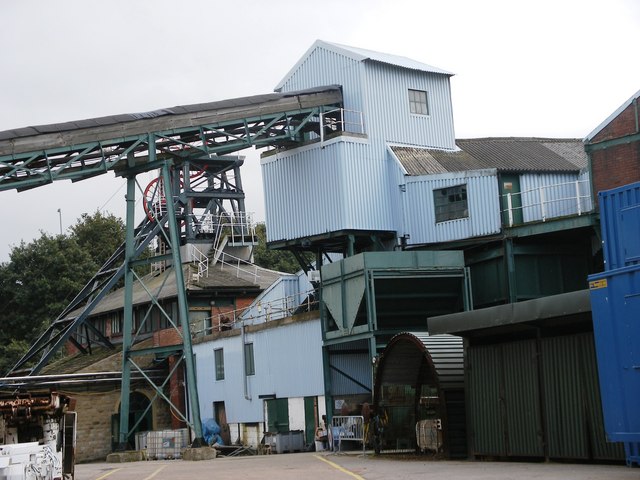
Historic pithead buildings, headgear and the original shaft, all preserved and in active use as part of the museum's underground tour.
Related mines
- Grange Ash Colliery — The neighbouring Denby Grange pit to the north, now the National Coal Mining Museum for England.
Nearby mines
- Denby Grange Colliery — 0.2 miles (0.3 km) SW
- Flockton Collieries — 0.9 miles (1.4 km) SW
- Grange Ash Colliery — 1.4 miles (2.3 km) W
- Hostingley Colliery — 1.7 miles (2.7 km) NE
- Combs Colliery — 1.8 miles (2.8 km) N
Straight-line distance, within 9 miles (15 km). Show on the map.
Recorded claims
Individual factual claims, each attached to the source(s) that support it below. Where sources disagree, both are kept.
- Caphouse Colliery was sunk in the 1770s or 1780s; a surviving 1791 plan showing workings from 1789-95 includes a shaft here thought to be possibly the oldest coal-mine shaft still in everyday use in Britain. 1
- Ownership passed from the Milnes family (before 1827) to the Lister Kaye family (until 1917), then to Arthur Sykes of Lockwood and Elliott from around 1941 until nationalisation in 1947. 1
- Coal reserves were exhausted by 1985, closing the colliery as a working mine; it reopened in 1988 as the Yorkshire Mining Museum, gaining national status in 1995 as the National Coal Mining Museum for England. 1,2
- The museum's underground tour closed from 29 December 2024 to install a new winding engine capable of taking visitors 140 metres underground, reopening in April 2025. 3
- Located at about 53.643 N, 1.621 W. 1
Photographs & further reading
The museum's own announcement of the new winding engine and the 2024-25 underground tour closure.
View sourceSources
- (secondary) Caphouse Colliery — Wikipedia
- (secondary) National Coal Mining Museum for England — Wikipedia
- (primary) Underground Tours (Jan-Mar 2025) update — National Coal Mining Museum for England
Record created: 21 August 2026 · Last researched: 31 August 2026