 MineArchive
Darfield Main Colliery
| Also known as | The Valley |
|---|---|
| Location | Low Valley, between Wombwell and Darfield, South Yorkshire — 53.5306, -1.3947 (approximate) |
| Commodity | Coal |
| Type | Coal |
| Worked | 1856 (sinking); Barnsley seam reached 28 August 1860–1989 |
| Maximum depth | 628 yards to the sump of the third shaft (1917-19); the first two shafts 342 yards. |
| Operators | Darfield Main Coal Company (1856–1861), Mitchell Main Colliery Company (?–1947), National Coal Board (1947–1987), British Coal Corporation (1987–1989) |
Overview
A Barnsley-seam colliery in the valley bottom between Wombwell and Darfield, known locally as 'the Valley', sunk from 1856 through water-bearing strata that had to be tubbed with cast iron. It survived a fire that forced the owners to flood it in 1872, outlived its sister pit Mitchell Main by thirty years, and closed in 1989 as the Darfield section of Houghton Main, after 129 years.
History
Shaft sinking began in the spring or summer of 1856, and the sinkers met water-bearing strata that made progress almost impossible until the shafts were lined with cast-iron tubbing; the Barnsley seam was reached on 28 August 1860. The original Darfield Main Coal Company was dissolved in 1861. In February 1872 a fire was put out by stopping off the district, but a far more serious fire from 13 October 1872, which began at the base of the furnace (cupola) ventilating shaft, could not be controlled, and the mine was flooded and sealed. It did not wind coal again until 1874, some thirteen months later, at a reported cost of over £100,000, and reopened with a mechanical fan in place of the furnace. The Mitchell Main Colliery Company, already listed as owner in 1894, worked Darfield Main alongside its Mitchell Main pit; in 1933 the company proposed to produce its whole permitted quota from Darfield as the more economic unit. By 1910 the Barnsley seam was nearly worked out and production moved to the Meltonfield. A third shaft, 21 feet across, was sunk from 1917 to 1919 to 628 yards with insets from the Meltonfield down to the Parkgate. Under the National Coal Board the pit was chosen over Mitchell Main for modernisation; when Mitchell Main closed in 1956 its men moved to Darfield, which then employed over 1,300 and set a production record of 12,000 tons a week that November. Hand filling ended in 1963. After the 1984-85 strike closure was announced, then reprieved on condition of cutting the workforce to 300 and merging with Houghton Main to work the Silkstone seam; the Darfield section of Houghton Main closed in 1989. The colliery's own history counts 93 fatal accidents, never more than two deaths in one.
Geology
Seams of the concealed Yorkshire coalfield: the Barnsley seam, worked exclusively until about 1910 and known for firedamp and spontaneous combustion, then the Meltonfield (to 1970), Winter and Beamshaw, and finally the Silkstone after the 1986 merger with Houghton Main.
Geological setting: Sedimentary Beds and Seams (well documented example)
Workings
Two shafts sunk 1856-60 to 342 yards, tubbed with cast iron through water-bearing ground, and a third, 21 ft in diameter, sunk 1917-19 to 628 yards with insets at the Meltonfield, Winter, Beamshaw, Swallow Wood, Flockton, Lidgett and Parkgate; by 1967 it wound all the coal from the Beamshaw level at 224 yards. Furnace ventilation gave way to a mechanical fan after the 1872 fire. The first mechanised face, an Anderson Boyes trepanner with Dowty powered supports, started in 1961.
Closure
After the 1984-85 strike the pit was reprieved on condition of a cut to 300 men and a merger with Houghton Main, completed by November 1986; the Darfield section of Houghton Main closed in 1989.
What remains
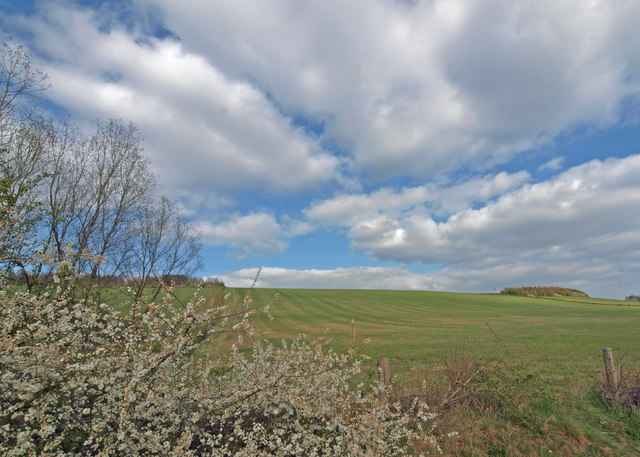
The site has been redeveloped; a school has been built on the former colliery ground and the spoil heap has been reshaped into farmland.
Unknown.
Redevelopment
Netherwood Advanced Learning Centre, which replaced the Darfield Foulstone and Wombwell high schools, was built on the old colliery site around 2012, with a new bridge over the River Dove for access.
Related mines
- Houghton Main Colliery — Darfield Main was merged with Houghton Main from 1986 to work the Silkstone seam, and closed in 1989 as its Darfield section.
- Mitchell Main Colliery — Both owned by the Mitchell Main Colliery Company; Mitchell Main's quota went to Darfield in 1933 and its men followed when it closed in 1956.
Nearby mines
- Mitchell Main Colliery — 0.9 km W
- Wombwell Main Colliery — 2.0 km SW
- Lundhill Colliery — 2.1 km S
- Grimethorpe Colliery — 2.8 km N
- Houghton Main Colliery — 2.8 km NE
Straight-line distance, within 15 km. Show on the map.
What's uncertain
Points where sources disagree or the record could not be settled; both accounts are kept. All open questions in the archive.
- Sinking started in 1860; the colliery opened in 1860. (disputed) 2,3
- Mitchell Main Colliery Company Ltd took over Darfield Main in 1902 (the history site marks an 1896 date as needing authentication). (uncertain) 1
Recorded claims
Individual factual claims, each attached to the source(s) that support it below. Where sources disagree, both are kept.
- Shaft sinking began in 1856; water-bearing strata forced the shafts to be lined with cast-iron tubbing, and the Barnsley seam was reached on 28 August 1860. 1
- Sinking started in 1860; the colliery opened in 1860. (disputed) 2,3
- A fire from 13 October 1872, starting at the base of the cupola (furnace) shaft, could not be controlled; the mine was flooded and sealed and did not wind coal again until 1874, reopening with a mechanical fan. 1,4
- Owners: Darfield Main Coal Co.; Mitchell Main Coal Co.; Mitchell Main Colliery Co., Ltd.; from 1947 the National Coal Board. 2,3
- Mitchell Main Colliery Company Ltd took over Darfield Main in 1902 (the history site marks an 1896 date as needing authentication). (uncertain) 1
- In 1933 the company owning Mitchell Main and Darfield Main proposed to produce its whole permitted output from Darfield Main as the more economic unit. 5
- Employment: 954 (1894), 1,002 (1933), 926 (1947), 971 (1954); 1947 output 280,000 tons. 2
- Two of the three shafts were sunk in 1860 to 342 yards; a third, 627 yards deep, wound all coal from the Beamshaw level at 224 yards; 970 men produced 388,000 tons (NCB, 1967). 2
- Merged with Houghton Main after 1985 to work the Silkstone seam; the Darfield section closed in 1989. 2,1,3
- The colliery's history site counts 93 fatal accidents over 129 years, the highest loss of life being two in one accident. 4
- The BGS / Mining Remediation Authority mine-plans catalogue holds plans filed under 'DARFIELD MAIN COLLIERY'. 6
Photographs & further reading
A dedicated history site with a timeline, fatalities list, NUM history and photograph gallery.
View sourceSources
- (secondary) The History of Darfield Main Colliery 1856 to 1989: Time Line — Darfield Main Colliery history site
- (secondary) Durham Mining Museum - Darfield Main Colliery (UK) — Durham Mining Museum
- (secondary) Darfield Main Colliery — Grace's Guide
- (secondary) Pit History of Darfield Main Colliery 1856 to 1989 — Darfield Main Colliery history site
- (primary) Mitchell Main Colliery, Wombwell (HC Deb 11 April 1933 vol 276 cc2348-50) — Hansard
- (primary) BGS / Mining Remediation Authority mine plans: DARFIELD MAIN COLLIERY — British Geological Survey
Record created: 21 September 2026 · Last researched: 21 September 2026